
When Is Open AI IPO: 2027 Is the Earliest Possible Year
OpenAI ruled out a 2026 listing, leaving 2027 as the earliest possible window while safety concerns and…
The short version
- OpenAI ruled out a 2026 IPO, making 2027 the earliest possible listing window without committing to that year.
- Safety, alignment and government coordination influence timing, while no registration statement, exchange, ticker or price range exists.
- Ordinary investors must wait for public offering documents before OpenAI shares become available through normal brokerage accounts.
Put away the calendar reminder. Every precise OpenAI IPO prediction is fan fiction with a Bloomberg tab open.
My inbox keeps asking, “when is open ai ipo?” Honest answer: OpenAI could go public in 2027 at the earliest, after ruling out 2026, but the company has announced no IPO date. We don’t know the month, offering size, valuation, exchange, share price or final registration timetable.
That blank space is catnip for finance websites. Give investors a possible year and somebody will pick a quarter, invent a ticker and mentally spend the gains on a Porsche with terrifying financing terms.
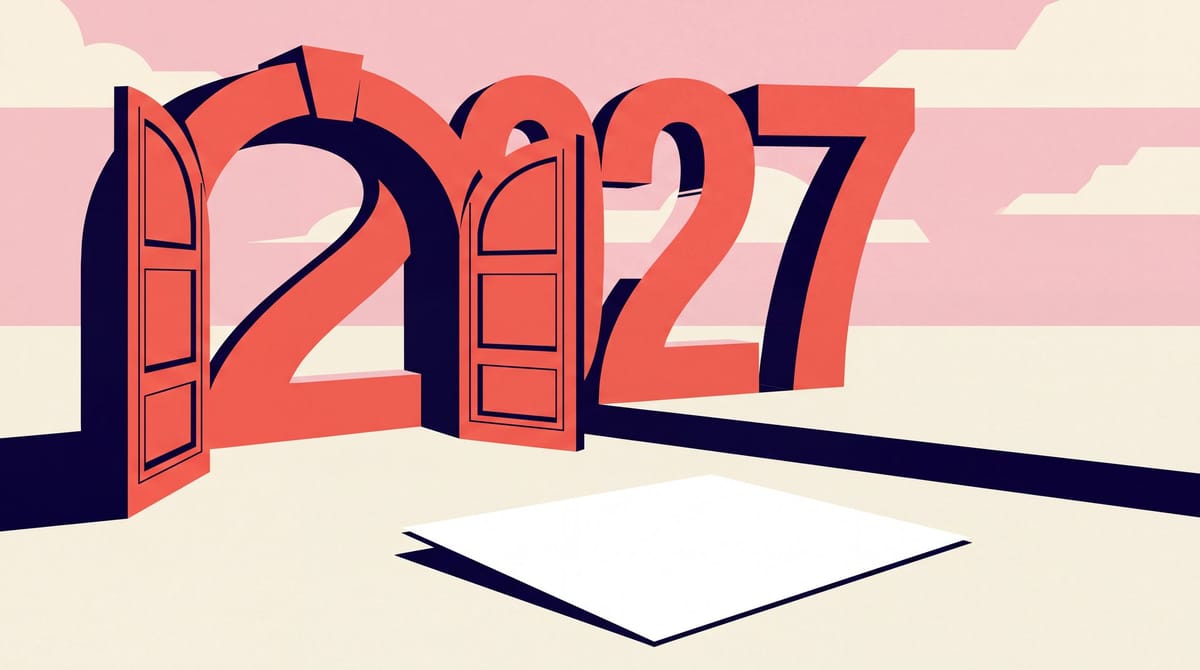
I see an open gate. Nobody sent the invitation.
An earliest window is still a maybe
OpenAI’s public position gives us one firm boundary. In a September Fortune interview, Sam Altman ruled out a 2026 listing, making 2027 the earliest possible opening. He said substantial work remained on safety and alignment, including cooperation between the AI industry and governments. OpenAI has not committed to listing in 2027 or published a target month or formal timetable. Investors have a possible starting point, not a scheduled event. Headlines blend those concepts into one confident smoothie.
Yahoo Finance preserved the distinction in its reporting: the year after the ruled-out period remains possible, but OpenAI has announced no target date. That lacks the dopamine hit of “BUY BEFORE TUESDAY,” so naturally the internet keeps trying to improve it.
Altman was unusually direct:
I actually think that, given everything happening with safety, right now would be an ill-advised moment to go public, and we don’t feel pressure on that.
That final clause matters. Companies usually endure the IPO circus for public capital or liquidity for employees and early investors. Altman says OpenAI feels no pressure to list. While that remains true, management can wait until its definition of readiness meets the market’s appetite.
I can steel-man the bullish case. OpenAI excluded 2026, preparation may continue privately, and a listing could improve liquidity for employees and existing investors. Those are sensible reasons to expect movement. I understand why people read them as clues.
They still don’t create an OpenAI commitment.
IPO speculation is astrology for people with Bloomberg terminals. I say that affectionately, mostly, because founders also spend shocking amounts of time decoding calendar invites.
Safety now controls the calendar
Altman has tied the sequence to two conditions: the business and the broader societal moment around the technology must be ready. That second condition makes an OpenAI IPO unusually hard to schedule. “Society is ready” fits poorly inside an investment banker’s spreadsheet.
The company’s logic goes like this. OpenAI believes substantial safety and alignment work remains. Some requires coordination between industry and governments, so management cannot treat it as an internal checklist with a neat Friday deadline. Those requirements led Altman to rule out 2026 and call going public amid today’s safety concerns ill-advised. Because OpenAI says it feels no pressure to list, management can prioritize that work over IPO preparation. The earliest window therefore depends on OpenAI deciding both that its business can handle public ownership and that the wider moment has improved enough. It has published no test for either condition, so outsiders cannot know how close it is.
Clausebench summarized the effect of a later date:
A later date is more time to do the same amount of work, not less work.
That opacity is the killer. “Finish the audit by Friday” has an owner and deadline. “Meet the moment required for safety and alignment” depends on technical evidence, management judgment and government coordination moving on its own timetable.
EDPB Deputy Chair Jelena Virant Burnik described the regulatory effort:
The new EDPB guidelines are a major step in further aligning how Data Protection Authorities decide whether an administrative fine should be imposed, either on its own or alongside other corrective measures. The GDPR significantly increased the corrective powers of DPAs, with fines serving as an important instrument for effective enforcement. The guidelines reaffirm our commitment to providing greater clarity and ensuring the consistent application of the GDPR across Europe.

I understand the cynical reading. Safety gives management a respectable reason to delay while improving the finances, and private companies face less scrutiny from ordinary investors. OpenAI has released no offering documents exposing its audited economics, so outsiders cannot cleanly separate financial timing from safety timing.
Cynicism and sincerity can coexist. A company may genuinely fear moving too fast while enjoying the time caution buys. Growing up in Italy taught me that a restaurant can care deeply about the ragù while keeping you outside because your table is occupied.
I want operational evidence before fully trusting the explanation. Who decides a model is too dangerous to release? What evidence triggers a pause? Can commercial leadership reverse it when delay costs serious money? Does the safety team retain authority while executives stare at a missed forecast?
Those answers matter more than another leaked quarter on a banker’s calendar. So far, they remain private.
Wall Street will test the mission
Going public would put OpenAI’s safety promises inside a machine rewarding predictable growth. The company can survive that tension, but its governance must withstand an ugly quarter.
Imagine OpenAI finds a serious problem shortly before launch. Its safety team requests more time, management delays the release and expected revenue shifts into a later quarter. Public investors see the missed forecast before the harm potentially avoided. Analysts demand a new schedule while traders cut the valuation. Directors face pressure to prove the pause followed a defined process. Safety leaders need authority to hold the line. If commercial leadership can reverse them whenever the share price falls, the policy becomes expensive wallpaper. A credible public company needs a process that can absorb restraint’s financial consequences.
An OpenAI prospectus could become genuinely interesting, which I rarely say about securities paperwork. I’d look for who controls model releases and how OpenAI handles conflicts between its mission and shareholder demands. Which body can order a pause? Can management overrule it? What do shareholders learn afterward?
Risk disclosures matter too. Generic language calling AI “an evolving field” would tell investors approximately nothing. OpenAI must explain how a safety decision could change a launch schedule, raise costs or delay expected revenue. Otherwise, the market will invent assumptions while caffeinated and angry.
I initially underestimated this tension. My founder brain treated an OpenAI IPO like any late-stage tech listing, just with more GPUs and better catering. Then Altman explicitly linked the timing to alignment work and cooperation with governments.
Once management attaches those conditions to the calendar, investors must ask whether OpenAI can enforce them when caution gets painfully expensive. The first earnings miss will test that authority harder than any mission statement.
The paperwork that would change my mind
OpenAI has announced no exchange, ticker, share count or price range. Those blanks help prevent me from confusing preparation with a final decision.
I first want a public registration statement containing audited financials and specific risk disclosures. It would show investors how OpenAI makes and spends money and should explain who controls the company when commercial goals conflict with its mission. Named lead banks and an announced roadshow would bring the offering closer to market. A share count and price range would give it shape; the exchange and ticker would show where shares should trade. Final pricing would come much later. Until those steps become public, a rumored quarter is just a rumor wearing expensive loafers.
Ordinary investors cannot buy OpenAI shares through a normal brokerage account because OpenAI remains privately held. A finance app may display a watchlist page or unofficial ticker-like label. Neither creates a tradeable public security.
Private-market funds and secondary transactions sometimes offer indirect exposure. Access may be limited to accredited investors, fees can be ugly, and prices may include a markup over the latest private valuation. The vehicle might also own several companies, making OpenAI one ingredient in a minestrone you didn’t order.
Another indirect route is buying shares in a public company holding an OpenAI interest. You inherit its whole business, so the investment may behave very differently from OpenAI itself. Calling that “OpenAI stock” is like ordering an entire lasagna for one layer of parmigiano.
Even after paperwork appears, key details will remain unknown until OpenAI discloses them. Nobody outside the process can confirm the offering size or valuation. We also lack the exchange, share price and final registration timetable. A filing would start replacing speculation with documents, though market conditions or OpenAI’s readiness test could still stop the listing.
My dated bet: OpenAI won’t complete an IPO in the first half of 2027, although 2027 is the earliest window after 2026 was excluded. I may be wrong, and I’m leaving this here so future Luca can be publicly bullied.
The first prospectus sentence I’ll search for will explain who can stop a model release. If that person can survive an ugly earnings call, OpenAI may finally be ready for the ticker.
Frequently asked questions
When will OpenAI go public?
OpenAI could go public in 2027 at the earliest because Sam Altman ruled out a 2026 listing. The company has not committed to 2027 or announced a month, exchange, ticker, offering size, valuation, share price, or final formal registration timetable.
Can ordinary investors buy OpenAI stock now?
Ordinary investors cannot buy OpenAI shares through a normal brokerage account because the company remains privately held. Private-market funds, secondary transactions, and public companies with an OpenAI interest may provide indirect exposure, but access, fees, markups, and unrelated holdings can make those investments behave differently.
What would confirm that an OpenAI IPO is approaching?
A public registration statement with audited financials and specific risk disclosures would be the first meaningful evidence. Named lead banks, an announced roadshow, a share count, a price range, an exchange, and a ticker would move the offering closer, while final pricing would come later.
Sources
- Exclusive: Sam Altman addresses AI doomsday fears in new Fortune interview
- Sam Altman confirms OpenAI won’t go public this year, saying an IPO now would come at an ‘ill-advised moment’ given AI safety concerns
- OpenAI’s Altman Says No IPO in 2026, Firm to Prioritize Safety
- OpenAI delaying IPO amid AI safety concerns, Sam Altman says
- OpenAI IPO will not happen in 2026 amid AI safety fears, Altman says
- OpenAI’s Sam Altman says it would be ‘ill-advised’ to go public in 2026