
SpaceX-Cursor Deal Tests Post-IPO AI Buy Logic
A $60 billion all-stock takeover turns IPO euphoria into acquisition currency and raises hard questions about AI strategy, timing, and control.
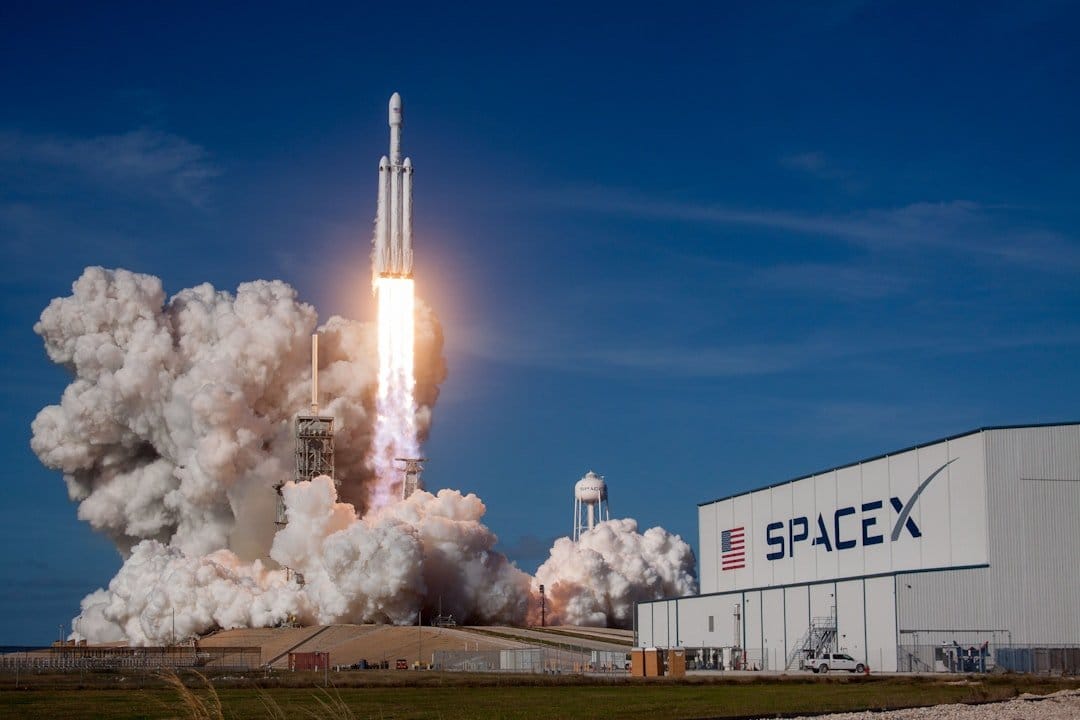
SpaceX’s $60B Cursor deal tests post-IPO AI acquisition logic in the most absurdly modern way possible: go public, let the stock levitate, then spend that glow on an AI company before anyone asks annoying questions.
I always get suspicious when a company goes public, the stock jumps, and management suddenly discovers a $60 billion strategic vision.
That’s not cynicism. Okay, fine, it’s a little cynicism. But this whole SpaceX-Cursor thing has the exact smell of post-IPO adrenaline: fresh ticker, euphoric investors, bankers doing victory laps, and executives acting like destiny itself demanded an all-stock AI deal immediately.
I don’t think SpaceX really bought Cursor in the normal sense. I think Wall Street bought Cursor for SpaceX. The market handed Elon a very expensive piece of paper, everybody agreed to call it value, and then SpaceX used that paper to grab a developer product, a user base, and maybe most importantly, a shortcut out of xAI’s own problems.
That’s the part that matters.
Not whether Cursor is good. Cursor is obviously good. Spend five minutes around actual engineers in San Francisco or one freezing coworking space in Austin and you’ll hear the same thing. The real question is whether post-IPO AI M&A is becoming the polite way to say: we ran out of time to build this ourselves.
My nonna would call that reheating leftovers and charging tasting-menu prices.
The IPO made the Cursor deal possible
The timing is the whole story. According to SpaceX’s June 15, 2026 investor release, the company closed its IPO with about $85.7 billion in gross proceeds. That is not normal financial flexibility. That is “I accidentally became a billionaire and now I collect modern art I don’t understand” flexibility.
Then, almost immediately, the Cursor deal was there.
AP reported that SpaceX had debuted on Friday and that its shares were already up 9% before the opening bell Tuesday. TechCrunch and The Information both framed the acquisition as a case study in what happens when a post-IPO stock surge turns valuation into strategic leverage. Which is a very elegant way of saying: if the market is briefly willing to believe your stock is made of gold, spend it before somebody checks the metallurgy.
This is an old finance trick wearing an AI hoodie.
And the $60 billion in stock matters more than people want to admit. TechCrunch, Axios, and the SEC filing all describe this as an all-stock transaction. Not cash. Stock. Acquisition currency. Vibes with a CUSIP.
That changes the psychology of the whole thing. If SpaceX had spent $60 billion in cash on Cursor, people would have reacted like someone set a boardroom on fire. Spend richly valued stock right after a euphoric debut, and suddenly it becomes “bold” and “strategic.” Wall Street loves this move because it turns sentiment into assets and calls it vision.
That’s why SpaceX’s $60B Cursor deal tests post-IPO AI acquisition logic so cleanly. The logic only works if you treat IPO pricing as a permission slip, not a verdict. Not proof of durable performance. Just temporary authorization to do expensive things.
Public markets are incredibly generous with permission in week one.
This wasn’t a bet on code. It was a bet on time.
Nobody pays $60 billion for an AI coding assistant because autocomplete got sexy.
You pay that because time got expensive.
According to Forbes, Cursor had reached $4 billion in annualized revenue before the deal. That number matters because it keeps this from sounding totally detached from reality. The valuation is still wild, but at least it’s wild with some math under it.
Still, I don’t think this was mainly a bet on code quality. It was a bet on speed. On distribution. On getting inside the daily workflow of developers before someone else locks the door.
AP put it nicely when it said Cursor’s appeal included its wide “distribution to expert software engineers.” That line is doing a lot of work. Distribution to serious engineers is not some fluffy brand metric. That’s the asset. Engineers choose tools the way Italians choose olive oil: irrationally loyal, weirdly emotional, and impossible to convert once they decide yours tastes wrong.
Cursor, founded in 2022 as Anysphere, already sits in the loop. TechCrunch and AP both make that clear. It’s where people write, edit, test, ship, and occasionally stare at the screen like the machine personally betrayed them. That position is worth more than a dozen AI press releases from executives who still say “digital transformation” with a straight face.
And the competition is real. AP notes Cursor competes with Anthropic’s Claude Code and OpenAI’s Codex. So if you’re SpaceX and you’ve folded xAI into the picture, you’re not just looking at a nice product category. You’re looking at a choke point. Whoever owns the developer workflow gets a real shot at owning everything downstream.
That’s why I read this as buying time. Building a Cursor-like product internally would have taken longer, triggered politics, and probably created one of those cursed org charts where infra hates research, research hates product, product hates legal, and everybody blames alignment. I’ve seen enough of that movie. It does not end with applause.
I used to be one of those founders who thought a good internal team should build everything itself. Very pure. Very macho. Very stupid. Then I watched a competitor buy distribution while we were still debating architecture like medieval philosophers. They won six months. Six months was enough.
That’s what SpaceX bought here. Maybe not forever. But six months, twelve months, maybe survival.
The xAI mess makes this deal look a lot less crazy
This deal makes more sense once you stop pretending xAI was in great shape.
TechCrunch’s reporting is rough. SpaceX’s AI division, built around xAI after the earlier merger, had been restructuring while dealing with repeated controversies, including reports that its products allowed non-consensual deepfakes of women and children. That’s not a minor PR issue. That’s the kind of thing that makes enterprise buyers suddenly rediscover caution.
Then there’s the detail I can’t get over: according to TechCrunch, all 11 of Musk’s xAI co-founders had left by the end of March.
All 11.
That is not turnover. That is a group project where every smart kid left before the presentation.
Musk also reportedly said xAI “was not built right [the] first time around” and needed rebuilding “from the foundations up.” I respect honesty. I also think when a founder says something like that in public, the internal reality is usually worse. Founders do not volunteer structural failure unless the walls are already making noises.
Then add one more detail from TechCrunch: earlier this year, xAI hired two of Cursor’s senior engineering leaders. That doesn’t feel random. Interest was already there. The acquisition just made it official.
So yes, Cursor is a growth asset. But it also looks like a cultural patch. A way to import product credibility, engineering density, and momentum from outside instead of waiting for a messy internal rebuild to maybe work.
I’ve seen companies do this after chaos. They call it acceleration. Sometimes it is. Sometimes it’s witness protection for the roadmap.

The $10 billion “never mind” fee is completely unhinged
This is the part where I put my espresso down.
Back in April, SpaceX said it had the right to buy Cursor for $60 billion in stock, or pay $10 billion to “work together” if the deal didn’t happen. AP reported that structure plainly, and TechCrunch called it what it was: a very weird pre-IPO arrangement that looked a lot like a strategic option waiting for the right market conditions.
A $10 billion “never mind, let’s collaborate” fee is insane.
Not fake-insane. Real-insane. The kind of insane that only starts sounding normal after enough lawyers and bankers repeat it in calm voices on Zoom. If I pitched that structure in a board meeting, somebody would ask if I’d had wine at lunch. Also fair.
The SEC materials matter because they show this wasn’t some spontaneous burst of M&A romance after the opening bell. The option mechanics and stock consideration were already disclosed. April set the stage. June supplied the valuation glow.
That tells me both sides expected public-market conditions to make the final decision easier, not harder.
And that’s the weird inversion here. Some people will call this disciplined because it was pre-arranged. I think it suggests the opposite. It suggests everyone involved knew valuation logic might get even stranger after the IPO, so they built a structure flexible enough to absorb the weirdness. If the stock flew, great, use it. If not, pay an absurd fee and keep the relationship alive.
Axios called this one of the largest VC-backed startup exits on record. True. It also means a lot of investors had every incentive to present this as smart, inevitable, and beautifully engineered. Maybe it was engineered. “Inevitable” is where I start laughing.
The deal is expected to close in Q3 2026, with Cursor becoming a wholly owned subsidiary, according to AP and The Information. The paperwork from here may be boring. The setup absolutely was not.
Cursor was already expensive. The IPO just made overpaying easier.
Let’s not act like Cursor was some hidden bargain.
Before this deal closed, TechCrunch reported Cursor was lining up a $2 billion funding round at a $50 billion valuation from Andreessen Horowitz, Thrive, and Nvidia. Which tells you the private market had already gone a little feral.
And this wasn’t pure fantasy with zero numbers underneath it. TechCrunch says Cursor had previously raised $900 million in a Series C in June 2025 and another $2.3 billion in late 2025. Before the SpaceX deal, it had reportedly reached a valuation of around $29 billion. So yes, the company was already on a rocket ship. I hate that metaphor too, but here we are.
The detail that actually matters is uglier: one source told TechCrunch that the planned $2 billion round still wouldn’t have been enough to help Cursor break even.
That’s the uncomfortable part.
You can have huge revenue, elite users, top investors, and still burn cash so aggressively that another two billion doesn’t fix the machine. Which means the case for a $60 billion sale wasn’t just “look at our growth.” It was also “someone with a bigger balance sheet and hotter paper can make this problem feel less urgent.”
That someone was SpaceX.
I don’t even love the word “overpay,” because it assumes there was some stable fair value nearby and everyone ignored it. I’m not sure fair value exists in this corner of AI right now. AI coding startup acquisition math is basically revenue growth, strategic scarcity, and a socially acceptable level of delusion.
The private market had already pushed Cursor into the stratosphere. The IPO just gave SpaceX a more elegant way to pay even more. Once you’re public, your stock becomes a kind of community-theater sovereign currency. Everyone agrees to the fiction because the show needs to continue.
Che bello. Same madness, nicer slides.
What this deal really means for AI acquisitions
The bigger story isn’t SpaceX. It’s what this says about AI M&A after an IPO.
AP reported that SpaceX wants an edge against Anthropic and OpenAI, and Cursor sits in a strategic spot because it competes with Claude Code and Codex while also depending on partnerships with larger model labs for foundational tech. That dependency is the whole chessboard. If the model layer keeps getting commoditized, or even just less differentiated, then the place to win is the workflow.
Own the user. Own the habit. Own the tab that stays open all day.
That’s why Cursor’s tie-up with xAI’s Colossus data center in Memphis, Tennessee matters. AP noted that the partnership would let Cursor build future AI products using Colossus. So this isn’t just software buying software. It’s compute, models, infrastructure, and distribution getting bundled into one package.
The stack is collapsing into itself.
And yes, we have to mention “vibe coding,” even though every time I say it I lose a bit of self-respect. AP pointed out that Cursor helped spark that trend, and specifically noted that it was Cursor Composer paired with Anthropic’s Claude Sonnet that a prominent AI researcher was using for weekend projects when he coined the phrase in early 2025.
That detail matters because it shows how these products actually spread. Not through procurement first. Through developers messing around on a Saturday, building something dumb and delightful, and then refusing to go back to the old way on Monday.
That’s real distribution. Habit first. Budget later.
If this sounds familiar, it should. The great software companies didn’t win because the press release was better. They won because they got embedded in workflows and became painfully annoying to replace. AI is doing the same thing, just faster and with much larger GPU bills.
So when I say SpaceX’s $60B Cursor deal tests post-IPO AI acquisition logic, I mean it’s testing whether freshly public companies can use inflated stock to buy workflow ownership before the model race settles. Not because they believe one coding assistant is spiritually superior. Because they know the models underneath may matter less than the relationship wrapped around them.
That’s the war.
Distribution dressed up as intelligence.
If this works, every newly public tech company will try the same move. Float high, use the stock as currency, buy an AI layer, then tell the market it was always part of the master plan. If it fails, we’ll have to admit that “AI strategy” has become a polished way of saying, we ran out of time to build this ourselves.
And honestly, that’s the question I can’t shake.
Not whether Cursor is worth $60 billion on paper. Paper is patient. Bankers are persuasive. Twitter is unserious. We know all this.
The real question is whether public markets should get to decide who’s allowed to skip the hard part.
Sources
- Primary trending article
- SpaceX will buy Cursor for $60 billion
- SpaceX buys AI coding startup Cursor for $60 billion in race for an edge over Anthropic and OpenAI
- SpaceX finalizes $60 billion deal to acquire Cursor
- Space Exploration Technologies Corp. Announces Closing of Initial Public Offering, Including Full Exercise of Underwriters’ Option to Purchase Additional Shares
- SpaceX - EU Prospectus (Approved by Bafin) - June 5, 2026