
Norwegian Holiday Buyout Rewrites Budget Airline Math
Norwegian’s $843 million holiday-buyout bet signals a new model where flights become funnels for hotels, packages, loyalty, and higher margins.
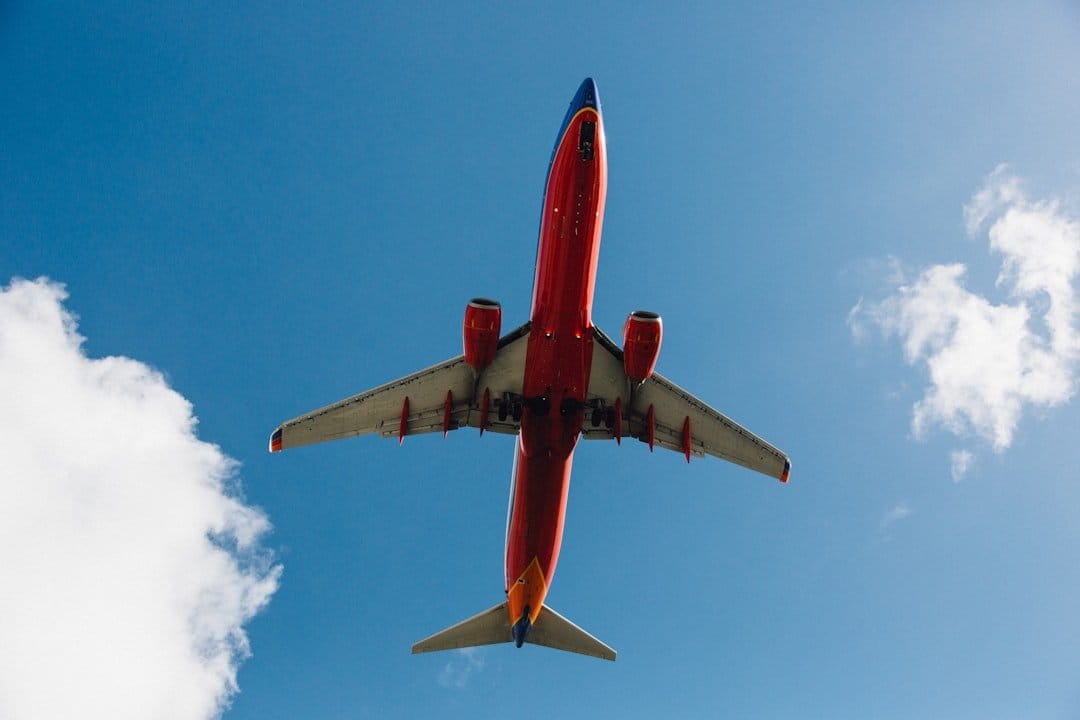
Norwegian’s $843 million holiday-buyout bet reshapes budget airline economics in a way that feels more important than a typical airline deal. Budget carriers used to sell a seat and then fight brutal margin pressure on everything from fuel to labor. Norwegian is now betting that the real money sits around the seat: hotels, packages, transfers, loyalty, and repeat bookings.
I’ve always treated budget airlines like buses with wings. Useful, occasionally chaotic, and spiritually opposed to letting me bring a normal-sized bag on board without a small financial crisis.
That’s why Norwegian’s move hit me immediately. Not because airline M&A is usually interesting, it usually isn’t, but because this one says something blunt about the business: cheap seats alone are a weak model. The money is in everything wrapped around the seat.
Norwegian is buying Nordic Leisure Travel Group for SEK 7.94 billion, about $843 million, according to its June 16 press release and exchange filing. That gives it Ving, Spies, Tjäreborg, Globetrotter, Sunclass Airlines, hotel inventory, package-holiday distribution, and a much bigger grip on what happens after you click “book flight.”
In plain English: Norwegian doesn’t just want to fly you to Spain. It wants to own your week in Spain.
That’s the part people are missing when they say Norwegian’s $843 million holiday-buyout bet reshapes budget airline economics. This isn’t really about getting bigger for the sake of getting bigger. It’s an airline admitting that the flight might be the least valuable part of the trip.
Honestly, fair.
A few weeks ago I was trying to book a quick summer trip from Milan. The flight was easy. The hotel prices looked like a prank. The transfer options were so bad they felt personal. At some point I had 14 tabs open and the dead eyes of a man paying €11 for airport bus reviews. My nonna would call the whole thing un casino. Norwegian looked at that chaos and basically said: okay, we’ll take more of that too.
Why Norwegian’s holiday buyout matters for airline economics
Travelers love low fares because low fares are visible. You can screenshot “€49 to Málaga” and send it to the group chat like you’ve discovered fire.
Investors do not care.
They care about margin, predictability, and whether the company turns into roadkill the next time fuel spikes, weather gets weird, labor costs rise, or consumers decide they’d rather stay home and complain about inflation. Airline economics are brutal because the product is easy to compare and the cost base is not.
Norwegian’s own CEO basically said the quiet part out loud. In the company release, Geir Karlsen said the deal creates “a significant opportunity to grow hotel and holiday sales across our existing customer base, turning every flight into a potential gateway to a full holiday experience and unlocking meaningful additional revenue per passenger.”
That is not the language of a company trying to win on airfare alone. That is the language of a company trying to monetize customers more efficiently while they smile and call it convenience.
And look, he’s right.
A seat-only airline is exposed to everything: fuel, staffing, airport disruption, price wars, seasonal demand, and customers who will absolutely switch brands over a difference smaller than the price of a sad cappuccino at the gate. Loyalty in budget flying is often fake. Most people are loyal to whatever is cheapest at 11:43 p.m.
That’s why this deal matters.
According to Norwegian, the acquisition should lift annual group operating revenue by close to 50%. That’s massive. The combined group would serve roughly 30 million customers annually, building on Norwegian and Widerøe’s existing 27 million passengers, based on the company’s release and filing. If one transaction can add that much revenue without some delusional long-haul expansion fantasy, then the message is obvious: just filling more planes is not enough anymore.
Norwegian also knows what fragility looks like because it nearly died in public. E24 reported that after its crisis years, the airline emerged in 2021 having cut debt by more than NOK 60 billion and removed aircraft-order obligations of NOK 85 billion. That’s not a tune-up. That’s corporate emergency surgery with the chest cavity open.
So I don’t read this as management getting clever for the deck. I read it as a company that got punched in the face by reality and decided it wants a business with more than one way to make money.
Smart.
This is vertical integration with a beach towel
Most airline acquisitions are boring in a very specific finance-guy way. More slots. More overlap. More fleet logic. More regulators pretending to be shocked.
This one is different because Norwegian isn’t mostly buying more aviation. It’s buying more of the traveler’s wallet.
That’s why Norwegian’s $843 million holiday-buyout bet reshapes budget airline economics beyond Scandinavia. It’s not classic consolidation. It’s vertical integration wearing flip-flops.
The assets are concrete. Norwegian gets Ving, Spies, Tjäreborg, Globetrotter, and Sunclass Airlines, according to the filing and company release. E24 also reported the deal includes 26 hotels, while Norwegian said those concept hotels are spread across Spain, Greece, Cyprus, Thailand, and Türkiye. Add all of that to Norwegian and Widerøe, and the combined group reaches close to 160 aircraft.
Now the flight changes meaning.
If an airline earns money not just on your seat but on your hotel, your package, your transfer, your add-ons, and your next booking too, it can think about airfare differently. The flight stops being the whole business and starts being the top of the funnel. Maybe every seat does not need to be wildly profitable if the rest of your holiday is.
That’s how a lot of modern businesses work. The flashy entry product gets the attention. The system around it captures the margin. Travel platforms never wanted to merely help you search. Once a company touches demand, it starts dreaming about owning the stack.
Airlines are just late to this party because planes are expensive and airline executives have a long history of acting like the plane itself is the sacred object.
It usually isn’t.
Norwegian called the combined company a unique “end-to-end Nordic travel player.” Which, translated from corporate into human, means: we’d like to stop being the first thing you book and become the whole trip.
And yes, that can be good for normal people. Not everyone wants to build a vacation like they’re modding a gaming PC. Most people want the dates to line up, the hotel not to be cursed, the airport transfer to exist, and the children to stop yelling.
That’s a real product.
Package holidays never died
One of my least favorite travel-media habits is pretending package holidays are some dusty relic from before Wi-Fi. As if every person with a smartphone naturally evolves into a points-maxing itinerary goblin.
No.
In the Nordics, package holidays never really went away because they solve an obvious problem: planning a family trip is annoying. Brands like Ving in Norway and Sweden, Spies in Denmark, and Tjäreborg in Finland aren’t random logos in a deal slide. They’re trusted consumer brands built around one very durable promise: we’ll make your week in the sun less of a headache.
That trust matters more than internet people like to admit.
Years ago I was staying with friends in Stockholm and suggested, with the confidence of an idiot, that booking flights and hotels separately was “more flexible.” They looked at me like I had proposed carving our own skis from a tree. That was my lesson. Flexibility is not the same thing as desirability when you’re trying to coordinate school holidays, family schedules, luggage, airport transfers, and one overtired child who can ruin a resort breakfast from 40 meters away.
Norwegian says the merged company will be a leading provider across Nordic leisure and business travel, but let’s be honest about where the juice is: leisure. Mainstream leisure demand is built on habit, trust, and the desire to reduce decision fatigue. It is not built on the thrill of manually comparing six ferry routes to save €13.
Ask me how I know.
Petter Stordalen, the Strawberry founder and one of the sellers, called the deal a “match made in heaven,” according to E24. He also said they were creating the leading Nordic travel group overnight, with around 55 billion in revenue, and that if it didn’t pass 60 billion next year, he’d be surprised.
That’s not nostalgia. That’s a machine.
And it’s easy for the digital-nomad internet to forget this because it overestimates how much normal travelers enjoy control. Many people do not want to optimize every leg of a trip. They want convenience, trust, and fewer decisions.
So when Norwegian buys a package-holiday giant, I don’t see a retro move. I see a company betting that convenience still wins. Usually, it does.

The real prize may be loyalty
Hotels are tangible. Planes are tangible. Loyalty is squishier, which is exactly why people underrate it.
The hidden asset in this deal may be the relationship with the customer after the first booking. Because whoever owns that usually gets the second booking too. And the third.
Norwegian’s press release explicitly says the acquisition brings flights, package holidays, hotels, and loyalty together under one platform. That’s not decorative language. That’s the moat.
Stordalen told E24 the companies had already been working together through the Spenn bonus program, so this wasn’t two random businesses deciding at midnight to become a travel empire. There was already a shared incentive layer in place. That matters because loyalty works best when it stops feeling like loyalty and starts feeling like default behavior.
People still talk about travel loyalty like it’s lounge access, elite baggage tags, and boarding-pass theater. But the stronger version is quieter: book the flight here, add the hotel here, redeem points here, keep the account alive, and come back next summer because all your preferences already live in the app and rebooking is one click easier than starting over somewhere else.
Norwegian says the deal will help it grow hotel and holiday sales across its existing customer base. Existing is the important word. If you already have millions of customers, you don’t need to invent demand from scratch. You just need to sell them more stuff without making them feel too manipulated.
The combined group would have around 30 million customers a year. That’s a lot of people to gently herd into a bigger ecosystem.
A vertically integrated travel company can do that better than a pure airline because it has more surfaces to hook you on: flight, hotel, package, rewards, support, and payments. Once those pieces work together, convenience turns into retention and retention turns into margin.
Which sounds less romantic than “holiday memories,” but that’s the business.
Why investors flinched
The market’s first reaction was basically: this looks messy.
E24 reported Norwegian shares fell about 4% after the announcement while the broader Oslo market was up 0.3%. That’s a very normal response to a company suddenly becoming harder to understand.
Because this is not a tiny acquisition.
The consideration is SEK 7.94 billion, including SEK 3.5 billion in cash and 300 million Norwegian shares, plus up to 30 million additional shares later, according to the Euronext filing. The deal still needs regulatory approvals, including EU competition clearance, and an Extraordinary General Meeting.
So yes, investors are right to ask questions.
If you were modeling Norwegian as an airline, now you have to model something more complicated: airline operations, charter economics, package-holiday distribution, hotel assets, loyalty dynamics, integration risk, governance changes, and all the fun ways big strategic deals can go slightly feral. Harder to benchmark. Harder to simplify. Harder to trust on day one.
There are also real execution risks. Integration can get ugly. Cost discipline can slip. Low-cost airlines tend to be efficient because they are obsessive and narrow. Once you start layering in hotels, tours, and charter operations, there’s always a chance the company gets drunk on synergy and forgets what made it good in the first place.
So the skepticism is healthy.
Still, the market may be underestimating the strategic logic here because it wants clean numbers immediately. Reuters and the filing say the deal is expected to be earnings accretive from 2027, with further improvement from 2028. That’s management admitting this won’t look pretty overnight. Fine. Most worthwhile pivots don’t.
Karlsen called the transaction “a milestone in Nordic travel history.” Normally that kind of line invites eye-rolling. Here, he might actually have a case.
What Europe’s low-fare carriers should watch next
The bigger story isn’t just what Norwegian bought. It’s the playbook it’s testing.
Norwegian says it wants a single ownership structure combining Norwegian, Widerøe, and NLTG into an integrated Nordic travel group. In the filing, management more or less says outright that the strongest players in European leisure travel combine flights, hotels, and experiences.
If they’re right, Europe’s budget airlines have a choice to make.
- Keep selling transport in a market where transport keeps getting commoditized
- Or sell a bigger slice of the trip, where the margin is fatter and the customer is stickier
I’m not saying the old low-cost model disappears. It won’t. Efficiency still matters. Ancillary fees still matter. Route discipline still matters.
But the center of gravity is moving.
The smartest leisure players will want more than your boarding pass. They’ll want your hotel, your transfer, your points balance, your family booking history, and your next summer too. Norwegian’s post-deal platform would include close to 160 aircraft, 26 hotels, and around 30 million customers, with major shareholders including Strawberry, Altor, and TDR, plus support from Geveran, John Fredriksen’s investment vehicle.
That is not a side quest. That is a serious attempt to build a vertically integrated travel company that happens to start with an airline seat.
For travelers, this will be useful and a little dangerous.
Useful because bundles can genuinely reduce friction and sometimes lower the total cost. Dangerous because integrated travel groups get better at steering demand, controlling what you see, and making their own inventory feel like the obvious answer. Once the flight, hotel, transfer, loyalty points, and package discount all live in one system, comparison shopping starts to feel like homework.
And when something feels like homework, most people stop doing it.
That’s the lock-in.
Not evil. Not dramatic. Just effective.
Maybe that’s the real shift behind all this. Cheap travel used to mean finding the lowest fare and assembling the rest yourself like some sleep-deprived logistics manager. The new version might mean getting shown one clean bundled price that feels efficient while the company quietly captures margin from every layer of the trip.
That doesn’t make it a scam. It just means we should stop being naive about what convenience is for.
The old budget-airline fantasy was that the seat was the product.
I don’t buy that anymore.
The seat is the lead magnet. The vacation is the business.
And if Norwegian is right, the next big travel winner in Europe won’t look like an airline at all. It’ll look like a vacation operating system wearing an airline on the front while it sells you the rest of your summer behind the scenes.
Sources
- Primary trending article
- Norwegian to acquire Nordic Leisure Travel Group
- Norwegian agrees to acquire Nordic Leisure Travel Group
- Norwegian Air to buy Nordic Leisure Travel Group for $843 million
- Norwegian kjøper Petter Stordalens Nordic Leisure Travel Group
- Norwegian-aksjen faller etter gigantavtale med Stordalen