
Spain’s Decanter Surge Exposes Italy Wine Weaknesses
Spain’s medal jump is more than a headline. It reveals why Italian wine still struggles to turn brilliance into a clear, sellable story.
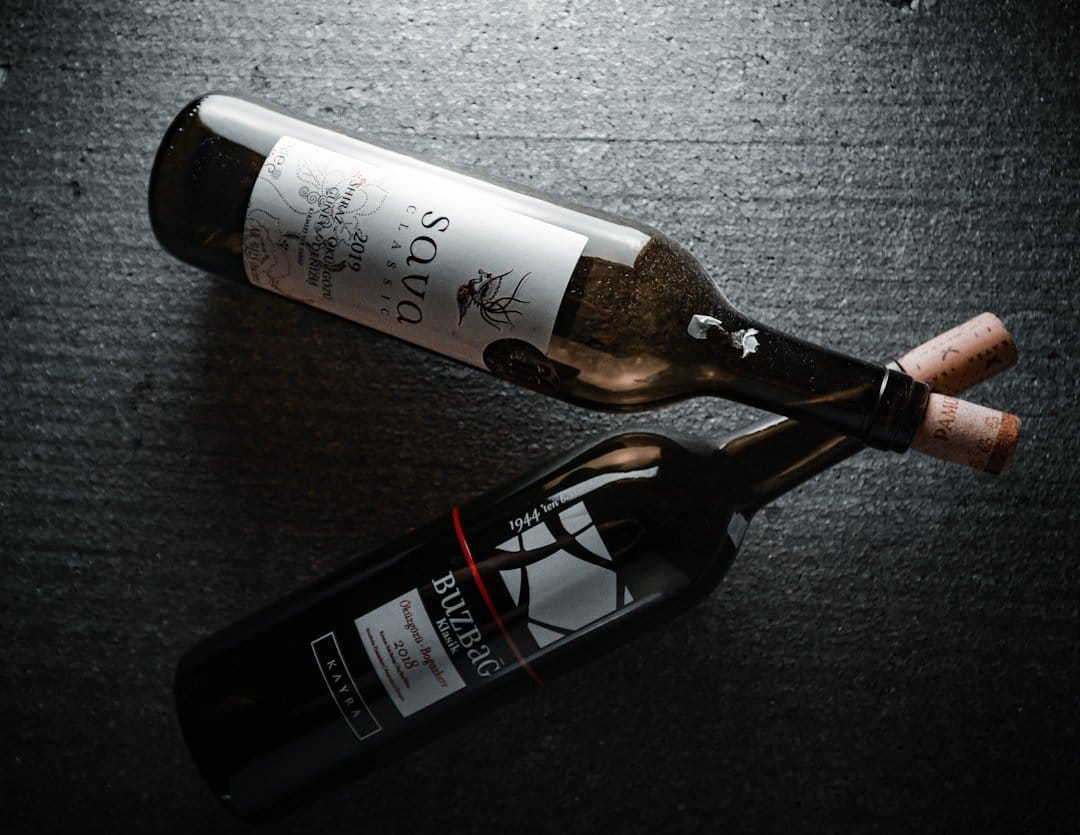
Decanter awards shake up Italian wine pecking order after Spain surge is the kind of headline that makes Italians defensive, but Spain earned this moment by making its wines easier to understand, sell, and pour.
I’m exactly the kind of Italian who should get defensive about this stuff.
Show me a headline like Decanter awards shake up Italian wine pecking order after Spain surge and my first instinct is to start free-associating about terroir, monks, volcanoes, my grandfather’s cellar, the Roman Empire, whatever buys me five minutes before I have to admit the annoying part: Spain earned this one.
Not because Italy suddenly forgot how to make wine. Please. We’d have to misplace half the peninsula for that to happen. Spain earned it because, right now, it looks more coherent. Easier to understand. Easier to sell. Easier to pour on a busy Saturday night when nobody wants a dissertation on subzones before appetizers.
And that matters more than Italians like to admit.
According to Decanter’s 2026 results, Spain won 160 top medals, up 52% year over year, and moved past Italy in the kind of competition buyers, sommeliers, importers, and wine obsessives actually pay attention to. Medal tables aren’t gospel. They are, however, a market signal. A loud one.
My hot take is simple: Italy didn’t lose because Spain got better. Italy lost because it keeps assuming brilliance explains itself.
Last month in New York, I watched a sommelier steer the table next to me toward a Spanish white in about 15 seconds. Clean pitch. Great with seafood, vegetables, spice, by-the-glass friendly. Done. If he’d tried to explain why some tiny Italian appellation was magical because of marl soils and a monk from 1432, they would’ve ordered a Martini and moved on.
Brutal. Also true.
Why the Decanter awards shake up Italian wine pecking order after Spain surge
The reason this hit a nerve is that the Decanter World Wine Awards isn’t some random sticker factory. In 2026, Decanter says the competition blind-tasted nearly 17,000 wines from 58 countries using 245 judges, including 63 Masters of Wine and 24 Master Sommeliers from 35 nations.
That scale doesn’t make it infallible. It makes it relevant.
Beth Willard, DWWA Co-Chair, called the judging process “one of the most demanding” she’s seen, and said wines that make it through to Gold, Platinum, or Best in Show are “worth seeking out.” Ronan Sayburn MS put it even more plainly: consumers use medals as reassurance, and the awards help “simplify the decision.”
That word should make every Italian producer sweat a little: simplify.
Because simplification is not exactly our national kink.
Italy has spent decades behaving as if complexity is always charming. Sometimes it is. Sometimes it’s just confusing. And when Spain overtakes Italy with 160 top medals after a 52% surge, that’s not just a fun stat for wine Twitter. It’s something retailers can put on shelves, importers can pitch on Monday morning, and sommeliers can use tableside without needing a laminated map.
That’s the real sting. Not the medals themselves. The downstream effect.
Spain’s advantage is not romance. It’s usefulness
Everybody defaults to the same lazy story about Spain. Rioja. Maybe Sherry if the room is feeling clever. But Spain’s real flex right now is usefulness.
I mean that in the least romantic way possible. Useful wines win.
The wines that move are the ones a sommelier can explain in one sentence, a retailer can recommend without sounding like a professor, and a normal person can order without feeling stupid. Spain has become very good at making wines that are clear without being boring. That’s harder than it sounds.
Verdejo is the cleanest example. Decanter’s recent coverage of World Verdejo Day described why people love it (zesty acidity, citrus flavours, herbal notes), but the bigger point is where it fits. It works with seafood, paella, salads, cheese, white fish, guacamole, even Asian dishes.
That’s not just tasting-note fluff. That’s restaurant utility.
You can pour Verdejo as an aperitivo. You can put it next to grilled fish. You can sell it to the Sauvignon Blanc drinker who wants to branch out without accidentally joining a cult. It’s approachable but not dumbed down. That’s the sweet spot.
And Spain built this on purpose.
According to Decanter, World Verdejo Day launched in 2013 after DO Rueda realized exports were weak even while domestic sales were strong. At the time, 85% of sales stayed in Spain and only 15% went abroad. So they did the radical thing: they marketed it.
By 2018, World Verdejo Day had become an international event across the US, Mexico, the UK, Spain, the Netherlands, and more. By 2025, DO Rueda exported 17,481,944 bottles, with Verdejo accounting for 88% of sales. The UK alone bought more than 1.3 million bottles.
That’s not an aesthetic victory. That’s a category embedding itself into real drinking behavior.
There’s a terroir story too, of course. Rueda’s vineyards often sit at 700 to 900 metres above sea level, which helps preserve acidity and aromatics. Great. Useful detail. Short explanation. Then back to dinner.
That’s the difference. Spain can tell the story without making you feel like you’ve enrolled in a seminar.
I’ve seen this over and over in Chicago, Miami, LA. Someone asks for “something interesting but not too weird,” and the Spanish section gets presented with confidence. The Italian section is often incredible, but occasionally written like the wine director is checking whether you deserve happiness.
Very beautiful. Very annoying.
Italy still has the deeper bench. It just makes you work for it
I’m not doing fake contrarianism here. Italy is not overrated. If anything, it’s still the deepest wine country on earth.
If I want nuance, texture, regionality, weird local grapes, volcanic tension, mountain freshness, sweet wines that taste like religion, I’m still reaching for Italy more often than anyone else. The issue is not quality. The issue is translation.
Decanter’s Top 50 Best in Show list makes that pretty clear. Out of nearly 17,000 entries, only 50 wines made the cut: around 0.3%. Those wines came from 15 countries, including Italy. So yes, Italy still shows up where the absolute top end lives.
But Italy rarely offers one clean national narrative. Spain can tell a simpler story across categories. Italy gives you brilliance in fragments: Barolo, Franciacorta, Etna, Friuli, Pantelleria, some absurd white from the mountains that tastes like alpine electricity. It’s all there. It’s just scattered like my suitcase after a month of pretending digital nomadism is glamorous.
And people do respond when they actually taste the wines.
At Decanter’s Fine Wine Encounter in New York, the DWWA Winners’ Bar drew more than 600 attendees at Manhatta and showcased 28 wines scoring 95 points and above. Among them were the Italian standouts Diego Morra, Del Comune di Verduno, Barolo 2021 and Donnafugata, Ben Ryé Passito di Pantelleria 2023.
That matters because this is where medals stop being abstract and become physical. People taste. People remember.
I had Ben Ryé in Palermo a couple of years ago with dessert and had one of those embarrassing food-writer moments where you go completely quiet because your brain needs a second. I’m not naturally gifted at silence. Usually I fill it with nonsense. That night I didn’t.
Italy’s best wines still hit harder emotionally. I believe that. But too often they arrive carrying too much context. Too much explanation before pleasure. Spain is better right now at giving people the pleasure first and the backstory second.

If Italy wants an answer, it probably isn’t Tuscany
If Italy responds to this moment by yelling “Brunello!” louder, we’ve learned nothing.
I love Tuscany. I will defend a proper Chianti Classico with my life and at least one dramatic hand gesture. But the smarter answer to Spain may come from places that feel less obvious and more useful.
Take Trentino.
In Decanter’s May 2026 regional piece, Trentino was described as a place still overshadowed by Alto Adige and known mostly for Trento DOC sparkling, while its still wines remain under the radar. Which is, frankly, the most Italian thing imaginable: hide some of your most compelling bottles behind category confusion, then act surprised when the world doesn’t instantly get it.
The numbers alone don’t scream seduction. Trentino has 10,232 hectares of vineyards. Pinot Grigio and Chardonnay account for more than half. Cooperatives produce 85% of the wine, and 75% of production falls under Trentino DOC. On paper, it sounds like a region invented by a guy named Marco in a beige office with very exciting spreadsheets.
But underneath that broad commercial layer is a much more interesting story: site-specific wines, dramatic mountain geography, and native grapes with real personality. The province stretches roughly 75km along the Adige valley, from near Salurno to Borghetto, with the Sarca valley to the west and the Dolomites rising to the east.
That is not generic. That is cinema.
And then there’s Nosiola, one of the most interesting native white grapes Italy still hasn’t fully sold to the world. Fresh, food-friendly, mountain-driven, distinctive. Exactly the kind of wine that could wake up a list. Yet outside wine circles, Trentino still gets flattened into “that Pinot Grigio area up north.”
This is the problem in miniature. Italy has under-marketed strengths hiding under boring language. We do not need to out-Spain Spain by turning every bottle into a globally optimized lifestyle SKU. Madonna no. But we do need to stop burying our best cards under labels and narratives that sound like homework.
Italian whites are better positioned than our marketing suggests
This is where I get a little evangelical, so bear with me.
If you pay attention to how people actually eat now (crudo, vegetables, shellfish, grilled fish, spice, long lunches that become dinner by accident), then Italian whites should be way more central to this conversation. Not as a side note. As a weapon.
According to Decanter’s report on the Northern Italy’s White Wines masterclass at Wines Experience London, Italy won 65 Gold medals in DWWA 2025. Out of those, 39 Golds went to whites and 25 to reds. That’s not a cute trend. That’s a message.
Even more telling, whites accounted for 60% of Northern Italy’s Gold medals. Vincenzo Arnese, who led the masterclass, said a new narrative is emerging around Italian whites, defined by “freshness, architectural structure and remarkable ageing potential.”
That phrase sounds a little dramatic, but honestly? It tracks.
The judging context matters too. Decanter says the 2025 competition assessed more than 17,000 wines from 57 countries with 248 experts, including 71 Masters of Wine and 23 Master Sommeliers. So when Italian whites start outperforming expectations there, I pay attention.
One bottle from that masterclass says a lot: Muzic Valeris Friulano, Friuli Venezia Giulia 2023, a 97-point Platinum wine. Friulano is exactly the kind of grape that should be easier to sell than it currently is. It has texture, identity, range, and enough personality to make people feel like they discovered something cool without needing to fake expertise.
And yes, that matters. Half of modern wine culture is pleasure. The other half is the tiny ego boost of ordering well.
I’ve seen this firsthand. In LA, I brought a Friulano to dinner with a table split between people who only thought they liked Sancerre and people who treated white wine like a warm-up act before “real” wine showed up. By the second course, everyone wanted to know what it was.
Not because I gave a lecture. Because it tasted alive with food.
That’s the maddening part. Italy is already making wines that fit the current dining mood: crisp, saline, mineral, flexible, lower on swagger and higher on actual usefulness. Abroad, though, we still market ourselves like every meal is ragù and every serious bottle is red.
That image had a good run. It now feels a little costume-y.
This fight will be won on restaurant lists, not in patriotic arguments
That’s why the whole Decanter awards shake up Italian wine pecking order after Spain surge story matters.
Not because medals settle who makes the “best” wine. They don’t. That argument will outlive all of us and several poorly decanted Barolos. It matters because awards influence what gets discovered, poured, and trusted.
Who gets the by-the-glass slot? Who gets the “trust me, you’ll love this” recommendation? Who ends up on neighborhood chalkboards, tasting menus, retail endcaps, and first dates where somebody wants to seem competent but not insufferable?
That’s the real battlefield.
Decanter is explicit that DWWA works as a guide for both consumers and trade professionals. Ronan Sayburn MS said medals help “simplify the decision” for consumers. Best in Show wines, Decanter notes, often get snapped up by collectors, the trade and enthusiasts alike. Awards create velocity. They shorten the path between quality and purchase.
Value matters too. DWWA’s Top Value Gold list now includes 35 wines under £15, up from 30 the year before. I love this detail because it cuts through the fake glamour. Prestige is nice. Accessibility is what actually moves culture.
If Spain is aligning quality, drinkability, and value more clearly, that’s a serious edge.
And here’s the part Italians should really sit with: Italy can absolutely play this game. Maybe better than anyone. We have the bottles. We have the regions. We have the food culture. We have the obsessive growers, the mountain vineyards, the volcanic whites, the sparkling wines, the bizarre local grapes that make sommeliers look like they’ve seen God.
What we don’t always have is the discipline to tell a cleaner story.
So no, Spain didn’t steal Italy’s wine crown. Italy left it on the table while explaining, at great length, why the table was historically important.
That works until it doesn’t.
The next decade of wine won’t belong to the country with the most mythology. It’ll belong to the country that makes a diner feel smart, curious, and just smug enough for ordering the right bottle. Italy still has everything it needs to own that future.
We just have to stop mistaking chaos for charm.
Sources
- Primary trending article
- Decanter World Wine Awards 2026 Best in Show: Top 50 wines
- Coming soon: Decanter World Wine Awards 2026 full results
- World Verdejo Day
- DWWA Winners' Bar: A standout destination at DFWE NYC
- Decanter magazine June 2026 issue: See what's inside