
EU Strikes AI Omnibus Deal: Ban First, Ease Rules
Brussels delays some AI obligations while outlawing nudification apps, signaling a tougher line on abuse and a lighter touch on builders.
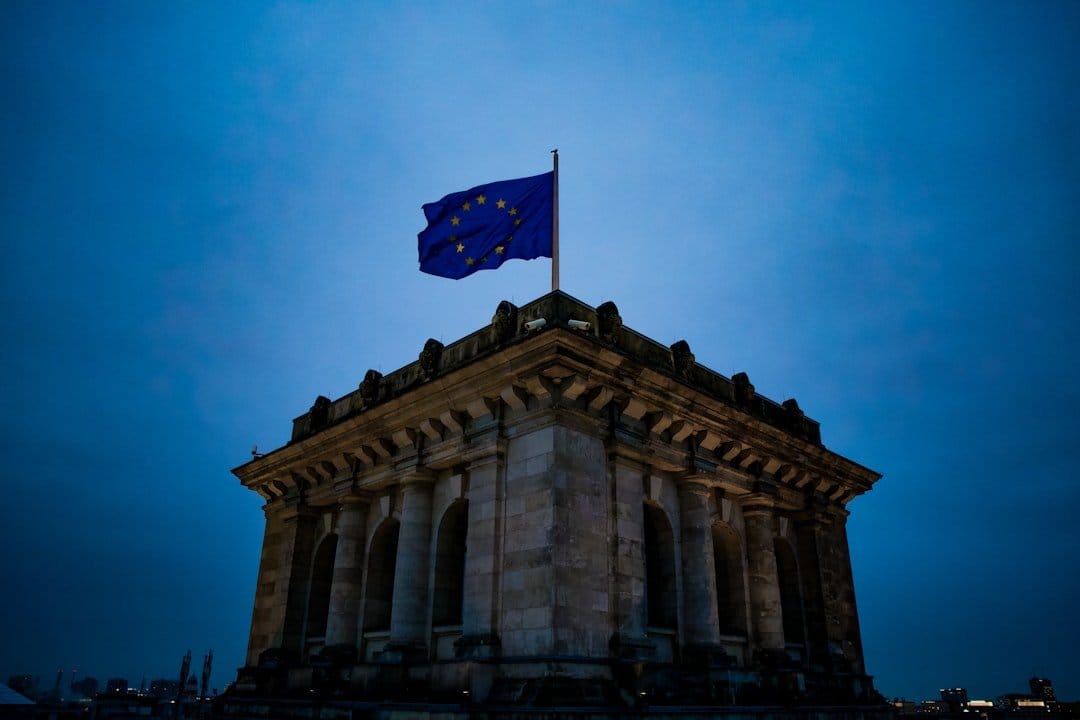
Brussels finally did the thing everyone claims it can’t do: act like a grown-up. It looked at AI and basically said, we do not need a compliance obstacle course for every company building useful industrial systems, but we absolutely should crush the creepiest products on sight.
That’s the real story behind EU strikes AI Omnibus deal banning nudification apps. Not the headline sugar rush. The logic underneath it.
The deal pushes back some high-risk AI obligations to 2 December 2027, and for AI embedded in products like lifts or toys, to 2 August 2028. At the same time, it adds a hard ban on systems generating non-consensual sexually explicit images, video, or audio, including AI-assisted child sexual abuse material. The Commission’s 7 May 2026 line was simple enough: simplify implementation, support innovation, keep safety and fundamental rights intact.
Honestly? Good.
Europe gets caricatured in the dumbest way on tech. Either Brussels is supposedly regulating banana geometry with a cursed ruler from 1998, or it folds the second industry starts whining. Reality is less memeable. Serious governments make trade-offs. This one actually makes sense.
If Europe is finally learning to regulate tech with a lighter touch where compliance is dumb and a heavier hand where harm is obvious, bene. About time.
Why EU strikes AI Omnibus deal banning nudification apps matters
The AI Omnibus deal is contradictory only if you think regulation has to be symmetrical.
It doesn’t.
Sometimes the smart move is to loosen rules where they’re duplicative and tighten them where the abuse is blatant. That sounds less cinematic than “Europe chooses freedom” or “Europe cracks down,” but policy is not a Marvel movie. Grazie a Dio.
According to the European Parliament’s 7 May 2026 release, lawmakers agreed to delay obligations for stand-alone high-risk AI systems until 2 December 2027, and for high-risk AI embedded in regulated products until 2 August 2028. At the same time, they added the new prohibition on non-consensual sexually explicit AI content.
That’s the balance right there.
Arba Kokalari, rapporteur from Parliament’s Internal Market committee, put it well in Euronews on 7 May 2026: “We are not weakening any safety rules; we are clarifying the rules for companies in Europe.”
Even better was the follow-up: “companies should not be regulated twice for one thing.”
Exactly.
Because the issue was never regulation in the abstract. The issue was the real-world experience of trying to apply the AI Act on top of existing sector rules without turning half of European industry into full-time document management departments. I’m pro-regulation when it protects people. I’m anti-bureaucratic cosplay when it mostly produces confusion, invoices, and twelve PDFs nobody understands.
The Commission framed the package the same way: simplify the rules, support innovation, preserve safety and rights. Europe is not walking away from the AI Act. It’s trying to make it survivable.
And if you want actual European AI winners instead of another beautiful policy deck, that distinction matters.
Nudifier apps are industrialized humiliation
Let me skip the fake nuance here: nudifier apps are vile.
Not because I’m prudish. I grew up in Italy. My family survived Berlusconi-era television. I have seen enough nonsense for several incarnations. The issue is consent. The issue is humiliation. AI has taken a form of sexual abuse and turned it into a scalable product category, which is such a bleak sentence that I had to stop after writing it.
The new prohibition covers systems generating non-consensual sexually explicit images, video, or audio. It explicitly includes AI-assisted child sexual abuse material. Good. There is no serious argument for leaving that in a legal gray zone.
What annoys me is when the “move fast” crowd acts like every intervention in AI is anti-innovation. No. Some products are just predatory. A tool designed to fabricate intimate images of someone without consent is not frontier tech. It’s a harassment machine with a nicer homepage and better onboarding.
DW reported on 7 May 2026 that the EU move came partly after incidents involving Elon Musk’s Grok, which users exploited to generate and spread sexualized deepfake content. That matters because it kills the idea that this is some fringe problem from the weirdest corners of the internet. If a mainstream AI product tied to one of the most famous men on earth can get dragged into this mess, we are well past edge-case territory.
There’s also something emotionally different about this category of harm. A younger cousin of a friend back in Lombardy got pulled into a rumor spiral at school over manipulated images. Not AI in that case, just edited photos and the usual adolescent cruelty delivered via WhatsApp like it was a public service. It wrecked her for months. Panic, no sleep, that horrible teenage feeling that everyone is looking at you even when it’s really one town and a handful of idiots. When I think about what generative AI does to that dynamic (faster, cheaper, more realistic) I stop being abstract very quickly.
This isn’t a morality panic. It’s basic human dignity.
The real villain was duplicate regulation
This is the part the lazy anti-EU crowd always misses.
The complaint was not “Europe regulates too much.” The complaint was “Europe keeps making firms prove the same thing twice in two different legal dialects.” Those are very different arguments, and if you actually build things, the difference is massive.
The ugliest fight in the AI Omnibus deal was over overlap between the AI Act and sector rules for products like machinery, medical devices, toys, lifts, and watercraft. According to Euronews on 10 May 2026, the final compromise only removed overlapping AI Act provisions for machinery products. The rest (medical devices, toys, lifts, watercraft) may be dealt with later through implementing or delegated acts, which is Brussels-speak for “yes, this is messy, we’ll send more paperwork later.”
Not ideal. But it proves the point.
Kokalari’s line about double regulation lands because companies genuinely did not know whether to comply mainly through the AI Act or through existing product-safety rules. If you’re building AI into an elevator, a smart industrial system, or anything that can break, hurt someone, or trigger liability, that uncertainty isn’t philosophical. It’s budget, launch timing, insurance, procurement, legal risk, all of it. Bureaucratic spaghetti is still spaghetti, even when served in a very elegant institutional bowl.
Cecilia Bonefeld-Dahl of DIGITALEUROPE praised the simplification. Fine. Industry groups were always going to celebrate it. The more useful reaction came from Guido Lobrano of ITI, who welcomed the postponement but warned that unresolved overlap remains “beyond industrial AI.” That’s the honest version. Better, not solved.
I have a founder’s allergy to paperwork that multiplies while you sleep. Last month in Milan I was helping a friend think through compliance questions for a B2B automation tool, and within twenty minutes we were in that very European nightmare where three frameworks seem to govern the same technical function from slightly different angles. My nonna would be offended by this comparison, but sometimes Brussels writes rules like a family recipe where four aunts each forgot one key ingredient because they assumed the others already told you.
If Europe wants AI champions, it cannot keep mistaking compliance complexity for virtue.
Yes, critics have a point
The nudifier ban was morally clear. It was also politically useful.
Those two things can be true at the same time.
According to EU Perspectives, the ban may have helped secure support for the more controversial machinery exemption. That analysis sounds plausible to me. If you’re trying to move a compromise through a divided system, attaching a headline-friendly consumer protection win to a technical simplification package is exactly the kind of move experienced negotiators make.
EUobserver was even more direct, arguing the Omnibus is “partly” a retreat and that industry pressure mattered in the delays and exemptions. I don’t think pretending otherwise helps. Europe’s institutions are not floating above politics in a cloud of moral superiority. They are power centers with constituencies, incentives, lobbying, timing problems, and a deep love of congratulating themselves after 4 a.m. negotiations.
Which, by the way, is what happened here. Euronews reported the final deal came together after all-night negotiations finishing around 4 am, after a failed attempt in April and disputes involving Germany’s handling of the file. If you’ve ever watched a European compromise come together at 4 in the morning, you know what that means: somebody got a real concession, and nobody got everything.
That’s why I’m not interested in the fake binary where this was either heroic citizen protection or shameful capitulation to industry. It was a genuine public-interest correction on deepfake sexual abuse, and it was also a real easing of pressure on some industrial sectors after sustained lobbying and practical complaints.
That’s politics. Benvenuti.

European digital sovereignty in practice
I’m tired of hearing “digital sovereignty” used like incense at tech events.
Sovereignty is not vibes. It’s not a tote bag at VivaTech. It’s not another LinkedIn sermon about Europe “waking up.” It’s the ability to set credible rules across a market of 450 million people, protect citizens, reduce friction for builders, and enforce all of it without asking Silicon Valley for permission.
That’s why EU strikes AI Omnibus deal banning nudification apps matters beyond the creeps-get-banned headline. DW quoted Marilena Raouna, Cyprus’ Deputy Minister for European Affairs, saying the agreement “ensures legal certainty and a smoother and more harmonized implementation of the rules across the Union, strengthening EU's digital sovereignty and overall competitiveness.” That’s the right frame.
Legal certainty is boring until you need it. Ask any founder, investor, or product lead whether they want one continental rulebook or 27 national improvisations with local quirks and contradictory interpretations. If Europe had tried to handle AI deepfake abuse country by country, it would have been useless. A harmful app crosses borders in one click. A platform can serve five markets before one national authority has finished deciding which font to use in the enforcement notice.
This is why I’m aggressively pro-federalist on tech.
I do not want a Europe where Paris does one thing, Rome another, Berlin stalls, Warsaw improvises, and then everyone acts shocked when the Americans and Chinese eat our lunch. I want stronger EU institutions, more centralized execution where it matters, and a pan-European tech strategy that treats scale as a prerequisite, not a nice-to-have. If that offends the little-Europe nostalgics, mi dispiace, but nostalgia is not industrial policy.
The Omnibus also includes EU-level sandboxes for testing AI systems before market entry, according to Euronews, plus simplifications for SMEs and even mid-caps up to €200 million turnover. That last bit matters more than people think. Europe’s future winners are not just tiny startups in coworking spaces and giant incumbents with government affairs teams. They’re also the scale-ups in the miserable middle, big enough to matter, small enough to get crushed by bad compliance design.
That middle is where European ambition usually dies.
I’ve seen founders survive product risk and market risk. What kills them is institutional ambiguity plus slower capital plus fragmented go-to-market. So when Brussels trims duplication while keeping a hard line on abuse, I don’t see weakness. I see the outline of an actual doctrine.
Europe may get tougher on abuse and softer on builders
I think this deal is a preview of what comes next.
The sequencing gives it away. Systems covered by the new nudifier-related ban need to comply by 2 December 2026. Mandatory watermarking of AI-generated content also kicks in from December. Meanwhile, stand-alone high-risk AI obligations move to 2 December 2027, and high-risk AI embedded in products move to 2 August 2028.
That is not random. That is Brussels saying the quiet part out loud: obvious consumer harm gets hit first; productive but complicated industrial use cases get more runway.
Honestly, that’s the right instinct.
Europe was never going to win at AI by copying the US and hoping vibes count as strategy. It was also never going to regulate every use case with identical intensity. The durable model is clearer than people admit: harsher bans for plainly abusive products, more sandboxing and more realistic timelines for useful systems, and tighter EU-level coordination so nobody has to reverse-engineer compliance across a patchwork of national interpretations.
You can already see the next fights coming. If this logic holds, Brussels will face pressure to apply the same approach to fraud bots, impersonation tools, voice-cloning scams, and the nastier forms of companion AI that blur into emotional manipulation. I don’t mean every chatbot with a fake therapist tone and a moon-sign feature. I mean products clearly designed to deceive, extort, or prey on vulnerable people.
That’s the real test.
Because banning sexual deepfake tools is politically easier than confronting business models wrapped in respectable words like “engagement,” “personalization,” or “creator monetization.” Once the harms get less embarrassing for politicians to say out loud and more profitable for powerful companies to defend, everyone suddenly rediscovers nuance. Very convenient.
What I want from EU leaders is simple: make it easier to build useful AI in Europe, and much harder to build abusive AI in Europe. Full stop.
Don’t sell every compromise as perfect. Sell it as serious.
That’s why I read EU strikes AI Omnibus deal banning nudification apps as more than a weird Brussels headline. I read it as a sign, maybe the first real one in a while, that Europe is learning to distinguish innovation from predation and regulate them differently.
As an Italian who grew up loving what Europe could be long before startup people turned “European sovereignty” into conference merch, I’ll admit something slightly embarrassing: I still get emotional when the EU acts bigger than its old insecurities. Not because Brussels is flawless. Madonna, absolutely not. Because I know what this continent looks like when it believes in itself institutionally instead of apologizing for existing.
Now comes the part that matters. Can Europe keep the same energy when the next abusive AI product is less embarrassing, more profitable, and defended by better-dressed lobbyists?
That answer will tell us whether this was a one-off compromise.
Or the start of a real European AI state.
Sources
- Primary trending article
- AI Act: deal on simplification measures, ban on “nudifier” apps
- EU agrees to simplify AI rules to boost innovation and ban ‘nudification' apps to protect citizens
- 'Companies should not be regulated twice': EU reaches tentative deal to simplify AI rules
- Imperfect AI Omnibus arrives. All eyes turn to Digital Omnibus
- Watch: Meloni's AI warning highlights Europe’s fight against ‘nudification’ apps