
TuttoWine in TUTTOFOOD Puts Italian Wine Back at Table
Milan’s latest fair strategy treats wine as part of the full Italian food ecosystem, where buyers, hospitality, and exports actually connect.
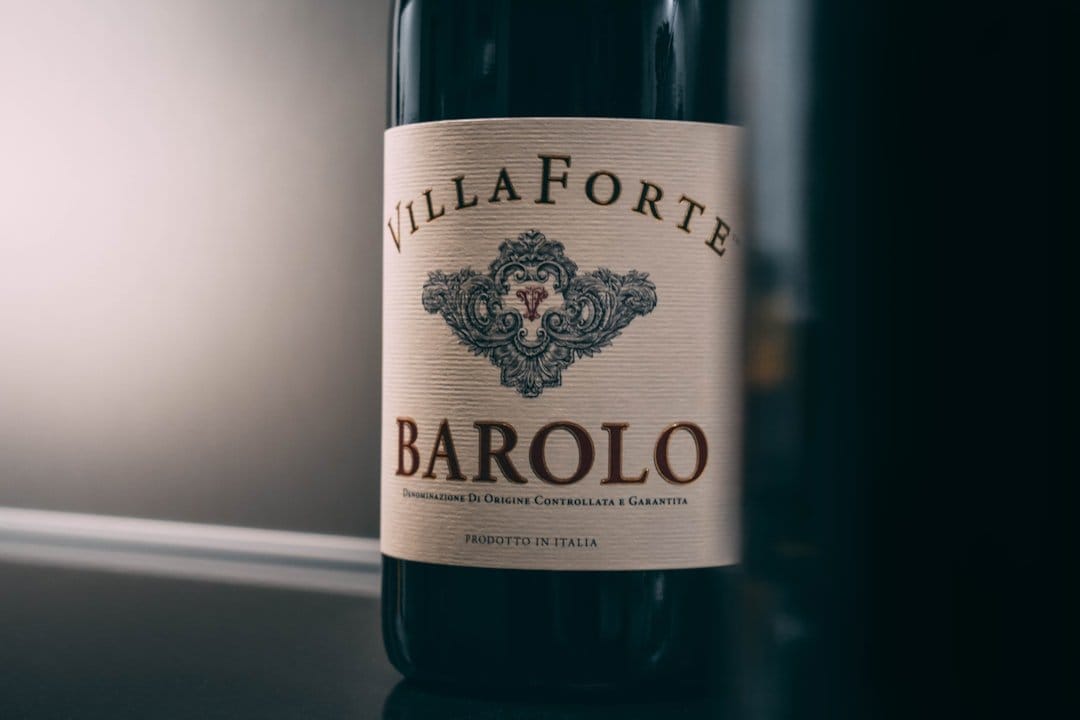
I’ve been to enough trade fairs to know when an industry is flattering itself. Wine is elite at this. It loves to act like a bottle of Barolo descended from heaven to be analyzed under fluorescent lights by men in navy blazers, instead of being opened next to tajarin, roast meat, and one uncle getting too loud about taxes.
So when Italy’s new TuttoWine push folds wine deeper into TuttoFood, my reaction was simple: finalmente.
Not because wine got smaller. Because somebody in Milan noticed the obvious. Wine does better when it stops pretending it lives above the table.
That, to me, is the real story here. Not “wine gets a new home.” Not “new fair launches in Milan.” The real story is that Italy is quietly admitting wine sells better when it’s attached to food, hospitality, distribution, and the messy reality of how people actually buy and consume things. Which, if you grew up in Italy, feels less like innovation and more like remembering basic civilization.
I say that as someone who loves wine enough to occasionally become annoying about it. I’ve done the tastings. I’ve stood in the serious room. I’ve nodded at phrases like “vertical expression” with a straight face. And still, the best wine moments of my life were never isolated. They were always attached to food, people, noise, bad chairs, great bread, and a table that got progressively more chaotic as the night went on.
My nonna could have explained this for free. Instead, apparently, we needed a trade fair strategy.
TuttoWine inside TuttoFood makes more sense than another wine temple
The interesting thing about TuttoWine is not that it exists. Italy already has plenty of places where wine can admire itself in public. The interesting thing is where it sits.
According to the official TUTTOFOOD 2026 release, this is Southern Europe’s leading food business platform, with around 5,000 exhibitors, 4,000 top buyers, and 100,000 professional visitors from 80 countries spread across 10 halls and 85,000 square metres. ICE, the Italian Trade Agency, is bringing more than 200 international operators from 36 countries, and nearly 30% of exhibiting brands are from outside Italy, according to Italianfood.net.
That’s not atmosphere. That’s traffic.
And traffic matters more than prestige if you’re trying to move product.
Wine fairs often confuse importance with usefulness. They create a vibe. Fine. I’m not anti-vibe. I’m Italian; half our GDP is probably vibes. But if I’m a producer from Abruzzo, Etna, or the Colli Piacentini, I don’t need another ornate shrine where everyone already speaks fluent tannin. I need the buyer from Toronto, the importer from Seoul, the hotel group from Dubai, the retail team from Germany, the foodservice operator from New York. Ideally all in the same building, while they’re already making sourcing decisions across multiple categories.
That’s the part some wine people hate admitting: access beats aura.
Milan is also the right city for this because Milan is not sentimental about commerce. Stylish, yes. Romantic, not really. Underneath the tailoring, it’s a logistics machine. Rho Fiera Milano is built for scale, meetings, flow, and dealmaking. You can practically hear the spreadsheets humming. If your goal is international business, plugging wine into a platform that already pulls in the full agrifood chain is just smarter than building another silo and hoping the world shows up out of respect.
Wine is being pushed back where it belongs: on the plate
The deeper shift here is cultural.
Wine is being repositioned as part of the Italian eating experience instead of a separate kingdom with its own coat of arms. Good. It should be. Italy gave the world one of its strongest food fantasies and somehow parts of the wine industry still act like they should be seated at a different table from the mozzarella.
The official hall plan makes the point pretty clearly. Alcoholic beverages are placed in Padiglione 6’s Mixology Experience, alongside Italian specialty foods and larger buyer itineraries. That is not random. It’s a commercial choice. Buyers are meant to encounter beverages in context, next to the products, occasions, and channels that actually help sell them.
That’s why Italy’s new TuttoWine push folds wine deeper into TuttoFood feels bigger than a normal launch announcement. It says wine no longer needs to be protected from adjacency. It can benefit from it.
And honestly, this is just Italy remembering itself. We do not drink in abstraction. We drink with lunch, with dinner, with salumi, with cheese, with arguments, with joy, with Sundays that start at one and somehow end at sunset. A bottle without a plate is often just foreplay.
The fair’s whole positioning is built around the entire supply chain: producers, distributors, retail, and Ho.Re.Ca. That matters because buyers don’t buy wine in a vacuum. They buy assortments. Menus. Pairings. Concepts. Margin structures. Stories they can actually pass on to customers who are deciding between a glass of Verdicchio, a negroni, and sparkling water because they have Pilates tomorrow.
On the opening day, TUTTOFOOD is hosting the International Forum of Italian Cuisine, backed by MASAF, to discuss cuisine as soft power and cultural diplomacy. Yes, that phrase sounds like it was approved by six ministries and one very stressed communications intern. But the substance is real. Italy is trying to sell not just products, but a model: taste, place, ritual, quality, identity.
That works better when wine is inside the picture, not floating above it.
I’ll admit something mildly embarrassing. For years, I bought into a little bit of wine exceptionalism myself. Not the full cosplay version, but enough. I treated the bottle room like the serious room and the kitchen like supporting cast. That was dumb. Some of the sharpest people in food are the ones who understand where the bottle sits on a menu, not just where the vineyard sits on a hill.
Milan isn’t building an event. It’s building a system
This is bigger than one fair.
What Milan is building with TuttoWine inside TUTTOFOOD looks a lot like consolidation, and I mean that as a compliment. Not finance-bro consolidation. Strategic consolidation. Italy deciding it would rather compete globally with integrated platforms than keep splitting attention across little kingdoms.
The political support makes that obvious. The opening featured Adolfo Urso, Minister of Enterprises and Made in Italy, and Francesco Lollobrigida, Minister of Agriculture, Food Sovereignty, and Forests. Ministers do not show up in force because the espresso is decent and the canapé game is strong. They show up when something starts to matter as industrial policy.
Urso called agrifood a cornerstone of Italy’s production system. In Italianfood.net, he described it as one of the five pillars of Made in Italy and cited more than €70 billion in exports, nearly 900 PDO and PGI-certified products, and over €20 billion in generated value. That is not wine-world poetry. That is state-level economic language.
Then there’s the machinery behind the fair itself. Italianfood.net points to the alliance between Fiere di Parma and Fiera Milano, combining Cibus expertise with Milan’s international reach and logistics infrastructure. That’s the real power move. Parma knows food. Milan knows scale, access, and international business theater. Put those together and you get something much stronger than an annual exhibition.
Antonio Cellie, CEO of Fiere di Parma, said the ambition is to create “a permanent platform to discuss and build the future of food.” That phrase matters. Permanent platform. Not annual pilgrimage. Not category pageant. Not one more excuse for the industry to eat very well while pretending the old model still works.
Because the competition here isn’t domestic. It’s global. The official TUTTOFOOD release explicitly says the event helps Italy compete with fairs that have historically been world leaders in the sector. Translation: Italy knows it cannot win by being fragmented and charming. Charming is lovely. Charming does not automatically close distribution in Asia.
I’ve seen the same thing in tech. Smaller players love independence until they realize users do not care about internal politics. They care about utility. Buyers are the same. They do not care which Italian sub-sector wanted its own spotlight. They care where they can solve the most problems in the least amount of time.
That’s what this really is. A utility play.

If Italy’s new TuttoWine push folds wine deeper into TuttoFood, this is what that looks like on the ground: buyers moving between food, beverage, and hospitality in one ecosystem instead of five disconnected ones.
This is export anxiety, but organized
Let’s not pretend this shift is happening because everyone suddenly became enlightened.
Usually when an industry starts integrating this aggressively, pressure is forcing honesty. Right now the pressure is obvious: exports, tariffs, softer demand in some markets, geopolitics, and the general feeling that nobody has money for inefficient outreach unless they’re LVMH. And even then, buona fortuna.
According to ITA President Matteo Zoppas, cited by Italianfood.net, Italy’s agrifood exports rose 5% in 2025 to €72.5 billion. Great. But the same report says exports to the United States fell 21.9% in the first two months of 2026 because of new tariffs. If you’re an Italian producer reading that, you are not in the mood for ornamental trade fair strategy.
You want buyers. New markets. Faster conversations. More shots on goal.
That’s where an integrated platform starts to look less like branding and more like survival. If I’m a mid-sized producer in Friuli or Sicily, I probably cannot afford to chase fragmented international opportunities through ten separate channels and three different event calendars. I’d rather be where buyers are already looking at cheese, pasta, pantry goods, beverage programs, foodservice formats, and hospitality concepts. Wine inside that environment gets context and cross-selling energy. Wine on its own gets judged on its own.
And yes, I know some people in the wine world hear that and recoil like I insulted their grandfather’s vineyard. Relax. I’m not saying wine loses identity when it’s integrated. I’m saying identity without commercial fit is expensive theater.
If I were running a producer with limited travel budget, I’d much rather be where buyers are solving full-category sourcing problems than where everybody is repeating the word terroir like it’s a meditation app. Terroir matters. But invoices matter too. My landlord in Brooklyn has never once accepted minerality as payment.
Buyers don’t think in categories anymore
This is the part wine still hasn’t fully metabolized.
TUTTOFOOD’s own trend analysis, based on more than 1,500 new products, says the food of the future is hybrid. According to the official release, consumers are no longer looking for simple products but for “combinations of meaning.” Slightly ridiculous phrase. Also completely true.
People do not buy in neat little category boxes anymore. They buy identity, convenience, wellness signaling, indulgence, portability, novelty, nostalgia, and whatever lets them feel a bit more interesting than they did ten minutes earlier.
The four trends TUTTOFOOD highlights tell the story:
- Premiumization of tradition
- Global street food
- Mainstream plant-based
- Functional wellness
Look at that list and tell me wine still gets to behave like it lives outside the same consumer universe. It doesn’t.
A buyer might come to Milan looking at assortments shaped by Korean flavors, plant-based demand, premium heritage products, and flexible foodservice formats. In that world, wine wins by being nearby, legible, and connected to the experience. Not by standing in a separate building demanding a coronation.
The Italianfood.net coverage of Eurovo makes this concrete. Eurovo showed up with lactose-free and sugar-free products, a vitamin D-enriched milk alternative, and foodservice tools like Tuorlo 33 and Cuisine Royale. Not glamorous. Not romantic. Very useful. Which is exactly the point. Buyers are not shopping for abstract categories. They are shopping for solutions.
That’s the commercial atmosphere wine is walking into now, and honestly, good.
Because wine also needs to make sense inside hybrid consumption. It needs to sit next to premium tradition, yes, but also next to modern hospitality, lower-alcohol occasions, cocktail programs, ready-to-eat formats, and retail shelves where the customer’s basket contains burrata, chili crisp, frozen dumplings, alcohol-free aperitivo, and one “special bottle” for Friday night. The category wall already collapsed. Wine is just late to the funeral.
I’m not saying every bottle needs to become lifestyle merch. Dio ce ne scampi. I’m saying the winners will understand that buyers are curating experiences, not restocking isolated boxes. If your wine only makes sense in a specialist vacuum, that’s not prestige. That’s a distribution problem wearing a scarf.
The smartest Made in Italy story is still the whole table
The best Italian stories are never about one item in isolation. They’re about systems of pleasure. Territory, ingredients, recipes, memory, hospitality, design, ritual, and now, obviously, content. The whole thing.
That’s why one of the smartest examples at TUTTOFOOD 2026 isn’t a bottle at all. It’s the joint narrative from the Mozzarella di Bufala Campana PDO and Pasta di Gragnano PGI consortia, reported by Italianfood.net. That is exactly how you sell Italy in 2026. Not as a museum of protected categories, but as a living table where products make each other stronger.
Their stand isn’t just throwing samples at people like a desperate airport kiosk. It tells a story through dishes:
- Rigatone di Gragnano PGI cacio e pepe with buffalo ricotta and truffle
- Linguine di Gragnano PGI with pesto and potatoes finished with mozzarella for creaminess
- Anellini di Gragnano PGI with Barolo-braised beef and mozzarella
That last one alone should end half the category wars. Bureaucrats think in silos. Eaters don’t.
That’s the model. Plate-level storytelling.
And it doesn’t stop at the stand. The initiative extends into video recipes on social media, connecting the physical fair to digital life. Again: smart. Buyers live in B2B reality, but brands now live in content ecosystems too. The strongest stories move from the fair floor to Instagram to restaurant menus to export decks to actual dinners. If wine wants to thrive inside this system, it has to plug into the same current.
That’s also why the official messaging around TUTTOFOOD keeps coming back to Italian cuisine as cultural diplomacy. Yes, the phrase sounds a little bureaucratic. But the truth under it is solid: Italy’s strongest export story is not one bottle, one cheese, one pasta shape, one olive oil. It’s the coherence of the whole table.
Which means TuttoWine only really works if it accepts a supporting role inside a larger cast. An important supporting role, certo. But still part of an ensemble. Producers who insist on category purity may be confusing prestige with relevance, and those are very different things. One gets admiring nods. The other gets reordered.
I feel this personally every time I host dinners in New York, Austin, Lisbon, wherever I’m temporarily pretending I have a routine. People almost never remember the wine first. They remember the whole moment. The pasta. The playlist. The olive oil somebody asked to photograph. The conversation. Then the bottle, because it fit the night.
Wine wins when it belongs.
That’s why I think Italy’s new TuttoWine push folds wine deeper into TuttoFood in a way that’s actually healthy. If this works, it won’t be because Italy made wine feel more important. It’ll be because Italy made wine useful again, to buyers, restaurants, retailers, hospitality groups, and to the global fantasy of the Italian table.
And that’s the real test now. Is the wine world ready to stop acting like the main character?
Because the next decade of Italian wine probably won’t belong to whoever talks best about vineyards. It’ll belong to whoever understands where the bottle sits when dinner actually hits the table.
Sources
- Primary trending article
- TUTTOFOOD 2026 OFFICIALLY OPENS
- TUTTOFOOD 2026 SETS THE COURSE FOR GLOBAL AGRI-FOOD TRENDS
- TUTTOFOOD 2026: CUCINA ITALIANA E CUCINE DI TUTTO IL MONDO PER DARE RISPOSTE A UN SISTEMA ALIMENTARE SOTTO PRESSIONE
- PRESS KIT CONTENT
- Tuttofood 2026 Opens With Record Global Turnout and Italian Food Export Momentum