
Spinach in Mouse Eyes? The Dry Eye Science Is Real
A real Cell 2026 study found spinach-derived nanoparticles helped mouse eyes make useful molecules under light for dry eye research.
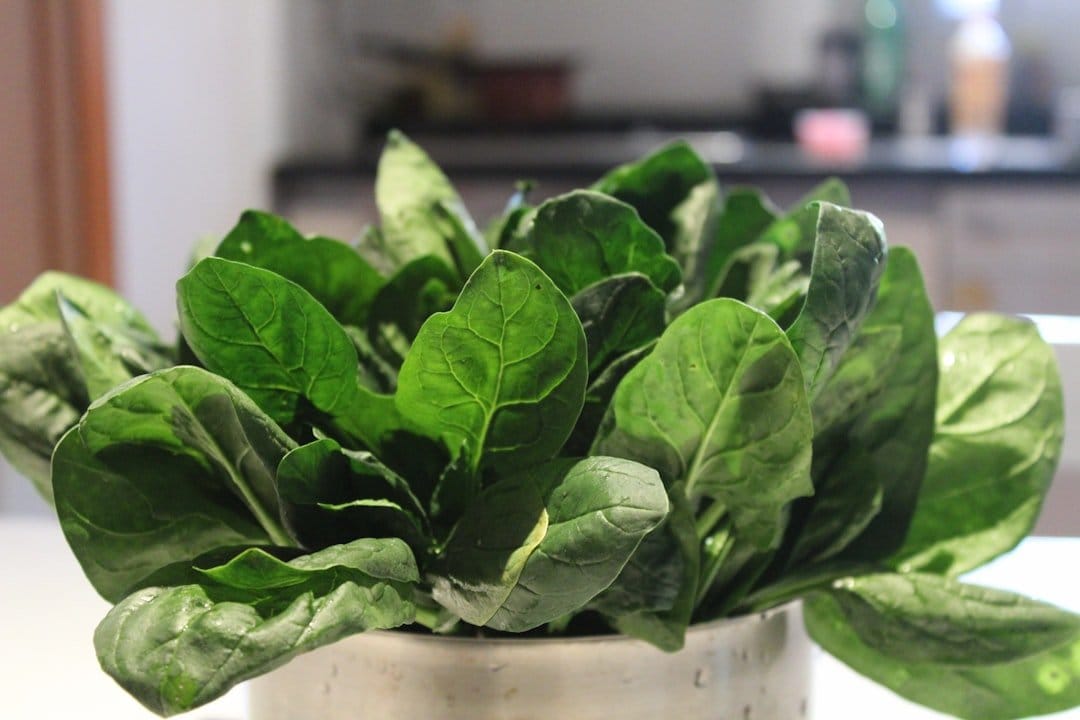
Mouse eyes photosynthesize after spinach extracts transplanted into animals sounds like a joke, but it is a real Cell 2026 study from the National University of Singapore exploring a possible new approach to dry eye disease treatment.
Scientists got mouse eyes to use spinach machinery and light to make useful molecules. If that sentence does not sound fake to you, congratulations, you have spent too much time online.
My first reaction to the headline, Mouse eyes photosynthesize after spinach extracts transplanted into animals, was not “wow, the future.” It was more like: finally, salad-based medicine. But once you get past the meme, the idea is surprisingly grounded. This was not done to make mice into tiny basil plants. It was aimed at dry eye disease, which sounds minor until blinking feels like sandpaper.
I have had my own low-budget founder version of dry eye: too many hours staring at a laptop, too much recycled air, too many flights, not enough sleep, and the classic lie that one more espresso will somehow fix biology. Last month my eyes felt like someone had seasoned them with grated Parmigiano. So when I saw this study, I laughed. Then I kept reading.
And the more I read, the more I had that very specific feeling modern science gives me sometimes: this sounds ridiculous, which usually means it might be important.
The Cell 2026 Mammalian Eye Photosynthesis Study Is Real
This is not some weird Reddit rumor with a dramatic thread title and zero receipts. The paper is real. It was published in Cell on 15 May 2026 as “Transplanting Light-dependent Reactions for Mammalian Eye Photosynthesis” from David Leong’s lab at the National University of Singapore.
With a story like this, you want names, institutions, and a DOI before letting your brain believe it.
The basic move was wild but not sloppy: the researchers took photosynthetic machinery from spinach, packaged it into what they call LEAF nanoparticles, and delivered it to mammalian corneal cells. Under light, those cells could then generate ATP and NADPH for several hours. That is the part that matters. Not green goo in an eyeball. Useful cellular chemistry.
Nature covered it too. Corey Allard, a cell biologist at Harvard, called it “really cool” and noted that efforts like this can look like a party trick at first.
A lot of genuinely new science shows up wearing clown shoes. Early CRISPR sounded like sci-fi. mRNA was “that niche platform” until it was not. The first version of any big idea usually looks a little embarrassing because nobody has figured out the polished narrative yet.
That is what this spinach-eye result feels like.
The Best Detail: This Started With Grocery Store Greens
My favorite part of the whole story is almost stupidly ordinary. According to Nature, Kuoran Xing, a bionanotechnologist at NUS, went to FairPrice in Singapore and bought leafy vegetables to test.
Elite research, supermarket edition.
There is something satisfying about that because biotech often gets narrated like every breakthrough begins in a hyper-controlled white room with lasers and dramatic blue lighting. Sometimes it does. Sometimes a scientist just goes to the store and starts with spinach.
The team compared spinach, red spinach, water spinach, and lettuce. Spinach won because it yielded more of the usable photosynthetic machinery they needed.
What they extracted were chloroplasts, and more specifically exposed the thylakoid grana inside them, the stacked membrane structures where the light-dependent reactions of photosynthesis happen. They were not pouring blended salad into mouse eyes and hoping for viral engagement. They isolated the part of the plant system that actually does the light-harvesting work.
That is why this is more interesting than the headline makes it sound. It is not random. It is modular.
And honestly, that is how a lot of good discovery works. Not as one giant elegant leap, but as somebody asking a question that sounds dumb for ten seconds. What if the useful thing is not the whole plant, but one subroutine inside the plant? What if that subroutine still works somewhere else?
That is not unserious. That is the beginning of a real method.
No, the Mice Did Not Become Plants
Let’s kill the dumb interpretation immediately. The mice did not turn into salad. Nobody made a chlorophyll rodent. This is not a vegan Pokémon origin story.
What happened is much narrower and much smarter: the researchers transplanted a limited light-dependent reaction into mammalian corneal cells.
That distinction matters because people hear “photosynthesis” and imagine a full plant process being installed into an animal like a software update. Not even close. The team took the relevant photosynthetic structures from spinach, wrapped them into LEAF nanoparticles, and those particles were then internalized by cells. Under light, the cells produced ATP and NADPH, which are exactly the kinds of molecules stressed cells want more of.
That is a very different claim from “the eye became a leaf.”
David Tai Leong put it bluntly in Nature.
We are stealing the entire technology that has evolved over millions of years in plants and are able to transplant it into the animal system.
There is precedent for this kind of biological theft. The inspiration here included sea slugs that can steal photosynthetic machinery from algae, a phenomenon called kleptoplasty. Sea slugs are one of those creatures that sound invented, but they are real, and they have already been doing weird cross-kingdom borrowing better than most startups do innovation.
The best mental model is not “animal becomes plant.” It is more like: borrow one absurdly useful capability from another branch of life and use it where it helps.
We already do versions of this all the time. CRISPR came from bacteria. Plenty of drugs come from fungi, microbes, venoms, and chemical compounds that sound like dares. The spinach part feels extra funny only because the image is too good.
It is hard to keep a straight face when the source material is basically lunch.

Why This Matters for Dry Eye Disease Treatment
The reason this is not just a biotech party trick is simple: dry eye disease is miserable, and current treatments are not exactly perfect.
According to the NUS release, dry eye affects more than 1.5 billion people worldwide. That number is absurdly high for a condition many people still talk about like it is a small annoyance. It is not. Severe dry eye can mean chronic pain, blurred vision, light sensitivity, and corneal damage. Reading hurts. Screens hurt. Air conditioning hurts. Existing in modern life starts to feel like a personal attack.
Medicine often underrates non-fatal suffering. If something does not kill you dramatically, people treat it like a minor inconvenience. But if a condition quietly ruins hours of your day, every day, that matters.
Dry eye also has a nasty biological loop behind it. Inflammation in the cornea generates reactive oxygen species, or ROS, which damage cells. Normally the eye can neutralize those with antioxidants, and NADPH helps drive that protective system. But when inflammation gets bad, ROS overwhelms the eye’s defenses, causing more damage, which creates more ROS, which causes more damage.
This is where the spinach approach gets interesting. Instead of only blocking one inflammatory pathway, the idea is to give corneal tissue a new way to generate the chemistry it needs to defend itself. Specifically, to make NADPH independently of the cell’s usual production pathways. That is clever because inflamed tissue is already struggling. Asking it to fix itself using the same broken machinery is not always a winning plan.
Sometimes you do not optimize the old system. You import capacity.
Why LEAF Nanoparticles Might Beat the Usual Dry Eye Drugs
The standard dry eye treatments are not useless. They help plenty of people. But they also come with the usual pharmaceutical menu: high cost, side effects, and incomplete relief. The NUS release specifically points to cyclosporine A (Restasis) and lifitegrast (Xiidra) as examples of current treatments that target inflammation through defined molecular pathways, while noting that cost and adverse effects can limit long-term use.
So the interesting thing about LEAF nanoparticles is not just that they are novel. It is that they represent a different philosophy.
Most modern drug development likes familiar targets because familiar targets are legible. They fit existing models. They are easier to explain to investors, regulators, and everyone else who gets nervous when biology stops behaving politely. If inflammation is the problem, you build another anti-inflammatory. That is the playbook.
This spinach-based approach says: maybe do not just suppress damage. Maybe give the tissue access to chemistry it does not normally have.
The LEAF system packages the spinach thylakoid grana into nanoparticles and delivers them as eye drops. Then ambient light powers the reaction. No bulky implant. No battery pack. Just eye drops and normal light.
And in preclinical testing, the results were not subtle. According to NUS, the treatment reversed corneal damage to near-healthy levels within five days and outperformed Restasis in those models.
There was also a practical detail worth noting: the dose was low enough that it did not interfere with color perception.
The Bigger Idea Is Cross-Kingdom Medicine
This is the part I cannot stop thinking about.
If Mouse eyes photosynthesize after spinach extracts transplanted into animals sounds ridiculous, that is partly because we still like our categories neat. Plants do plant things. Animals do animal things. End of story. But biology has never cared about our aesthetic preferences. Nature is full of hacks, theft, repurposing, weird symbioses, and systems that would sound made up if they were not already happening.
So the bigger implication here is not “haha, spinach eye drops.” It is that medicine may be moving toward importing capabilities, not just tweaking existing human pathways.
We are used to thinking of treatment as repair: block the bad signal, replace the missing molecule, suppress the inflammation, maybe patch the tissue. This points at something more radical but also more practical. Find a useful mechanism somewhere else in life. Package it. Deliver it. Let the body use it.
Borrow the trick that works.
That is how smart people operate in every other field too. The founders who insist on inventing everything from scratch are usually the ones heading toward a wall at speed. Actual intelligence is often just knowing when not to rebuild what already exists.
Evolution has been shipping product for a few billion years. The least we can do is steal shamelessly.
And yes, “cross-kingdom biology” sounds like the title of a conference panel attended by six people and one guy in shoes made of algae. But if this works, nobody is going to care that it once sounded goofy. They will care that it helped people whose eyes hurt every single day.
So Is This a Gimmick or a Breakthrough?
Probably both, at least for now.
The headline is absurd. It deserves to be absurd. Mouse eyes photosynthesize after spinach extracts transplanted into animals is one of those lines that sounds engineered for maximum internet damage. But underneath it, there is a serious Cell 2026 mammalian eye photosynthesis paper, a real mechanism, and a very practical target in dry eye disease treatment.
That combination is exactly why this is worth watching.
The best weird science usually looks a little stupid before it looks inevitable. This one has all the right ingredients: a headline people laugh at, a mechanism specific enough to survive scrutiny, and a use case that solves something painfully unglamorous.
If you had asked me a year ago whether spinach-derived photosynthetic machinery wrapped in LEAF nanoparticles could become a plausible therapy for inflamed mammalian corneas, I would have assumed you were joking. Yet here we are.
And honestly, this is the shape of more breakthroughs than people realize. Not clean, linear, obvious progress. Just somebody finding a bizarre trick in one corner of biology and asking if it can survive transplantation into another.
Sometimes the future shows up looking elegant.
Sometimes it shows up looking like spinach in an eye dropper.
I would not bet against the eye dropper.
Sources
- Primary trending article
- Eyes that photosynthesise: NUS scientists plant a cure for dry eye disease
- Eyes that photosynthesise: NUS scientists plant a cure for dry eye disease
- David Leong Lab – Welcome to our world of Nano-biology and New Biomaterials
- Publications – David Leong Lab