
EU AI Act Retreat Shows Lobbying’s Real Leverage
Brussels didn’t just bend to Big Tech. The AI Act rollback reveals Europe’s deeper problem: weak state capacity behind bold rules.
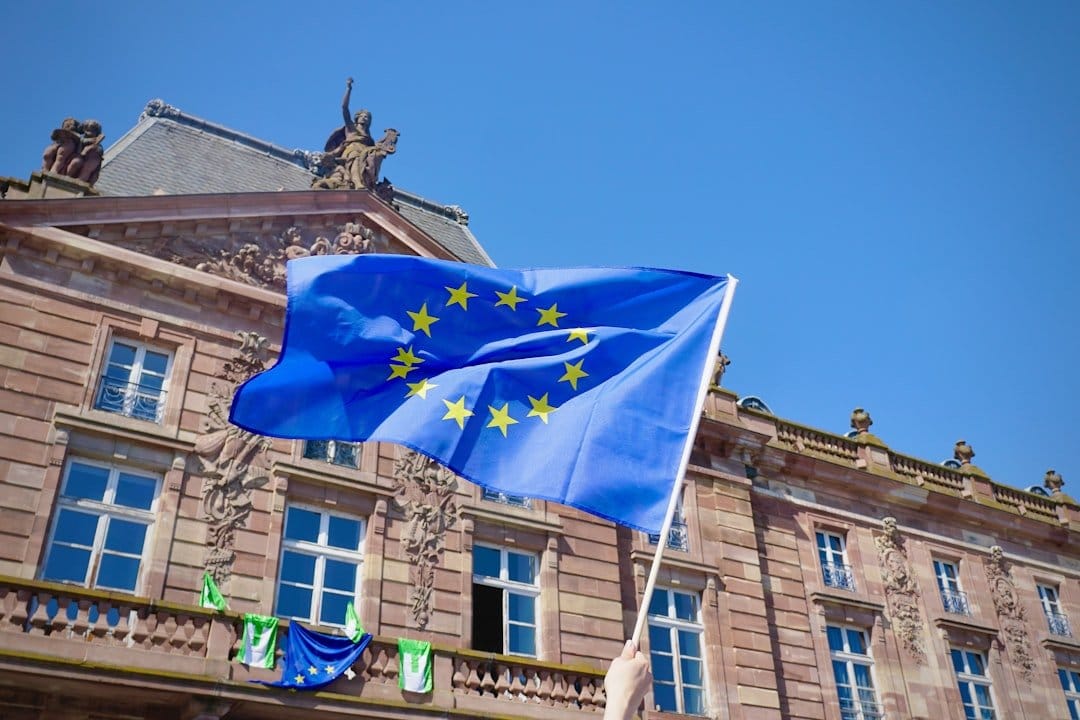
EU weighs watered-down AI Act after fierce Big Tech lobbying is the headline, but it misses the deeper problem. Brussels spent years selling the AI Act like Europe had finally figured out how to govern frontier technology with confidence. Then, right before implementation got hard, it blinked.
The lobbying was real. Of course it was. If there is a giant pile of regulatory risk on the table, companies are going to show up with lawyers, trade groups, and a face like who, me? But the bigger story is less flattering and more European: lobbying works best when the state behind the law is still half-built.
The compromise says plenty on its own. According to MLex on 7 May 2026, lawmakers reached a deal after about 10 hours of talks, with an Aug. 2 milestone hanging over them, and pushed high-risk AI obligations delayed from 2 August 2026 to 2 December 2027. That is not some technical tweak buried in annexes. That is Brussels admitting, quietly and in legalese, that writing the flagship AI law was easier than building the machinery to live with it.
That is the part that stings, because the ambition itself was right. A risk-based approach AI Act made sense. The problem is that ambition without capacity turns into theater, and theater is catnip for carve-outs.
If Europe wants the moral authority of strong AI rules, it also has to pay the industrial and institutional bill. Compute. Procurement. Enforcement. Standards. Legal clarity. Startup support. Actual common strategy across 27 member states. Otherwise every implementation deadline becomes a hostage situation.
The AI Act hangover arrived fast
When the AI Act entered into force on 1 August 2024, the European Commission described it as a uniform framework across all EU countries and part of the EU’s push to become the global leader in safe AI. The structure looked elegant on paper: minimal risk, transparency risk, high risk, and unacceptable risk.
Spam filters and video games were largely fine. Chatbots needed labels. Medical software or hiring systems faced stricter obligations. Social scoring was banned. It was neat, legible, and very Brussels.
Then reality arrived.
Less than two years later, lawmakers were back in the room softening parts of the law. MLex reported on 7 May 2026 that the Omnibus compromise changed governance, revised product-safety interactions, and delayed the core high-risk obligations until 2 December 2027. The official line was that this preserved the AI Act while making compliance easier.
Maybe. But when a flagship law needs emergency simplification before its most important obligations even land, that is not just healthy iteration. It is a sign that the architecture was politically celebrated before it was operationally ready.
A founder in Brussels recently put the problem in plain terms: his company could handle the AI Act if the rules stayed stable for 18 months. His real problem was not regulation itself. It was uncertainty. Every investor call now included the same question: which version of the rules are we pricing in? For startups, uncertainty is often worse than strictness. Strictness can go in a spreadsheet. Political improvisation cannot.
That is the real hangover. The EU AI Act amendments exposed that the law was never as politically settled as it looked. It held together while everyone was celebrating values. It got messy when those values collided with actual products, actual liability, and the fear that Europe might regulate itself into another decade of imported infrastructure.
Big Tech pushed, but Europe Inc. pushed too
The lazy version of this story is Silicon Valley versus Brussels. Nice headline. Incomplete diagnosis.
A lot of the pressure came from European industry, especially manufacturers worried about getting crushed by overlapping rules. The clearest example is VDMA, the German and European mechanical engineering association. In a 27 April 2026 statement published via EURACTIV PR, Hartmut Rauen, VDMA’s deputy executive director, said the AI Act was causing uncertainty and delaying the urgently needed widespread adoption of industrial AI.
That matters because it did not come from OpenAI, Meta, or Google. It came from the industrial base Europe keeps saying it wants to protect.
Rauen also called the AI Omnibus the last chance to make the law workable for SMEs and to avert burdensome double regulation for AI applications in machinery. That phrase, VDMA double regulation, captures the fight in miniature. Not an abstract complaint about innovation, but a concrete fear that AI rules were stacking badly on top of machinery law and product-safety obligations.
VDMA is not a niche startup group. It represents 3,500 companies, around 3 million employees in the EU-27, and about €900 billion in turnover. According to the same statement, roughly 80% of the machinery sold in the EU comes from a manufacturing plant in the domestic market. That is core continental industry saying the legal architecture is getting in the way.
So the phrase EU weighs watered-down AI Act after fierce Big Tech lobbying is not wrong. It is just incomplete. Big Tech was there. European industrial lobbies were there too. This was Europe arguing with itself about whether it wants to be a rule-maker, an industrial power, or somehow both without paying fully for either.
“Simplification” is doing a lot of work
Simplification is not inherently bad. If a law is duplicative or incoherent, fix it. But suspicion is warranted when simplification becomes a universal deodorant sprayed over a political mess.
The Parliament’s line, as reported by MLex on 7 May 2026, was that the deal kept the AI Act’s risk-based structure while making compliance easier. In theory, that sounds ideal. In practice, it can mean two very different things: clarifying obligations, or carving out politically sensitive categories because nobody had the stamina to finish the harder fight.
Luca Bertuzzi, writing for MLex on 30 April 2026, put it more bluntly. He argued that the earlier failed talks showed the limits of the Commission’s digital simplification agenda, and that the AI Omnibus risked undermining both regulatory clarity and EU credibility without significantly easing compliance burdens.
That is the nightmare scenario. Weaken the signal, keep the confusion, and still fail to solve the operational pain.
CEPS had already mapped the structural problem in its analysis of the AI Act and the wider EU digital acquis. It looked at overlaps with 14 pieces of legislation and flagged eight key areas where inconsistencies could emerge, including legal terminology, sector-specific interaction, product safety integration, data protection consistency, risk classification loopholes, and enforcement weaknesses.
Because the AI Act was always a horizontal law trying to sit on top of sector-specific regimes, those interfaces mattered enormously. Health, machinery, product safety, and data protection all had to fit together. If they did not, companies would not get elegant governance. They would get legal uncertainty and expensive delay.
The more operators talk about this, the clearer one point becomes: legal coherence is itself a competitive asset. If companies cannot tell how EU AI regulation simplification interacts with product law, they delay. If they delay, incumbents lobby. If incumbents lobby, politicians improvise. Then the cycle starts again.
The loopholes are where trust dies
Industry was not the only side complaining. Consumer groups came out swinging too. According to MLex on 7 May 2026, BEUC warned that the simplified rulebook creates dangerous loopholes and rolls back key consumer protections.
That is not fringe activism. It is a serious warning from a mainstream European consumer organization. BEUC said machinery are exempt from higher scrutiny and that reduced registration requirements could weaken transparency. On paper, that sounds technical. In practice, technical exemptions are often how accountability disappears quietly.
The original promise of the AI Act was never just paperwork. According to the Commission’s 1 August 2024 explainer, high-risk systems were supposed to meet strict obligations including risk-mitigation systems, high-quality of data sets, clear user information, human oversight. That was the point of the law: to turn abstract values into operational duties.
Trim categories or soften scrutiny around sectoral interactions, and the burden of risk shifts. Usually that means the public carries more of it, just in a more confusing way.
Europe’s real edge in AI was never supposed to be bureaucratic maximalism. It was trust. The pitch was simple: in a world full of black-box systems, the EU could be the place that makes advanced technology legible, contestable, and safe enough for broad adoption. In health, hiring, insurance, and public services, trust is not decoration. It is distribution.
If the watered-down version starts looking like a patchwork of exemptions stitched together in trilogues and back rooms, that trust premium disappears fast.

If Europe wants fewer carve-outs, it needs more power
This is the uncomfortable part. Simplification alone will not save Europe. But a law without industrial backing also becomes soft, lobbyable, and selective in who it hurts. Both things are true.
The European Commission’s own AI overview says the EU wants to maintain its place as one of the global leaders in AI, support European startups and SMEs, and build trustworthy AI that puts people first. Fine. Now comes the expensive part.
If Europe wants ambitious AI rules that survive contact with reality, it needs stronger EU-level implementation capacity. Not just more speeches. It needs a serious European Commission AI Office with staffing, technical depth, and political backing. It needs coordinated procurement so European companies can actually sell AI into public systems at scale. It needs compute access that does not force every promising startup into structural dependence on US cloud giants. It needs financing deep enough that compliance costs do not automatically favor incumbents.
No member state, not even Germany or France, can fake federal scale on its own. AI competition runs through chips, cloud, data centers, standards, procurement budgets, and enforcement. If Europe wants sovereignty, it has to stop treating pooled power like an embarrassing family secret.
Yes, some of this architecture exists on paper. The Commission points to the AI Office and the general-purpose AI code of practice as part of the governance stack. Useful, but not sufficient. Europe is full of elegant frameworks that arrive underfunded, fragmented, and politically timid.
Real simplification should mean removing duplicate obligations, fixing conflicting terminology, and cleaning up sector-specific contradictions. It should not become a substitute for industrial policy. If startups are struggling, give them implementation support, legal guidance, procurement pathways, functioning sandboxes, and financing. Do not just hollow out the law and call it pragmatism.
Because incumbents can negotiate exemptions. Startups usually cannot.
Europe’s next fight is not law versus innovation
One detail from the AI Omnibus deal captures the whole mood. According to MLex, the compromise included a new ban on AI-generated intimate content. Good. That should be easy politics. Nobody needs a long philosophical debate about whether deepfake sexual abuse content deserves a grace period.
But that is also the easy part. The harder question is whether Europe can maintain credible AI governance when the bill lands on real industries, real supply chains, and real compliance budgets. That is where brave rhetoric usually starts limping.
CEPS said it in drier language: the AI Act introduced a weak enforcement scheme that should be strengthened and aligned with other digital policies. That gets to the heart of the issue. Europe is often good at announcing values and banning obvious harms. It is weaker at the boring state-capacity work of harmonized enforcement, administrative guidance, common interpretation, technical staffing, and disciplined implementation across 27 member states.
If Europe wants digital sovereignty, serious EU-level intervention cannot suddenly become too much the second it requires money, institutions, or pooled authority. You cannot demand sovereignty on Monday and spend Tuesday defending fragmentation because national ministries want control over their own small patch of turf.
People like Margrethe Vestager argued for years that Europe has to shape technology instead of importing it. Thierry Breton pushed the idea that industrial capacity has to sit next to regulation. Kai Zenner has been one of the sharper voices on the parliamentary side about the importance of implementation details. The specifics are debatable. The direction is not.
Europe’s problem is not that it aimed too high with the AI Act. It is that high ambition requires high capacity, and Europe still seems oddly offended by that fact.
A continent of 27 cannot regulate AI like a think tank memo and compete like a nation-state by accident. If Brussels keeps acting like it has to choose between credibility and competitiveness, it will lose both. But if this embarrassment forces the EU to pair regulation with actual federal-scale industrial strategy, on compute, procurement, capital, enforcement, and common implementation, then the setback may still prove useful.
So when the headline says EU weighs watered-down AI Act after fierce Big Tech lobbying, the real takeaway is not just that lobbyists won. It is that Europe has not yet built enough power to make strong rules stick.
Europe’s AI future will be decided less by how many obligations survive the next amendment than by whether the EU is willing to become powerful enough to enforce good rules without apologizing for them.
Next time Brussels says simplification, it should mean Europe finally built the muscle to make strong rules workable, not that the lobbyists got there first.
Sources
- Primary trending article
- EU lawmakers reach deal on amendments to EU's AI Act
- AI developers, users see EU agreement on AI Act changes
- AI Act amendments show limits of EU digital simplification agenda
- EU's simplified AI rulebook creates 'dangerous loopholes,' consumer group warns
- On the EU AI Omnibus trilogue “Europe and Germany must demonstrate their ability to reform”