
Wizz Air Starlink Wi-Fi Could Reset Budget Flying
Wizz Air’s Starlink move could make inflight internet the next low-cost battleground, with rivals forced to rethink what passengers expect.
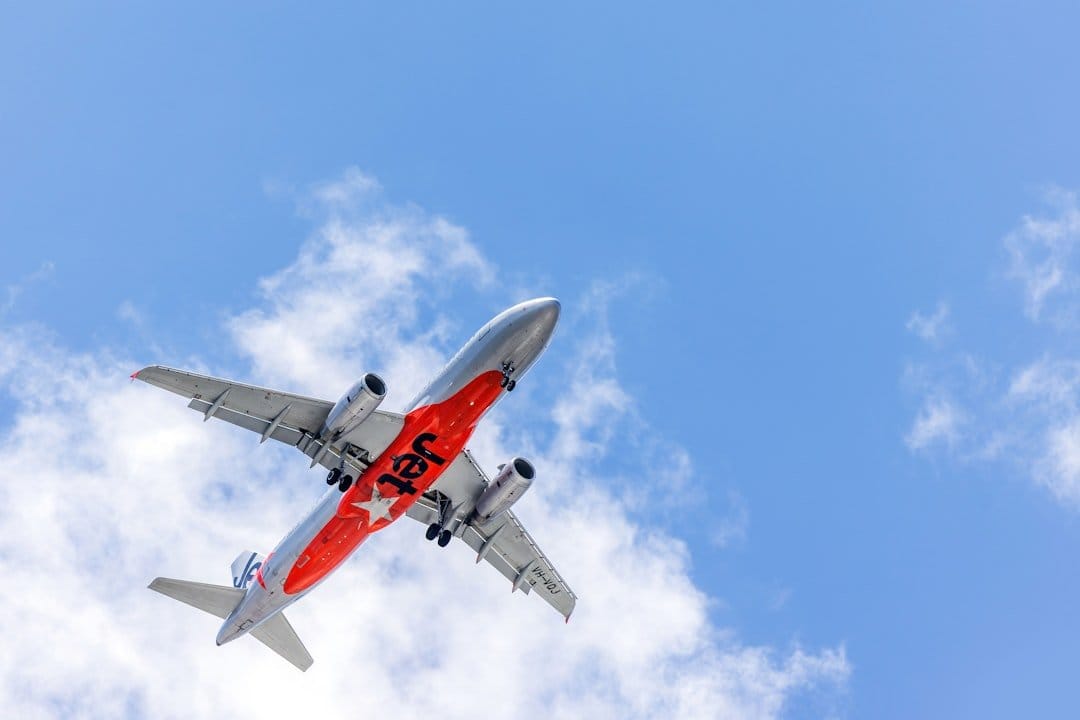
Wizz Air’s Starlink Bet Could Break the Budget Airline Playbook
I’ve had a toxic little relationship with short-haul European flights for years. I hate them, I book them anyway, and then I spend two hours pretending I’m enlightened because I can’t get online.
No Slack. No WhatsApp. No doomscrolling. Just me, a cramped seat, and a €7 panino that tastes like airport mayonnaise and poor life choices.
So when I saw that Wizz Air bets on Starlink Wi-Fi before budget rivals follow, my first reaction wasn’t “nice.” It was: uh-oh. Because this isn’t just about internet on planes. It’s about whether the last reliably offline place in modern life is about to become another product layer, another upsell, another way to keep us plugged in when we’re already way too plugged in.
And yes, I know. Tiny violin. My nonna would absolutely tell me, “Luca, you survived dial-up, you’ll survive a connected airplane.”
She’d be right. But this still matters.
Because Wizz Air isn’t really selling Wi-Fi here. It’s testing whether the whole ultra-low-cost airline model has to evolve now that passengers expect to stay online everywhere, all the time, like little overcaffeinated houseplants with notifications.
Wizz Air Starlink Wi-Fi is really about making cheap feel less cheap
Wizz says it’ll start rolling out Starlink-powered inflight internet from 2027 across its Airbus A320 and A321 family fleet. Reuters, via Investing.com, says that would make it the first European ultra-low-cost carrier to commit to Starlink at fleet scale.
That’s the important part. Not the satellite hardware. Not the Elon-adjacent branding. The scale.
For years, budget airlines trained us to accept a very specific deal: low fare, no frills, don’t ask questions, maybe buy a scratch card if you’re feeling feral. Price was the product. Everything else was somewhere between inconvenience and punishment.
Now Wizz is trying to tweak that formula. Not by becoming premium. Not by pretending an A321 to Athens is suddenly Emirates. Just by making the experience feel less digitally broken.
That’s smarter than it sounds.
Wizz has literally framed this as “flipping the script” on ultra-low-cost travel, as reported by Paddle Your Own Kanoo. And honestly, that’s the pitch. Not luxury. Not status. Just this: cheap flights don’t have to feel weirdly behind the rest of your life anymore.
That lands because “reliable internet” used to be a premium perk. The aviation version of warm nuts in business class. Now it feels more like plumbing. If I’m flying from Milan to Athens for €29, I still expect the app to work, the boarding pass to scan, and increasingly, the internet to exist.
Not because I’m fancy. Because we all got way too used to being online, and there’s no going back.
Wizz operates around 240 Airbus aircraft across the group, according to Air Journal, including operations in Malta, the UK, and Abu Dhabi. So this isn’t some cute six-plane experiment. It’s a real fleet bet.
And that’s what makes it interesting. Once a budget airline tries this at scale, the question stops being “is onboard Wi-Fi nice?” and becomes “why doesn’t everyone else have it?”
Last month I took a cheap hop out of Lisbon and told myself being offline for two hours would be “restorative.” In reality I spent half the flight wondering if a client had sent revisions and the other half rage-eating Pringles. Very mindful. Very balanced.
Connectivity isn’t a luxury anymore. It’s emotional infrastructure, which is a cursed phrase, but unfortunately true.
Ryanair says customers don’t care. I think that’s 2014 logic.
The funniest part of this whole story is that Wizz isn’t just launching Wi-Fi. It’s forcing rivals to explain why they haven’t.
Ryanair and easyJet have both held back, according to Reuters and Euronews, and Ryanair has been especially loud about it. Michael O’Leary’s line is basically that customers on short-haul European flights don’t care enough, and that installing Starlink would push up fares.
Which, to be fair, is the most Ryanair answer imaginable. I can hear it in his voice already. Probably delivered beside a yellow gate sign and a vending machine that only accepts your dignity.
The practical objection has been the fuel burn caused by the antenna mounted on top of the fuselage, according to Paddle Your Own Kanoo. More drag, more cost. Starlink has reportedly pushed back on that, which turns this into one of my favorite forms of corporate beef: one side says “the economics don’t work,” the other says “you’re just scared to move first.”
I think Ryanair is wrong. Or at least wrong in the way incumbents are often wrong: they define demand too narrowly.
Passengers don’t always say they want something before they’ve had it. They just start noticing when it’s missing.
Nobody in 2012 was passionately demanding mobile boarding passes. Then Apple Wallet happened and now if I have to print a document, I feel like I’m being punished by a small-town Italian tax office in 1998.
Same with USB charging. Same with app check-in. Same with live train tracking. You don’t crave these things in advance. You just become irrationally annoyed once the absence feels janky.
That’s why Wizz Air bets on Starlink Wi-Fi before budget rivals follow looks less like a gimmick and more like the start of a category shift. Euronews called it a possible new “competitive battleground” in European low-cost flying, and that feels right to me. Once one airline makes connectivity normal, the others stop looking disciplined and start looking cheap in the bad way.
There’s low-cost. Then there’s low-rent. Airlines confuse those all the time.
I used to defend offline flights, by the way. I’d say they were good for us. Healthy. A forced digital detox. Very smug, very TED Talk, very annoying.
Then I missed a message that actually mattered on a flight from Catania to Barcelona, landed, saw it, and got that horrible modern punch of guilt. Since then I’ve been less romantic about dead zones.
Still skeptical. But less ideological.
The economics are the whole point
This is where the dreamy “connected skies” story runs into a spreadsheet.
Wizz Air hasn’t disclosed the commercial terms of the Starlink deal. More importantly, it hasn’t said whether the service will be free, paid, or tied to some account or loyalty setup, according to Airways.
That’s not a minor missing detail. That is the story.
Because the minute you put premium-grade connectivity on an ultra-cheap seat, somebody has to pay for it. And if you know anything about budget airlines, you know they never leave money sitting on the table out of pure generosity. These are not monks.
Starlink’s airline pitch usually leans toward fast, frictionless access. According to Paddle Your Own Kanoo, it often pushes airlines to offer the service free to passengers. But “free” in airline land usually means “the charge moved somewhere else and put on sunglasses.”
The useful comparison here is IAG, which owns British Airways, Iberia, Vueling, and LEVEL. Paddle Your Own Kanoo reported that when Starlink signed with IAG, the budget brands Vueling and LEVEL were reportedly allowed to charge for access. Which makes perfect sense. The economics of Wi-Fi on a premium long-haul seat are not the same as Wi-Fi on a budget hop where half the cabin paid less than a decent dinner in Milan.
Wizz also isn’t making this move from a position of obvious financial comfort. Paddle Your Own Kanoo says the airline posted a €139 million net loss for the last three months of 2025 and issued a profit warning tied to rising jet fuel costs during the Iran conflict.
So no, this is not some benevolent gift to passengers. It’s a strategic bet from a company under pressure.
If Wi-Fi is free, the cost shows up somewhere else. Fares. Bundles. Membership tiers. Priority packages. Some cursed product name like “Wizz Connect Plus Flex Max” that sounds like a protein powder.
If Wi-Fi is paid, then it’s classic ancillary revenue. Same old budget-airline trick, shinier wrapper. Cheap seat, modular experience. Pay for your bag. Pay for your seat. Pay to board earlier. Pay to answer emails from 31E while your knees are in your chest.
And if access is tied to account login or loyalty enrollment, then the real product might not be internet at all. It might be identity. Logged-in passengers are measurable passengers. Measurable passengers are monetizable passengers. Bellissimo.
Free airline Wi-Fi is never really free
This is where I become slightly unbearable at dinner, but stay with me.
A lot of coverage treats airline Wi-Fi like the only question is whether it’s free. Airways made the better point: the real question is what you’re trading for that convenience.
Because airline internet isn’t just “the internet, but on a plane.” It’s a managed access layer with the airline, the captive portal, the provider, and sometimes loyalty or authentication systems all sitting in the middle. That’s normal. It’s also worth understanding.
The British Airways example is useful because terms and conditions tend to tell the truth by accident. Airways reported that BA’s Starlink Wi-Fi terms say the service is provided by IAG Connect on behalf of British Airways and is “powered by Starlink acting as the Internet Service Provider.”
Same reporting says BA’s terms note that content and associated data may be “transmitted, processed, or stored across networks and countries.” Again, legally normal. But not exactly the same thing as your home broadband or that chaotic TIM line in Rome that dies every time it rains.
It gets more direct. Airways says BA’s terms also allow the network to “identify, inspect, remove, block, filter, or restrict” access to certain content, websites, apps, or services for legal or network-management reasons.
So when people hear “Wi-Fi in the sky,” I think they picture normal internet with clouds. It’s not that. It’s commercial internet with rules, intermediaries, and visibility.
I’m not doing tinfoil-hat cosplay here. I’m not saying Starlink is personally reading your encrypted banking app like a Bond villain. HTTPS exists. VPNs exist. Common sense exists, at least on a good day.
I’m just saying convenience is never neutral. If airline Wi-Fi feels frictionless, that usually means the business model got hidden well.
And yes, I’ll probably still use it.

For digital nomads, Wizz Air Starlink Wi-Fi sounds amazing. That’s the problem.
As someone who works while moving, I get the appeal instantly.
If Wizz Air Starlink Wi-Fi works the way it’s being sold, I can answer messages, fix a deck, upload files, and stop treating a two-hour flight like a productivity black hole. According to Passport News, Wizz has leaned all the way into this framing, even posting “RIP Airplane Mode” on social.
Funny line. Good marketing. Tiny bit dystopian.
Passport News says the service is being pitched around streaming, browsing, and messaging, with Wizz framing it as reliable internet for millions of passengers. Smart move. It makes the whole thing feel democratic instead of premium. Internet for the people. SpaceX for seat 31B.
There’s also a broader pattern here. Passport News noted that American Airlines is planning ultra-fast connectivity from 2027 on domestic and short-haul flights, with passengers potentially able to stream, game, and make real-time video calls.
And that’s where I need everyone to calm down.
Because the moment people start taking video calls on short-haul flights, society has failed. I do not want to hear someone doing a FaceTime breakup over the Balkans. I don’t want to hear startup standups at cruising altitude. I don’t want a floating WeWork with worse coffee and more babies.
Just because we can turn every flight into a coworking space doesn’t mean we should.
The hidden luxury of short-haul flying, especially on budget airlines, was that nobody could reasonably expect anything from you for 90 minutes. You were in a metal tube. You were unavailable. End of story. Socially accepted. Spiritually medicinal, even if the seat itself felt like penance.
Starlink kills that excuse.
And I feel conflicted saying that because I know I’d benefit. Last winter, flying from Warsaw to London, I had a pitch deck due and no connectivity. I spent the flight editing offline like a medieval monk illuminating a manuscript, praying Keynote wouldn’t explode before landing.
If I’d had proper internet, my life would’ve been easier.
But easier is not always better for your brain. We’re already too reachable. Too pingable. Too available to every app, every coworker, every family group chat that somehow needs an urgent answer about Sunday lunch.
The death of airplane mode sounds cool in a press release. In real life, it means one less legitimate boundary in a culture that eats boundaries for breakfast.
The airline that wins won’t be the one with Wi-Fi. It’ll be the one that makes it disappear.
This is why I think Wizz’s real gamble isn’t installing Starlink. It’s whether the experience actually works without being annoying.
Because airline Wi-Fi has historically been clown behavior. Weird portals. Broken payment pages. “20MB for €6” like we’re all emailing a JPEG from 2009. Logins that fail. Sessions that die. Pages that load just enough to irritate you but not enough to function.
If that’s the experience, nobody cares what satellite is involved.
The promise of Starlink aviation connectivity is different. Air Journal says Starlink is pitching high-speed, low-latency internet through its low-Earth-orbit network, with coverage from departure to arrival and something closer to home broadband. That’s why airlines are paying attention.
Jason Fritch, Starlink’s vice president of enterprise sales at SpaceX, put it pretty clearly in comments quoted by Air Journal: the goal is a “seamless connection for passengers and crews at 30,000 feet,” with reliable, high-speed internet from departure to arrival.
That’s the benchmark now. Not “Wi-Fi exists.” More like: I board, I tap once, it works, I forget about it.
Invisible infrastructure always wins. Same reason nobody brags about contactless payments anymore. If the tap fails, you notice. If it works, it disappears.
If Wizz gets that right before Ryanair and easyJet, it narrows the emotional gap between a budget carrier and a legacy airline in a way people will actually feel. Aviation.Direct and Air Journal both framed this as a move that could reduce the onboard experience gap with legacy carriers, and I think that’s exactly it.
Not because anyone expects champagne on Wizz.
Because they’ll stop accepting digital inconvenience as part of the low-fare deal.
And airline executives consistently underestimate how fast “nice to have” becomes “table stakes.” First it’s a feature. Then it’s a filter. Then it’s weird if you don’t have it. Mobile boarding passes did that. USB ports did that. Decent apps did that. Wi-Fi will probably do it too, especially once one European ultra-low-cost carrier proves the model can work.
Ryanair can keep saying customers don’t care. For now.
Airlines love dismissing features right up until a rival teaches passengers to miss them.
My bet: budget airline Wi-Fi becomes normal, and the real cost sneaks in sideways
So here’s my take.
Wizz Air bets on Starlink Wi-Fi before budget rivals follow feels like the first crack in the old low-cost airline playbook. Within a few years, reliable onboard connectivity will probably be treated the same way mobile boarding passes are treated now: first optional, then expected, then invisible.
The winners won’t be the airlines shouting the most about innovation. They’ll be the ones that hide the complexity. No friction. No dumb pricing. No login labyrinth. No nonsense. Just connection that works well enough that people stop noticing they’re on a budget airline.
But I don’t buy the fantasy that this is pure passenger liberation. If fares stay low, somebody pays in some other currency. Maybe it’s a bundle. Maybe it’s a surcharge. Maybe it’s account lock-in. Maybe it’s data collection wrapped in convenience. Usually it’s all of the above, because capitalism never orders one dish when it can get the tasting menu.
And the part I can’t shake is more personal than commercial.
I’ve spent a big chunk of my adult life in transit (New York, Milan, Madrid, random lounges with bad espresso and better gossip), and I’ve come to appreciate how rare it is to be unreachable without having to explain yourself. Flights used to give you that. Not because they were peaceful. Usually they were sweaty, cramped, and smelled faintly of someone else’s tuna sandwich. But they gave you a clean break from the feed.
That break is disappearing.
Maybe Wizz is right. Maybe affordable flights with real internet are just the next obvious thing, and millions of passengers will love it. I probably will too, at least the first time I send a file over Albania and feel absurdly powerful.
But let’s not pretend only Wi-Fi is boarding the plane.
So are more expectations. More tracking. More noise. And one less excuse to disappear for two blessed hours above the Adriatic.
Sources
- Primary trending article
- Wizz Air to offer Starlink in-flight internet from 2027
- Wizz Air Taps Starlink To Pioneer European LCC Inflight Connectivity
- Wizz Air Will Become Europe’s First Ultra-Low-Cost Carrier With Starlink In-Flight Internet
- Wizz Air Starlink Deal Raises Free Wi-Fi Data Questions
- Wizz Air announces agreement on wifi network with Starlink while low-cost rivals hold back