
U.S. Tariffs Hit Italian Olive Oil as Exemption Fight Grows
Italian olive oil exports to the U.S. are plunging as tariffs bite, stocks swell, and producers push harder for an exemption.
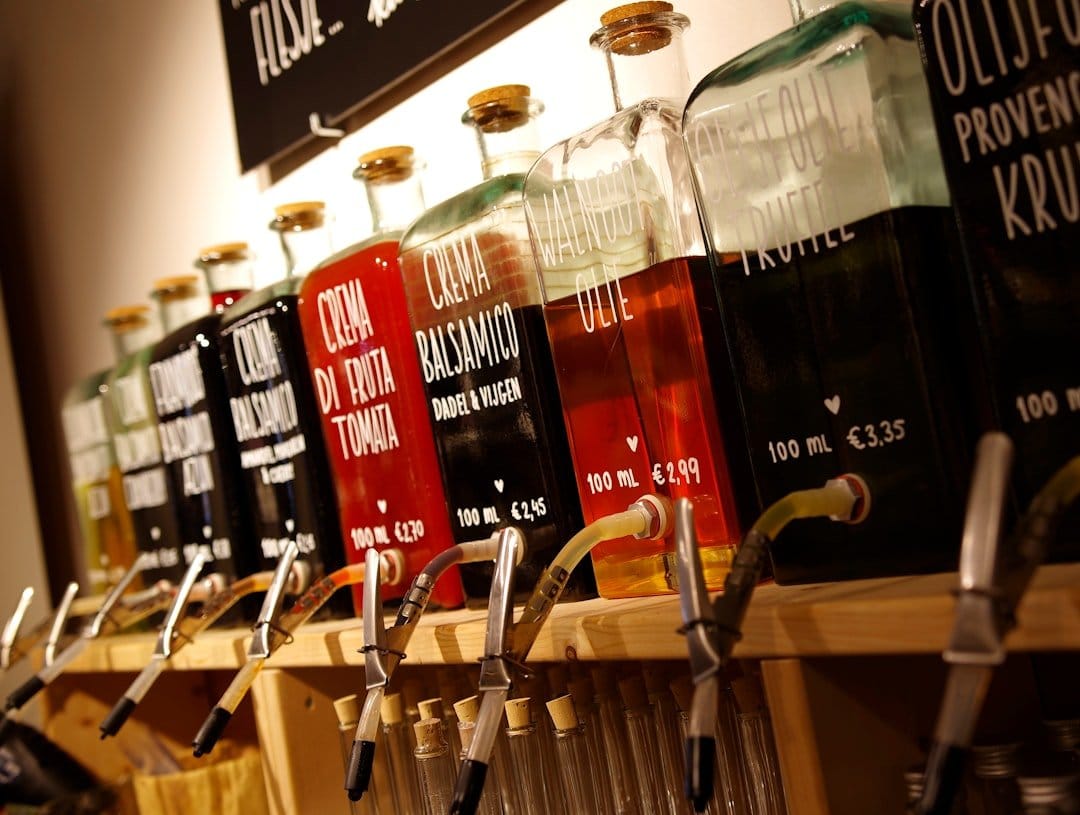
U.S. tariffs hammer Italian olive oil exports as exemption fight intensifies, and the problem is bigger than a premium-food dispute. In 2026, America is taxing a kitchen staple like it is a luxury item, even as consumers use olive oil as an everyday essential.
I picked up a bottle of extra virgin olive oil in Brooklyn last week and had the same reaction I usually reserve for airport salads: absolutely not. The price had jumped so much it felt like the bottle should come with a tiny leather case and a founder-friendly pitch deck.
That is the whole problem with this story. A lot of policymakers still seem to think olive oil is some cute Mediterranean luxury. It is not.
Growing up in Italy, olive oil was closer to Wi-Fi than wine. If the internet died, people got annoyed. If the oil ran out, my mother looked at us like the republic itself had collapsed. You can survive without Barolo. You cannot make a soffritto with positive thinking.
That framing matters, because people hear “Italian olive oil” and picture a fancy bottle next to truffle salt and some rich couple arguing in Williams Sonoma. Real life is less cinematic. Olive oil is pantry infrastructure now. Eggs, vegetables, pasta, fish, salad, the sad piece of toast you eat over the sink. America uses it like a staple and Washington is taxing it like a luxury.
U.S. tariffs hammer Italian olive oil exports as exemption fight intensifies
The numbers are ugly enough that even the usual trade-policy spin cannot save them.
According to ANSA, citing U.S. Census Bureau data analyzed by Certified Origins, Italian olive oil exports to the United States fell 40% in value in the first months of 2026, from $370 million to $223 million. Volume fell 33%.
That is not a little consumer hesitation. That is a market getting punched in the face.
And no, this is not just an industry group doing dramatic Mediterranean theatre for sympathy points. The analysis came from Certified Origins, yes, but the underlying data is Census Bureau data. If exports drop from $370 million to $223 million that fast, something structural broke.
The North American Olive Oil Association has been pushing for an olive-oil exemption, and on substance, the case is strong. Their argument is simple: the U.S. market structurally depends on imports.
That word is doing a lot of work. Structurally.
If America had a huge domestic olive oil industry ready to fill the gap, fine, have the protectionism debate. But it does not. California matters, obviously. California producers have built something real. It is just nowhere near enough to replace imported volume at the scale the U.S. market now expects.
That is where tariff logic starts cosplaying as economic policy. Politicians love the fantasy that every imported food can be swapped out for patriotic local abundance if consumers just believe hard enough. Bellissima. Also nonsense. American shelves, restaurants, distributors, and home kitchens run on imported olive oil. That is the reality.
I was cooking at a friend’s place in Austin recently and saw the holy trinity of accidental adulthood: kosher salt, a cast-iron pan, and a giant Costco bottle of olive oil. Not a decorative bottle. A serious one. The kind you buy because you burn through it. That is not luxury behavior. That is staple behavior.
Italy has too much oil sitting in tanks at exactly the wrong time
The timing makes this worse.
Tariffs are not landing during some noble scarcity moment where everyone rallies around a precious harvest. They are hitting during an oversupply mess. Less Tuscan sunset. More stainless steel tank anxiety.
According to ANSA, Italian extra-virgin prices were around €8 per kilo in November and December. By May and June, they had dropped to roughly €5.80 to €6.00 per kilo, depending on quality and origin. That is a decline of more than 30% year over year.
If you know producers, you know how fast sentiment flips. One minute everyone says the market is finally rewarding quality. Three months later the market is acting like crypto with better packaging.
Then there is inventory. As of 31 May 2026, Italy had about 277,000 tonnes of olive oil in stock, according to the same ANSA report. That is roughly 45% more than the same period in 2025.
And it is not just low-end leftovers nobody wants. Of that stockpile, 221,800 tonnes were extra virgin. Within that, 132,700 tonnes were strictly Italian-origin extra virgin.
That matters because tariffs do not just hurt exports. They trap product. They trap cash flow. They crush pricing power. If the U.S. slows down while Italy is already sitting on 132,700 tonnes of Italian-origin EVOO, the pressure does not disappear. It moves backward through the whole chain: producers, bottlers, exporters, distributors, everybody.
I have seen the same dynamic in tech, weirdly enough. When demand assumptions break, inventory stops looking like an asset and starts looking like an accusation. Olive oil is older and more noble than SaaS, grazie a Dio, but margin compression is ugly in any language.
Producer groups are also worried about competition from lower-cost imported oils. Of course they are. If domestic prices are falling and the export outlet gets squeezed, cheaper oils become the easiest escape route for buyers. Most people are not conducting a philosophical inquiry at 7:12 p.m. on a Tuesday. They are trying to make dinner.
Italy keeps selling a dream while America buys a staple
I understand why Italy tells the story it tells. We are extremely good at it. Heritage. Territory. Excellence. Nonna. Ancient groves. A hilltop village. Maybe a stone mill if the marketing team is feeling dramatic. A lot of that story is true.
Italian Agriculture Minister Francesco Lollobrigida leaned into that this month. According to ANSA, he said Italy’s oils are the best from every point of view and that science supports that claim. He also pointed to Italy’s biodiversity, noting the country has more than 500 cultivars.
That part is real. More than 500 cultivars is not branding fluff. It is agricultural chaos in the best possible way. My family in Puglia can turn a conversation about olive varieties into a minor religious war in under five minutes.
Lollobrigida also argued that these oils need protection through regulation: more transparent labeling, stronger action against fraud and adulteration, and enforcement tied to the 15 April law aimed at protecting the agri-food system with tougher sanctions.
I am with him on that too. Fraud in olive oil is not some side plot. If consumers cannot trust labels, the whole premium story collapses. And if you are selling fake or murky oil, you are not preserving tradition. You are doing crime with a rustic font.
But the quality story, by itself, is not enough.
If Italy defends olive oil only as a premium symbol of national excellence, it becomes much easier for U.S. policymakers to treat it as expendable. Fancy thing. Foreign thing. Optional thing. Tax it.
The market says otherwise.
Because the real power of Italian olive oil in America is not rich people drizzling it over burrata in the West Village while discussing their seed round. It is normal people roasting vegetables in Ohio. It is someone in Phoenix frying eggs in EVOO because they watched Samin Nosrat once and never looked back. It is pasta in New Jersey on a random Tuesday.
My nonna would absolutely roast me for saying this, but the Americanization of olive oil is exactly why it matters. The second a product stops being ceremonial and becomes habitual, policy should stop treating it like an accessory.

The olive oil exemption fight is really about market reality
The phrase sounds dry, but what is really being tested here is whether olive oil gets treated as essential.
That is why the exemption fight matters.
The NAOOA keeps making the same case: olive oil deserves a carve-out because the United States does not have the domestic production base to replace imports. “Carve-out” is one of those policy phrases that makes normal people want to fake a phone call, but the argument itself is solid. This is not about sentiment. It is about dependency.
And the broader trade climate makes that argument harder to win.
On 1 July, the EU steel safeguard tightened, cutting duty-free import quotas across 26 product categories by an average of 47%, according to ANSA. Imports above quota now face a 50% tariff. Different sector, obviously, but same political mood: governments everywhere are selling toughness as fairness.
Same thing with e-commerce duties. According to ANSA and Teleborsa, the EU removed the duty exemption for parcels under €150 and imposed a €3 per item fixed tariff. The pitch was fairness, scale, and consumer protection. Trade Commissioner Maroš Šefčovič summed it up as open market, equal rules.
That slogan works politically, which is exactly the problem for olive oil. Once fairness becomes the sales pitch, asking for an exemption sounds like asking for privilege.
So olive oil cannot win by arguing that it is special in the sentimental sense. It has to argue that it is structurally different. There is a big difference between exempting a nice-to-have and exempting a category your domestic market fundamentally relies on.
I learned this the hard way in startups. If you explain your company using your own mythology, people smile politely and forget you. If you explain the operational dependency clearly, they pay attention. Olive oil needs less poetry and more systems language.
Which, trust me, is not a sentence I enjoy writing.
Spain is in the picture too, which means this can get worse fast
If this were only an Italy story, it would already be bad. It is not only an Italy story.
An ANSA brief citing the Wall Street Journal reported that U.S. officials are preparing a list of Spanish products that could face a possible embargo. Details are still limited, so it would be premature to overstate the case. But the signal is obvious enough: Mediterranean food trade risk is widening.
That matters because Spain is too central to olive oil for anyone serious to treat these as isolated national dramas. You cannot destabilize Spanish trade exposure and then act like Italy exists in a charming artisanal bubble untouched by the rest of the market.
The European Commission’s olive oil market page makes this painfully clear in the most boring way possible, which is usually how you know something matters. It tracks prices, production, trade, balance sheets, and quota mechanisms across the sector. There is even a dedicated file for the Tunisian olive oil import quota for 2026.
That is not random bureaucracy. That is a map of an already interdependent market.
The Commission’s documentation shows a system constantly monitored through dashboards, monthly production updates, extra-EU trade files, and stock data. In plain English, this market already needs active management because producing countries, importing countries, and quota systems are tightly linked. Add retaliatory trade politics and you are kicking a chair with one leg already wobbling.
A lot of people still want the clean, comforting version of this story where they can say “buy Italian instead” and call it a day. Bello slogan. Not enough brain cells. If Spain gets dragged deeper into retaliation and the Mediterranean supply web gets shakier, “buy Italian instead” stops being strategy and starts being denial.
I used to resist calling food infrastructure because it sounded too MBA, too bloodless, too detached from culture. Then I moved around enough American cities, cooked in enough borrowed apartments, and noticed the same oversized bottle in kitchens from Miami to Seattle. Olive oil is not separate from culture. It is what culture looks like after it becomes habit.
And habit is infrastructure.
Cheap oil wins unless Italy changes the story
Here is the part the sector probably will not love.
If tariffs stick and Italy keeps framing olive oil mainly as artisanal excellence, the market will quietly reorganize around cheaper oils and blended alternatives. Not because consumers are uncultured barbarians. Because most people are tired, busy, underpaid, and trying to cook dinner before their kid has a meltdown or their Zoom call starts.
ANSA already flagged pressure from lower-cost imported oils as a major concern. That pressure only gets stronger when premium Italian product is trapped in an oversupplied domestic market and taxed in one of its biggest foreign markets.
This is not a morality play. It is a pricing mechanism.
The frustrating part is that the long-term demand picture is not even bad. According to the same ANSA reporting, projections still point to structural growth in global demand, with pressured markets, including the United States, expected to remain major engines of development.
The U.S. is not a side quest. It is the growth engine.
The European Commission’s 2025/26 olive oil documents, including monthly production and stock materials, make the vulnerability pretty obvious. Production, consumption, inventories, and trade flows do not line up neatly enough for Italy to pretend export access is optional. If your cushion is thin, your routes to market matter more, not less.
So yes, keep defending quality. Keep fighting fraud. Keep talking about cultivars, territory, sensory excellence, all of it. But if that is the only story, you are basically handing tariff hawks the category definition they want: premium import, nice but nonessential, easy to tax.
Say the obvious thing out loud instead. In modern American kitchens, olive oil is infrastructure.
Taxing it is like taxing the pan before the food even hits it.
And the warning lights are already flashing: a 40% drop in value, a 33% drop in volume, 277,000 tonnes of stock in Italy, and extra-virgin prices sliding from €8/kg to roughly €5.80-€6.00/kg. Those are not vibes. Those are consequences.
I am not saying every imported food deserves an exemption because I personally enjoy it on focaccia. I contain multitudes, but not that many. I am saying trade policy should be smart enough to tell the difference between a luxury and a dependency.
If it cannot, shoppers will get pushed downmarket, policymakers will call it efficiency, and everyone will act surprised when quality gets hollowed out by cheaper substitutes.
And olive oil will not be the last example. We keep pretending certain foods are still specialty products long after they became default inputs in everyday life. That gap between political labeling and market reality is where stupid policy gets made.
The American kitchen has already made its decision about olive oil. The only question is whether Washington notices before dinner gets more expensive and worse at the same time.
Sources
- Primary trending article
- Wsj, 'Usa preparano lista di prodotti spagnoli per possibile embargo'
- Olive oil
- MONTHLY EU OLIVE OIL PRODUCTION (2025-2026)
- European Commission Directorate-General for Agriculture and Rural Development: United States agri-food trade factsheet
- Dazio sull’eCommerce, Bruxelles: “Garanzia di equità per imprese e tutela per consumatori”