
Tech Sovereignty Package Turns EU Buying Into Power
Brussels is treating chips, cloud, and AI as strategic infrastructure, using procurement and demand shaping to cut risky dependencies.
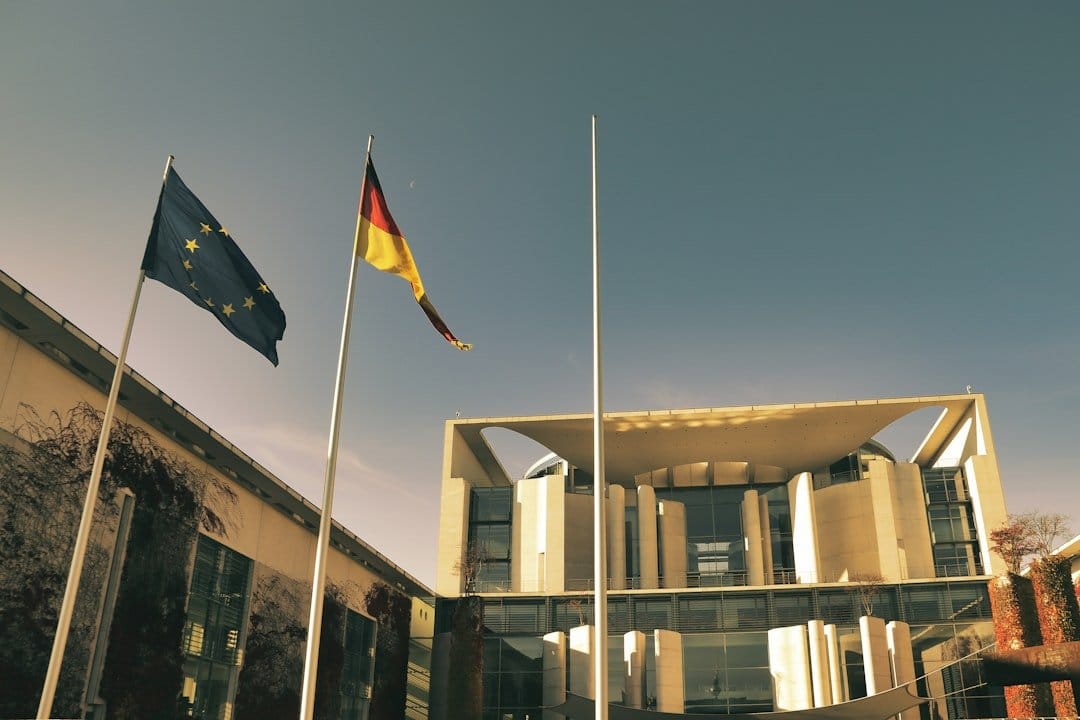
EU unveils Tech Sovereignty Package targeting chips, cloud and AI, but the real story is not the headline. It is the machinery underneath: procurement rules, demand aggregation, and buying criteria that turn sovereignty from a slogan into a market signal.
That matters because tech sovereignty is not a philosophy seminar. It is a purchasing decision. If Europe keeps buying the stack from someone else, it should not be surprised when someone else holds the leverage.
And this stopped being theoretical when dependency started looking like a switch another government or company could flip. AP reported on June 3 that concerns intensified after the Trump administration sanctioned the International Criminal Court’s top prosecutor, and Microsoft canceled his email account. In Brussels, that sharpened a broader fear: does reliance on foreign tech come with a hidden kill switch?
Europe has long had the ingredients to be stronger here: top researchers, industrial depth, and a Single Market of 450 million people. What it lacked was the willingness to act like a coordinated buyer instead of a fragmented set of procurement offices defaulting to the same foreign vendors.
The moment Brussels stopped asking nicely
The June 3 package feels less like a routine policy bundle and more like a shift in mindset. The message is no longer please diversify. It is convenience is not a security strategy.
In the European Commission’s June 3 press release, Ursula von der Leyen put it plainly:
We cannot afford to depend on others for the technologies that keep our hospitals running, our energy grids stable and our services secure.
That is critical infrastructure language, not niche digital-policy jargon. It signals that cloud, chips, software, and AI are now being treated as pillars of state capacity.
The Commission’s communication goes further, warning that dependencies can be “instrumentalised by third countries.” In plain English, that means infrastructure dependence can become geopolitical leverage.
Henna Virkkunen, the Commission vice-president leading this file, framed the goal clearly in AP’s reporting:
Europe wants to be in the position to make its own choices, avoiding risky dependencies on single dominant suppliers, one company or one third country.
This is not a case for autarky. It is a case for options. Europe wants room to maneuver when geopolitics turns ugly and a cloud contract becomes a foreign-policy problem.
That is why the package matters. Brussels is no longer just asking the market to be less concentrated. It is starting to behave like a buyer with preferences.
Europe’s real tech problem was fragmentation
The most revealing number in the package may be €264 billion. According to Agence Europe, that is what the EU spends each year, mainly on American IT products and services.
This is not just spending. It is outsourced leverage at continental scale. Europe has been financing someone else’s ecosystem and then wondering why domestic alternatives struggle to reach scale.
The easy story is that Europe lacks talent. That is not convincing. Europe has firms such as ASML, SAP, STMicroelectronics, and Mistral AI, plus a research base strong enough to attract global competition. The deeper problem has been coordination.
The Commission says the strategy is meant to be “interconnected and mutually reinforcing across each stage of the value chain, from chips, to infrastructure, to software, cloud and AI.” That full-stack logic is overdue. Chips feed infrastructure. Infrastructure enables cloud. Cloud powers AI. Software determines whether buyers stay flexible or get locked in.
Agence Europe says the goal is to build a real “European technology stack.” That does not require isolationism. It requires reducing structural dependence at every strategic layer of digital infrastructure.
The Single Market remains one of Europe’s most underused strategic assets. With shared demand, public procurement can become industrial policy: creating markets, shaping standards, reducing lock-in, and giving European firms room to grow.
Chips Act 2.0 shifts from subsidies to demand
The revised semiconductor push reflects a hard lesson. Euronews reported on May 28, citing a draft proposal, that the first Chips Act was “predominantly supply-driven,” while “Chips Act 2.0 places greater emphasis on demand-side measures.”
That change follows the collapse of Intel’s plans to build two mega-fabs in Germany. The old assumption was that subsidies alone would attract and anchor capacity. Reality showed otherwise.
Euronews says the draft explicitly argues that “supply-side investment alone is insufficient to create scale without stronger demand.” That is the core correction. Fabs need buyers, not just grants.
So the revised approach emphasizes:
- Demand aggregation
- Procurement coordination
- Consumption incentives
- Stronger crisis management tools
If Europe can consolidate demand for strategic chips, especially for AI workloads and critical sectors, local production becomes more commercially viable. That is where EU-level action makes sense. No single member state can create the same scale on its own.
The crisis powers matter too. Euronews reported that in a supply-chain emergency, the Commission could organize joint purchasing and request priority orders from publicly subsidized fabrication plants. That is not just industrial policy. It is strategic coordination.
The cloud fight is really about the kill switch
Cloud used to sound technical and abstract. Geopolitics changed that. The key question is now simple: who can turn you off?
AP reported that the EU is worried about dependence on American companies for AI and cloud computing services. As AI demand grows, that dependence becomes more consequential because AI converts chips, power, and cloud capacity into strategic advantage.
The Cloud and AI Development Act responds at the level that matters: capacity. AP says the EU wants to triple Europe’s data-center capacity over the next five to seven years. Computer Weekly points to a longer horizon, saying the act aims to triple datacenter capacity by 2035 while improving research, energy access, financing, and reducing over-reliance on non-EU providers.
This is where the package starts to look less like rhetoric and more like procurement architecture. According to the Commission’s June 1 note, in April 2026 it awarded a €180 million contract to procure sovereign cloud services for EU institutions and agencies to four providers under the Cloud III Dynamic Purchasing System.
That matters because Brussels is changing how it buys, not just how it talks.
The framework introduced SEAL scoring, or Sovereignty Effectiveness Assurance Level, and an overall sovereignty score based on 48 criteria across eight categories:
- Strategic
- Legal and jurisdictional
- Data and AI
- Operational
- Supply chain
- Technological
- Security and compliance
- Environmental sustainability
Sovereignty is becoming measurable. Once it is embedded in procurement criteria, it becomes a market signal. Providers adapt, rivals benchmark, and other buyers can copy the model.

This may be one of the smartest parts of the package. Europe does not need to pretend hyperscalers do not exist. It needs buying frameworks where jurisdictional risk, operational control, resilience, and software supply-chain transparency count alongside price and convenience.
If buyers score only cost and familiarity, they should not be surprised when they purchase dependence.
The open-source layer may be the most radical part
The chip and cloud pillars will get most of the attention. The open-source strategy may prove more structurally important.
On June 3, the Commission said digital sovereignty requires “open and interoperable digital ecosystems” for public administrations. That is more ambitious than it sounds. The goal is not to swap one dependency for another. It is to reduce lock-in itself.
Computer Weekly notes that the Cloud and AI Development Act promotes open source solutions to enhance supply-chain resilience. That makes sense. Open source is not a cure-all, but it lowers the cost of exit, improves portability, supports auditability, and gives smaller firms a better chance to compete.
The Commission is right to frame sovereignty as something that runs from chips to software. Software is where dependence becomes deeply embedded through workflows, APIs, identity systems, data formats, training, and procurement cycles.
If public administrations buy interoperable systems and support reusable digital public infrastructure, startups and mid-sized firms get a more realistic path into state procurement. That could matter more than many headline-grabbing startup initiatives.
This only works if Europe thinks at continental scale
The package is directionally strong, but the political risk is obvious. Europe often takes a good continental idea and pulls it back into national competition over factories, ministries, permits, and favored domestic players.
AP notes that the proposals still need to pass through the European Parliament and the Council of the European Union. That means dilution is a real possibility.
Virkkunen’s test should remain the guardrail: Europe must avoid risky dependencies on a single supplier, company, or third country. That standard cannot be met by replacing foreign concentration with 27 fragmented mini-strategies.
Euronews reported that the broader approach is meant to rest on “fair competition rather than isolationism or protectionism.” That distinction matters. Correcting for scale, procurement habits, energy constraints, and entrenched lock-in is not protectionism. It is a way to make competition more real.
If chips, cloud, software, and AI are strategic infrastructure, then the EU should act at the level capable of coordinating them. That means common procurement, common standards, common financing, and common crisis tools.
The deeper shift is that Brussels is trying to become more than a rulemaker. It is trying to become a market shaper with a checkbook.
If Europe is serious, the next decade will not be decided by who writes the best white paper about sovereignty. It will be decided by who signs the contracts.
That is the uncomfortable part, because procurement forces tradeoffs between short-term convenience and long-term leverage. Some of those tradeoffs will be costly. Some will fail. But that is what strategic maturity looks like.
My bet is that Brussels will matter less as a scolding regulator and more as a buyer capable of making markets. For Europe, that is a much more serious role. And if it works, it may become one of the bloc’s most important forms of power.
Sources
- Primary trending article
- Communication on European Tech Sovereignty, accompanied by an EU Open Source Strategy
- European Commission unveils legislative package on tech sovereignty to reduce Union’s external dependencies
- EU seeks to boost Europe’s chip demand in tech sovereignty bid
- European Union launches tech sovereignty initiative to boost chips, cloud and AI at home
- EU unveils full-stack sovereignty package to build Euro tech muscle