
How Spirit’s Shutdown Is Rewriting US Budget Routes
Spirit’s collapse is pushing up fares, shrinking options, and exposing how much one chaotic airline shaped cheap domestic travel.
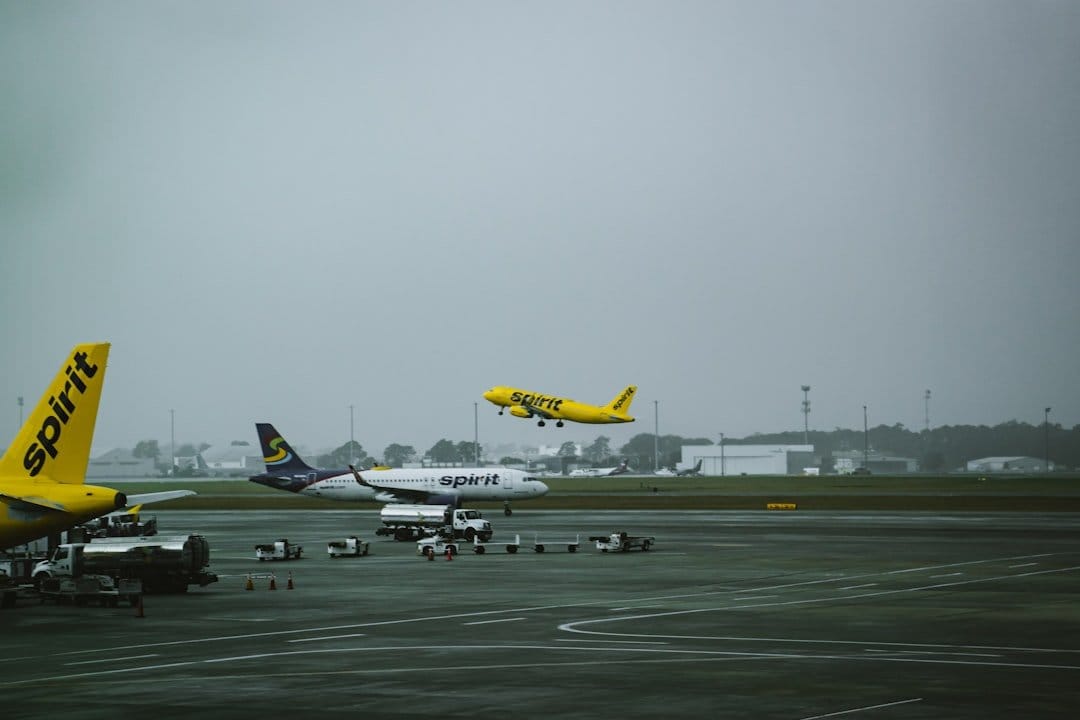
Spirit’s shutdown is reshaping budget routes across the US in a way people may not fully notice until they try to book something ordinary: a Florida weekend, a family visit, or a quick beach trip that suddenly costs far more than it used to.
I’ve made fun of Spirit plenty. Of course I have. The whole experience felt like Ryanair’s American cousin after three espressos and a legal dispute. My nonna would rather sit on a folding chair in the cargo hold than pay for a carry-on and a bottle of water.
But the second Spirit died, the joke stopped being funny.
Because Spirit’s shutdown is reshaping budget routes across the US in a way people won’t really clock until they try to book something stupid and normal. Fort Lauderdale for a long weekend. Atlantic City to see family. Myrtle Beach because someone in your extended family got engaged at a golf resort and now everyone has to pretend that’s romantic. Suddenly the fare is up $60. Or $120. Or the “cheap” option now leaves at 5:12 a.m. with a layover you absolutely did not ask for.
That’s my take, and I’m not softening it: Spirit wasn’t just a bad airline with low fares. It was a chaos subsidy for the entire domestic travel market. Even people who swore they would never fly Spirit benefited from that ugly yellow fare sitting on Google Flights like a threat. It kept everyone else a little more honest.
Not good. Not generous. Just honest enough.
Spirit’s shutdown is reshaping budget routes across the US
Spirit’s real job was never comfort. It was price discipline.
That sounds like something a guy in a blazer would say on CNBC, but it’s simple. If Spirit showed up on a route with some deranged fare like $39 before bags, seat selection, and basic human dignity, every other airline had to react. Maybe not match it. But move closer. Spirit didn’t need to win your booking to change your price. It just needed to exist.
CBS News, citing Cirium data, reported that when Spirit exited a route, average round-trip fares jumped 23%, about $60. Passenger volume also fell 20%.
That second number is the whole story.
A 20% drop doesn’t mean people just switched to Delta and moved on with their lives. It means a lot of them didn’t fly at all. The trip got cut. The family visit got delayed. The random beach weekend became “eh, maybe next month.” Cheap domestic flights don’t just serve demand. They create it.
That’s what people miss when they talk about Spirit like it was just a punchline with wings. Cheap seats are ugly, annoying, cramped, fee-ridden, and still incredibly useful. America has built this whole fake consensus where everyone pretends they want “better service,” but what most people actually want is to get from A to B without taking out a small personal loan.
Spirit, for all its nonsense, did that.
Reuters made the same point in more polished language: Spirit’s collapse gives other budget carriers more room to raise fares, even while the ultra-low-cost carrier model itself is under pressure. Which is such a perfect American ending. The messy cheap player dies, and the survivors get to charge more while still cosplaying as scrappy underdogs.
Last month in Milan I ate at this tiny trattoria near Porta Venezia that everyone complained about. Slow service. Loud room. House wine that tasted like a dare. Then it closed, and within two weeks every nearby place had quietly bumped pasta prices by three or four euro. Same neighborhood. Same ingredients. Suddenly people got nostalgic. Spirit was that trattoria. Ugly, irritating, and weirdly necessary.
This isn’t a rough patch. They’re selling the airline for parts
A lot of people are still talking about the Spirit Airlines shutdown like it’s a bad quarter. Like maybe they disappear for a second, reorganize, and come back with a slightly sadder logo. No. This is liquidation. Different movie.
According to the AP, U.S. Bankruptcy Judge Sean Lane approved Spirit’s wind-down and liquidation, clearing the way for the company to sell basically everything:
- Planes
- Engines
- Spare parts
- Gates
- Landing slots
Not just the brand. Not just a few routes. The bones.
That matters because once you start scattering gates and slots across the market, recovery gets messy fast. “Other airlines will fill the gap” sounds reassuring until you remember airlines are not Legos. Planes have to be placed. Crews have to be hired. Routes have to make economic sense. Airports need room. A dead airline is not an app you reinstall after clearing cache.
The AP also had one detail that stuck with me because it’s weirdly cinematic: Spirit said it announced the shutdown in the middle of the night so the final flights could land safely and crews could be accounted for. That’s brutal. The last yellow planes come down, everybody gets counted, and then the lights go out.
The collapse was also not exactly a surprise if you’d been paying attention. The route map had already been thinning. Staff had already been cut. Travelers were already seeing routes disappear and fares get less interesting. The shutdown made it official, but the hollowing-out started earlier.
And then there’s the part people skip over because it ruins the meme: jobs. The Points Guy reported roughly 9,500 employees were affected, and 17,000 including contractors. Gate agents. Flight attendants. Mechanics. Dispatchers. Airport workers. A lot of people got hit because one of the biggest low-cost carriers in the country finally ran out of runway.
That part got me more than I expected. Maybe because I’ve built companies, and even at startup scale payroll feels sacred. Watching thousands of people lose jobs while the internet keeps doing bag-fee jokes feels a little gross, capito?
Fort Lauderdale will bounce back. Atlantic City is where this gets ugly
Not every airport loses Spirit the same way. That’s the part most national coverage flattens into one generic airline shutdown story.
CBS Miami reported that Spirit’s old Terminal 4 at Fort Lauderdale-Hollywood International turned into a ghost town after the shutdown. Empty counters. No yellow. Weirdly quiet. But the same report showed why big South Florida airports recover faster than smaller, more dependent ones.
Broward Mayor Mark Bogen told CBS Miami that JetBlue, Allegiant, Frontier, and Breeze all wanted to expand at FLL. And not in a vague “we’re monitoring opportunities” way.
- JetBlue is adding 11 destinations
- Breeze is adding eight routes
- Frontier is adding nine
So yes, Fort Lauderdale Spirit routes will get replaced. Maybe not perfectly. Definitely not always cheaply. But Fort Lauderdale itself isn’t about to become an aviation ghost story. South Florida has too much tourism, too much family traffic, too much demand.
Atlantic City is the real warning sign.
According to CBS Philadelphia, Spirit accounted for about 75% of flights at Atlantic City International Airport. That’s not a big presence. That’s this airport’s personality being basically one airline. Airport director Tim Kroll said up to 2,400 passengers a day depended on Spirit there.
That is a real wound.
When a major airline leaves a major airport, you get a scramble. When a dominant low-cost carrier dies at a secondary airport, you get an existential crisis. The airport doesn’t just lose flights. It risks losing relevance. And once people get trained to drive to Philly or Newark instead, good luck getting them back.
Post-shutdown, Atlantic City looks rough:
- Allegiant becomes the only remaining regular commercial airline
- American offers a bus connection to Philadelphia International Airport
- Sun Country is only running charters
If you live in Manhattan, that all sounds niche. If you live in South Jersey and used Atlantic City because it was easy, low-stress, and didn’t feel like a hostage negotiation with a giant hub, it’s not niche at all. It’s your life getting more annoying and more expensive in one move.
And that’s the part that sticks with me. The people getting hit hardest here are not premium-cabin travelers making lounge content with an Amex Platinum in one hand and a sad little airport Negroni in the other. It’s regular leisure travelers. Families. People doing practical trips. People who don’t call it yield management when a fare doubles. They call it “guess I’m not going.”

“Other airlines will fill the gap” is technically true and emotionally fake
This is the official script every time an airline collapses: don’t worry, the market will adjust. And technically, yes. In the same way replacing your favorite neighborhood café with a Starbucks is still, technically, coffee.
The U.S. Department of Transportation said airlines including American, United, Delta, JetBlue, Southwest, Allegiant, Frontier, Avelo, and Breeze agreed to support impacted passengers in different ways. Nice. Helpful. Also not the same thing as rebuilding a low-cost network.
The details tell the story. According to the DOT:
- JetBlue capped fares for 72 hours
- Southwest capped fares for 72 hours, but only at airport ticket counters
- Delta offered capped fares for five days
- United offered capped fares for two weeks online
That’s emergency triage. Not structural competition.
A short-term fare cap gets stranded people home. Good. It gives airlines a decent headline and keeps politicians from yelling for a minute. Also good. But it does not recreate Spirit’s role on budget routes in the US, where low fares sat in the market every day as a permanent threat.
And travelers noticed the gap immediately. In CBS Philadelphia’s reporting, Alyssa Herrmann said the promised capped fares didn’t really help because other airlines were still charging way more than Spirit had. That quote should be framed and mailed to every executive who thinks a temporary rescue fare fixes a market problem.
Her story had another detail I weirdly loved because it was so human. She and her husband were gold members, and that status let them fly their 14-year-old dog, Jersey, for free. Now that perk is gone.
That’s not trivial. That’s what travel actually feels like in real life. Pet fees. Familiar airports. Direct flights at sane times. The small conveniences you only notice when they disappear. Spirit vanishing means a million tiny practical advantages vanish too, and together they matter more than most airline analysis wants to admit.
Budget travel in America is becoming a branding exercise
I don’t think the low-cost airline model died with Spirit. I think it got less honest.
Reuters reported that Spirit’s collapse is lifting fares while the budget model itself remains under pressure. Translation: people still want cheap leisure travel, but the economics are nastier now, and the surviving airlines have more room to charge more.
That’s not the death of budget travel. It’s the rebrand.
The biggest problem, beyond Spirit’s own mess, is fuel. The Points Guy reported an 80% increase in jet fuel prices since the start of the U.S. war in Iran, calling it the final blow for Spirit. Eighty percent is not headwinds. That’s a kneecapping.
Spirit had also sought a $500 million bailout, according to CBS News and The Points Guy, but it stalled amid creditor resistance and pretty obvious doubts that it would solve the actual problem. And that’s the uncomfortable part nobody wants to say too loudly: even if the bailout had happened, it probably would’ve bought time, not fixed the model.
There’s only so long you can keep selling a seat for nothing and hoping bags, snacks, and seat assignments will save you once fuel, labor, and financing all get ugly at the same time.
I’ve seen this in startups too. And yes, comparing airlines to SaaS is cursed, I know. But the pattern is familiar. For years everyone celebrates growth, weird pricing, customer pain, and disruption because the chart goes up and everybody gets to sound visionary. Then cheap money disappears, real costs show up, and suddenly everyone rediscovers fundamentals.
My spicier take is that budget travel in America is turning into a visual style more than a real price category.
- Bare-bones cabin
- À la carte everything
- A giant fee for bringing a normal suitcase like a normal person
All the theater of low-cost flying is still here. The actual bargain is getting thinner.
The survivors get to look cheap without being especially cheap.
What disappears next isn’t just cheap seats. It’s spontaneity
This is the part I think analysts underplay because it sounds soft. I think it’s the whole point.
When bottom-barrel fares disappear, people don’t just pay more. They travel differently. They become less spontaneous. Less willing to say yes to low-stakes trips. Less likely to do the Thursday-night “should we just go?” thing that makes life feel a little less like admin.
Kiplinger has been blunt that even people who never flew Spirit are likely to feel the shutdown through higher fares, fewer low-cost choices, and higher ancillary costs. That lines up with the Cirium data CBS cited: airfare increases after Spirit exits a market are real, and the 20% drop in passenger traffic is basically proof that cheap flights create trips that otherwise never happen.
That’s not a luxury problem. That’s mobility.
And it hits unevenly. If you fly New York to L.A. for work and expense it, you’ll survive. If you relied on a weird leisure route from a secondary airport, or you travel with kids, or a pet, or a bag you’d really like to bring without entering a moral battle over fees, this gets real very fast.
I felt this recently while looking at flights for a random Florida trip I almost took because a friend texted me, “Come down, it’ll be chaotic.” Which, to be clear, is exactly the kind of invitation I’m vulnerable to. Old me would’ve checked fares, found something absurdly cheap, and made a reckless but defensible decision. This time I looked at the prices, laughed the sad laugh, and stayed home.
Small thing. But multiply that by millions and the country gets smaller.
That’s why Spirit’s shutdown is reshaping budget routes across the US in a way that goes way beyond one ugly airline disappearing. It changes who gets to move casually. Who has to plan weeks ahead. Which airports still matter if you’re not rich, loyal to one carrier, or willing to connect through Atlanta for absolutely no reason.
And here’s the part I can’t stop thinking about: Spirit’s collapse is basically a test of whether America actually wants affordable mobility, or just likes mocking the people who use it.
My bet? Within a year, a lot of the same people who used to say “I’d never fly Spirit” are going to be staring at a $312 round-trip to Florida and realizing those ugly yellow planes were doing more for them than they ever admitted.
Sources
- Primary trending article
- Analysis-Spirit’s exit lifts airfares, but budget model remains under pressure
- With its planes grounded, Spirit secures court approval to begin selling its assets
- A sad ending: Spirit's bright yellow planes grounded for good
- Why the Spirit Airlines Shutdown Matters Even If You Never Flew With Them
- What does Spirit Airlines' shutdown mean for travelers?