
Ryanair Family Seating Fees Spark Consumer Rights Clash
A UK probe into Ryanair’s family seating charges could reshape fare transparency, drip pricing rules, and what airlines must include upfront.
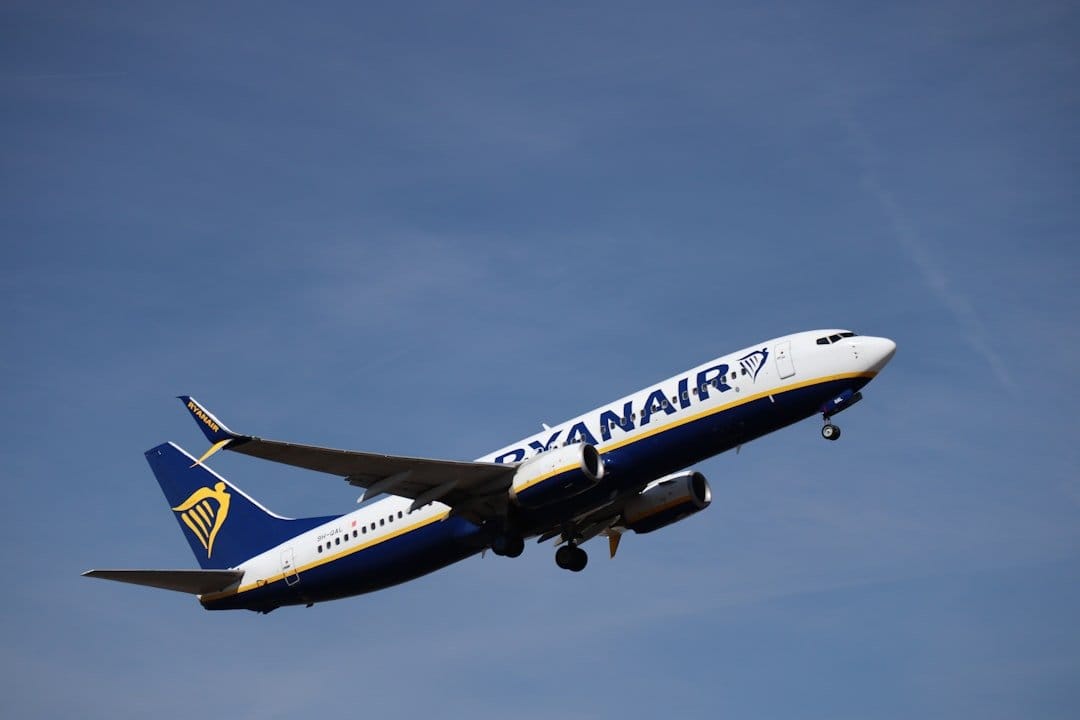
Ryanair family seating fees trigger fresh consumer-rights showdown because this is no longer just another annoying budget-airline add-on. Once an airline says a parent must sit next to a child and then charges for that arrangement, the issue stops being about optional extras and starts looking like a real pricing problem.
I’m staring at a €19.99 fare and somehow ending up in a moral crisis at checkout.
Not because of bags. Not because Ryanair wants extra money for basically every human function short of blinking. That part is folklore now. It’s because the moment an airline tells a parent they have to sit next to their child, and then charges for the privilege, we’re not talking about optional extras anymore. We’re talking about a fake price.
I’ve booked enough cursed low-cost flights around Europe (Bergamo to Valencia, Lisbon to Palermo, those weird Tuesday routes that feel generated by a sleep-deprived intern) to know the game. You see one number. You know it’s not the number. You click anyway because maybe this time you’ll beat the system. My nonna would call that stupidity with Wi-Fi.
The €19.99 fare is basically fan fiction
Budget airlines didn’t just unbundle flying. They trained us to accept that the first price is mostly fiction.
That’s why this case matters. According to reporting from Euronews and The Guardian, the UK’s Competition and Markets Authority is investigating whether Ryanair’s family seating policy could be an unfair contract term and a form of drip pricing. In plain English: is Ryanair advertising one price while knowing many families can’t actually buy the flight for that price?
The fee at the center of it is not subtle. Reports put the parent seat charge at around £8 each way, or roughly €4.50 to €13.50 depending on the route. It applies when traveling with children aged 2 to 11, and the CMA believes the setup is used across most of Ryanair’s UK routes, according to The Guardian and legal analysis from Lewis Silkin.
That last bit is the real story. If this were some weird edge case on one route to nowhere, fine. But if it’s happening across most UK routes, then this isn’t a glitch. It’s part of the business model.
And families don’t experience this as some fun modular travel choice. They experience it as being charged for a baseline condition of civilized travel: a small child should not be seated in a random row like they’re matchmaking with strangers on the internet. I don’t even have kids, but I’ve traveled with my niece once through Milan during a delay, and that was enough. Family seating is not a premium add-on. It’s society hanging on by a thread.
ITV News asked the obvious question: if the fee is unavoidable, shouldn’t it be shown upfront in the fare? Yes. Obviously yes. If I can’t realistically say no, then it belongs in the real price. This is not philosophy. It’s arithmetic.
Ryanair says it’s optional. Come on.
Ryanair’s defense is technically clever in the way a lot of deeply annoying things are technically clever.
The airline says it does not charge children, only the accompanying adult. Its website has used language like “Free reserved seats for kids under 12,” as noted by Lewis Silkin. Very cute. But if the child only gets that “free” seat when the adult pays to unlock the arrangement, then the child’s seat is not free in any normal-human sense. That’s like me saying the olives are free if you buy the €14 spritz.
According to Ryanair’s own terms and reporting from The Guardian, at least one parent or guardian must sit with children aged 2 to 11 using what Ryanair calls a mandatory family seat. For other passengers, seat selection is optional. That difference is the whole case.
Because “optional” inside a booking funnel and optional in real life are not the same thing. The internet has been running this trick for years. You give people a formal choice while designing the process so there’s no actual choice. Hotels do it. Ticketing sites do it. Every dark-pattern merchant with a UX team and no shame does it. Consumer law is finally catching up. Dio mio, finally.
Under the Consumer Rights Act 2015, the fairness test looks at whether a contract tilts too far in favor of the business. That’s the frame the CMA is reportedly using here, according to The Guardian and Lewis Silkin. And honestly, if the airline writes the rules, controls the seating map, says the arrangement is mandatory, and then charges you to comply, that balance starts looking a little drunk.
Ryanair, naturally, is not exactly doing soul-searching. It called the probe a “bogus investigation” and said it looked forward to “disproving these false CMA claims,” according to The Guardian. I almost respect the consistency. Ryanair has built an entire brand around saying the rude part out loud. Sometimes that reads as honesty. Sometimes it reads as contempt with a boarding pass.
This stops being a pricing debate once safety enters the chat
The bigger issue here isn’t comfort. It’s not whether families deserve special treatment. It’s whether Ryanair is charging families for something the airline itself treats as necessary for safety and, potentially, disability-related access.
That is one of the questions the CMA is reportedly examining, according to The Guardian, Euronews, and legal commentary from Muckle and Lewis Silkin. And once safety enters the chat, the whole “ancillary revenue” defense gets shaky fast.
There is some nuance. UK law does not strictly require airlines to seat families together, and that’s worth saying plainly. But according to Lewis Silkin, the Civil Aviation Authority advises that young children and infants should ideally be seated in the same row as accompanying adults. “Ideally” is doing a lot of work, sure. Still, it’s not random.
Then there’s Ryanair’s own explanation. As Lewis Silkin notes, the airline reportedly told Which?: “For safety reasons, children under the age of 12 must sit beside an accompanying adult.” That quote kind of blows up the whole vibe. If the airline says the arrangement exists for safety reasons, it gets very weird to present the related fee like it’s some lifestyle upgrade, in the same category as extra legroom or priority boarding.
And yes, it applies on both the outbound and return flights. Which sounds obvious until you remember how these “small” charges stack. One fee becomes two. Add another adult, a cabin bag, maybe priority because nobody wants to gate-check a stroller-adjacent meltdown, and suddenly your bargain trip is performing private-equity margins.
The disability angle is where this gets ugly. The CMA is reportedly also looking at whether parents are being charged in cases involving children with disabilities. If access or assistance is being monetized through the seat-selection flow, that’s not clever pricing. That’s charging people for baseline participation.
I used to shrug at airline add-ons, mostly because I’m exactly the kind of deranged backpack goblin who can travel for four days with one bag and a hoodie. Fine, I thought. Let people pay only for what they use. Then I started booking trips with friends who had kids, and suddenly the whole “choice” thing looked different. The interface stopped feeling like freedom and started feeling like a trap with rounded corners.
Why this Ryanair family seating fees trigger fresh consumer-rights showdown matters
At heart, this is a drip pricing fight.
That phrase sounds legal and boring, but the idea is simple: show me a cheap headline fare, then reveal unavoidable charges later in the booking flow. It’s the e-commerce version of a restaurant listing pasta at €12 and then adding a compulsory fork fee once you sit down. As an Italian, I would consider that a war crime.
According to Muckle and Gowling WLG, the Ryanair case lands right in the middle of the CMA’s broader crackdown on hidden mandatory charges under the Digital Markets, Competition and Consumers Act. The point of that law is not subtle. If there’s a minimum amount a consumer has to pay, businesses should not play hide-and-seek with it.
The CMA has been pretty clear that this is part of a bigger push. Gowling WLG notes the regulator launched a major consumer enforcement drive focused in part on drip pricing. So this is not one random tantrum aimed at an airline everybody already loves to hate. It’s part of a broader mood shift.
And there’s precedent. According to Gowling WLG, one investigation ended with a £4.2 million fine against AA and BSM driving schools over dripped booking fees. That matters because companies love to treat this stuff like abstract compliance theater until somebody gets hit with a number large enough to ruin a quarterly deck.
Airlines have had weird cultural immunity on this for years. Not legal immunity. Cultural immunity. We got so used to baggage roulette, boarding-group theater, and “basic” fares that come with emotional damage that the industry started acting like pricing honesty was optional. If the booking flow was annoying enough, passengers would blame travel itself instead of the company designing the funnel.
That era might be ending.
Travel Weekly points out that the probe could have implications across fare transparency and family booking rules more broadly. Which makes sense. If regulators decide an unavoidable family seating charge should be included in the fare from the start, that logic won’t stay neatly inside one Ryanair checkout page. It spreads to metasearch, online travel agencies, fare comparisons, all of it.

The funniest part? Italy already forced the issue
Here’s the part that made me laugh in a very specifically Italian way.
According to Lewis Silkin, after action by Italy’s Civil Aviation Authority, Ryanair reportedly does not apply this fee on flights to and from Italy. So apparently this charge is not some sacred law of aviation physics. It disappears when a regulator gets serious enough.
That’s the killer question. If the fee vanishes in one market, was it ever truly essential?
As an Italian, I find this darkly hilarious. Italy, a country where renewing a document can feel like a side quest built by Kafka after two Negronis, somehow ended up with the cleaner consumer rule here. I’ve spent more time than I’d like arguing with Italian parking machines that had the emotional intelligence of stale bread, yet on this issue we managed to be less absurd than the UK market. Miracoli happen.
The CMA reportedly believes Ryanair may be the only major airline operating from the UK that charges families this way, according to The Guardian, Travel Weekly, and Lewis Silkin. Other airlines either seat children with adults for free or allocate seats together automatically. That comparison is brutal for Ryanair because it kills the easiest defense: this is just how the industry works.
No. This is how Ryanair works.
That distinction matters. Low-cost airlines often run one commercial model and several compliance personalities depending on the country. Same planes. Same app. Same obsession with ancillary revenue. Different levels of legal courage depending on whether the local regulator is awake. If you travel around Europe enough, you start noticing this everywhere. Consumer rights are weirdly geographic for services that market themselves as frictionless and borderless.
And once a company proves it can operate without the fee on Italy routes, the “we have no alternative” line starts sounding like nonsense wrapped in terms and conditions.
The real fight is bigger than Ryanair
This investigation matters because it could redraw the line between a genuine add-on and a disguised core cost.
I’m not anti-add-on on principle. I’m a founder. I understand margins. I understand segmentation. I even understand why a 22-year-old flying from Stansted with one tote bag should pay differently from a family of four traveling in August. Va bene. Charge for extras. Just don’t gaslight me with the interface.
That’s the point. If family seating is part of the core service families reasonably expect, as legal commentary from Muckle argues, then the whole fare-comparison game has to change. Price-comparison tools can’t keep pretending all travelers are identical little avatars with no age, no mobility needs, no children, no actual life constraints.
And that has consequences beyond Ryanair. If the CMA takes a hard line here, airlines may have to change family seating disclosures, booking flows, and how they present “from” fares. Metasearch sites may have to get more honest too. A from £19.99 fare that only works for an unattached adult traveling with a toothbrush and a dream is not information. It’s marketing cosplay.
According to Lewis Silkin, the complaint reportedly followed action by Which?, which feels exactly right because this is one of those consumer issues that looks tiny until you realize it’s structurally rotten. One seat fee becomes a case study in how digital pricing manipulates people.
The broader enforcement context matters too. In its 2026–2027 annual plan, cited by Lewis Silkin, the CMA said it would focus on the clearest and most serious consumer harms, including terms that are obviously imbalanced or unfair. That tells you a lot. Regulators are picking fights normal people instantly understand. “Why am I paying to sit with my child?” is one of those fights.
Ryanair’s defenders will say consumers already know the low-cost model. Sure. We also know resort fees are nonsense and ticketing platforms are allergic to showing totals until the last possible second. Familiarity does not make a dark pattern fair. It just means we’ve been trained to tolerate it.
My hot take? The fake base fare is one of the most successful consumer-psychology scams of the internet era. Not because it’s hidden perfectly. Because it’s hidden just enough to stay deniable. Companies can always point to the fine print, the tooltip, the booking flow, the little asterisk doing unpaid labor in the corner of the screen. But if a charge is unavoidable for the traveler being targeted, then it belongs in the first number. Full stop.
That’s why the Ryanair family seating fees trigger fresh consumer-rights showdown story matters beyond one obnoxious airline. The next battle in travel isn’t over cheaper flying. It’s over honest pricing.
And if Ryanair loses, the real shock won’t be that one airline got slapped. It’ll be that regulators finally said out loud what every traveler already knows: a fare that only works if you travel like a childless adult with no needs is not a real fare.
So no, the question isn’t whether families should pay to sit together.
It’s how much longer we’re willing to let companies advertise fantasy prices and call it transparency.
Sources
- Primary trending article
- Ryanair investigated over charging parents to sit with their children
- Ryanair investigated over charging parents to sit with children
- Ryanair faces competition probe over charging parents to sit with children
- Unfair commercial practices don't fly: The CMA investigates Ryanair over its family seating fees
- Pay to parent? Ryanair’s family fees hit turbulence