
Rome Restaurant Red Flags Experts Want Tourists to See
Why savvy travelers are rethinking where they eat in Rome, and the simple warning signs experts say can help you avoid tourist-trap meals.
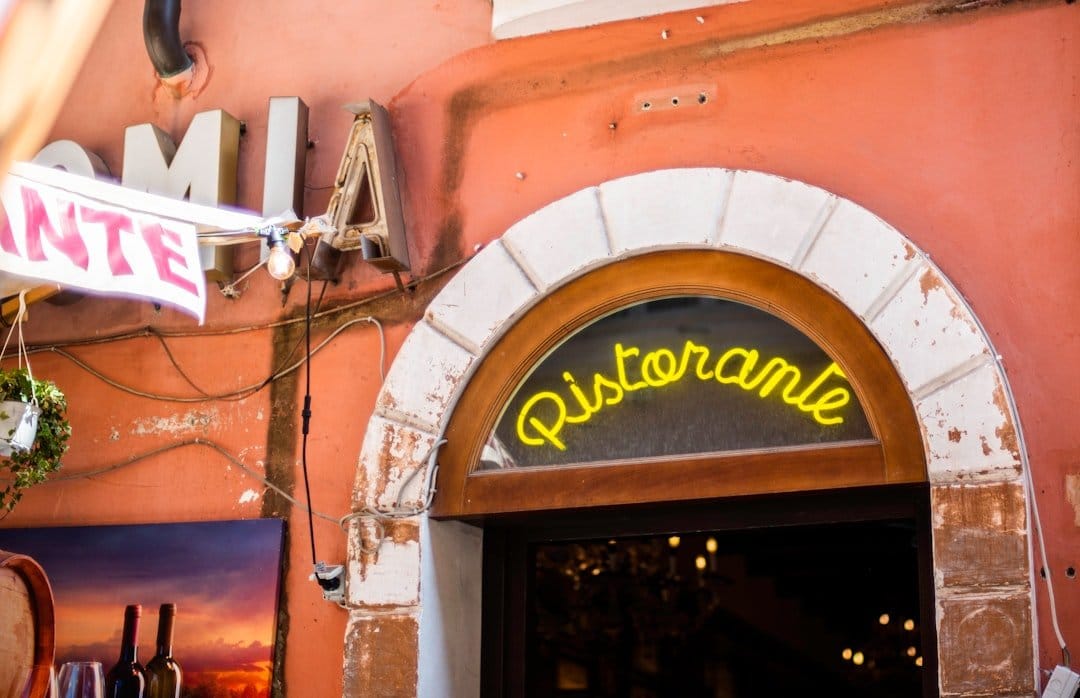
Rome restaurant backlash intensifies as experts teach tourists red flags, and the real issue is bigger than one bad plate of pasta. Travelers are increasingly choosing restaurants by algorithmic signals like review volume, viral posts, and prime locations, only to end up with overpriced, forgettable meals that mistake visibility for quality.
I’ve watched people in Rome walk past a genuinely good trattoria because it had “only” 312 Google reviews, then line up for a place with laminated menus, a guy outside yelling my friend, best carbonara in Rome, and 63,000 TripAdvisor ratings like they were boarding a Ryanair flight to disappointment. That’s the trap. Not bad pasta. Bad pattern recognition.
On the surface, this is about how to avoid a terrible restaurant in Rome. But the deeper story is uglier and much more current: the internet has trained people to confuse visibility with quality, popularity with trust, and “I saw this on TikTok” with “someone in this kitchen actually cares.”
As an Italian, that part irritates me more than the tourist traps themselves. Rome has always had mediocre restaurants near monuments. That is not new. What changed is the scale, and the way people now arrive with a completely broken operating system for choosing where to eat. They pick lunch the way they buy cheap headphones online: highest rating, most reviews, fast reassurance, done.
Then they act shocked when the cacio e pepe tastes like warm glue.
A few weeks ago I was near Piazza Navona with a friend from New York who wanted to try a place because it was “all over Instagram.” I looked at the menu photos, the host doing customer acquisition like a founder before seed round, and the giant tray of lasagna posed near the entrance like evidence. My nonna would have crossed herself. We walked ten minutes, sat down somewhere quieter, ate anchovies on buttered bread and tonnarelli that actually tasted alive, and my friend said, almost offended, “Why doesn’t everyone know about this place?”
Because everyone is looking at the wrong signals.
The 63,000-review delusion in Rome
The Washington Post piece that kicked off this latest wave of discourse nailed something I’ve seen for years. Katie Parla, who has lived in Rome for decades and knows the city better than most people “discovering” it online, said she keeps hearing tourists say, “Oh my God, this place has like literally 63,000 reviews on Tripadvisor. Let’s go here.” Her response was simple: that is a giant red flag.
Exactly.
Not a green flag. Not social proof. A red flag.
Because in Rome, a massive review count often tells you less about excellence than throughput. According to the Post, Parla says those numbers can signal a high-volume restaurant catering to tourists, maybe even serving “a lot of prepared nonsense and low-quality stuff.” Brutal phrase. Also correct.
That’s the delusion. People think 63,000 reviews means 63,000 confirmations of quality. What it often means is 63,000 people passed through a machine built to extract one meal from one-time customers standing near the Pantheon, Piazza Navona, or the Trevi Fountain. The goal is not loyalty. It is turnover. Fast menu recognition. Safe-looking dishes. Carbonara calibrated for people who want “Roman food,” but not too much Roman food.
Reviews are not neutral. Platforms shape behavior. Once you train people to ask “where did the most people click?” instead of “who actually cooks well here?”, you flatten the city. Rome stops being a food culture and becomes a leaderboard.
I understand the anxiety. Nobody wants to waste lunch in Rome. But shortcuts come with trade-offs, and the internet’s favorite shortcut is quantity pretending to be discernment.
I once picked a “top-rated” ramen spot in Lisbon because it had thousands of reviews and a very clean minimalist brand identity. It was fine. Which is almost worse than bad. Bad is at least memorable. Fine is offensive.
Rome deserves better than being consumed through review inflation.
How Rome got optimized for tourist traffic
The city did not wake up one morning and decide to cosplay itself for tourists. It got optimized, slowly, the way everything gets optimized once enough money and foot traffic enter the chat.
AFAR put it bluntly: the centro storico is being “consumed by mass tourism.” Since 2019, sitting on the Spanish Steps has been banned. In 2023, the Pantheon started charging a €5 entrance fee for the first time in its history. To get near the Trevi Fountain basin now, you wait in line. And this year’s Catholic Jubilee is expected to bring an extra 30 million visitors to Rome.
At that point, we are not talking about a busy season. We are talking about a city being asked to perform itself at industrial scale.
That pressure changes restaurants too. Rick Steves has a simple rule, quoted in the Washington Post piece: beware “high rent” areas. In Rome, that is not snobbery. It is economics. If you are paying brutal rent near a monument, and most of your customers will never come back, your incentive is not to build a beloved institution over fifteen years. Your incentive is to get people seated, fed, upsold, and replaced before the gelato melts.
This does not mean tourists ruin everything. Rome has always been a global city. People should visit. They should eat. They should make mistakes and then learn. The problem is structural. Too much of the historic center now rewards businesses designed for transient attention, not neighborhood trust.
Sophie Minchilli told the Post, “There are obviously some great restaurants, but it’s harder [to find them] than it used to be.” That is the sad part. Not because Rome is over, but because a city famous for pleasure now often requires defensive strategy. You cannot just wander around the Pantheon at 1:30 p.m. and assume the city will catch you.
Spontaneity in hyper-touristed zones has been hijacked by businesses that know exactly how tired visitors think: central location, lots of reviews, visible pasta, decent lighting, no risk of challenge.
That is not hospitality. That is a conversion funnel with olive oil.
Rome restaurant red flags are easier to spot than people think
Most Rome restaurant red flags are visible in about 30 seconds. You just have to stop roleplaying “traveler” and start acting like a person who has eaten food before.
AFAR and the Washington Post point to the same dead giveaways: restaurants directly on major piazzas, menu photos, hard-sell hosts trying to pull you in, performative fresh-pasta displays aimed at passersby, and gelato colors so bright they look approved by a vape company. If the pistachio is glowing neon green, run. If someone is waving a laminated menu at you near the Pantheon, they are not inviting you into Roman culture. They are converting foot traffic.
One of my favorite tells is the menu that says almost nothing. Generic dish names. No producers. No ingredients worth mentioning. No clue why this place exists beyond the fact that tourists get hungry every four hours. Sophie Minchilli said she prefers restaurants whose menus list producers and ingredients, including who makes the cheese and where things come from. That matters because it signals a relationship with food, not just with demand.
Specificity is not a guarantee of greatness. But it is evidence of intention.
The opposite is the restaurant built like theater. Pasta being stretched in the window because tourists expect visible authenticity. Giant bowls of ingredients by the entrance. A host doing soft aggression in five languages. A menu with carbonara, amatriciana, pizza, seafood risotto, tiramisù, club sandwich, gluten-free burger, and spritz happy hour all at once.
That is why the phrase Rome restaurant backlash intensifies as experts teach tourists red flags lands. The red flags are not secret local knowledge. They are obvious the second you stop asking “Does this look like Rome?” and start asking “Does this look like someone is trying very hard to sell me the idea of Rome?”
I learned this the embarrassing way. Years ago in Florence, I defended a restaurant because the terrace was beautiful and the pasta looked “classic.” It was terrible. I sat there annoyed at the food, then more annoyed at myself, because I had ignored every sign just to protect the fantasy of the trip.
Sometimes people do not get scammed because they are clueless. They get scammed because they want the fantasy.
And Rome is very, very good at selling fantasy.
The best Rome food advice is still stubbornly analog
The best advice on where locals eat in Rome is honestly not very glamorous: borrow someone else’s taste.
Katie Parla put it perfectly in the Washington Post: “Go to a place that someone with good taste likes.”
That can mean local writers, a trusted guidebook, or a food tour run by someone who knows what they are doing. Good tours are compressed pattern recognition. They do not just feed you. They teach you how to stop being an easy mark.
Sophie Minchilli’s Via Rosa tour, for example, starts at Campo de’ Fiori market and includes stops for pizza, sandwiches, cheeses, and pastries, while giving people restaurant advice they can actually use for the rest of the trip. That is useful because it teaches judgment, not just consumption.
I am very pro this approach because the internet has made people weirdly allergic to expertise. Everyone wants to believe they can outsmart a city with enough tabs open. But more information does not automatically produce better judgment. Usually it just produces more confidence.
And confidence is exactly what gets people trapped in Rome tourist restaurants.
I still use guidebooks, by the way. Actual paper guidebooks. A good guidebook has something most apps do not: a point of view. Someone made choices. Someone excluded things. Someone was willing to say this is worth your time and this is not. That is more useful than a democratic soup of opinions from people reviewing the bathroom lighting.

You do not need hidden gems, just better geography
I get a small allergic reaction every time someone asks me for “hidden gems” in Rome. The city is not a scavenger hunt for your content strategy. You do not need a secret. You need a wider map.
AFAR’s neighborhood advice is the kind more travelers should follow because it solves the actual problem. Testaccio is a restaurant and nightlife hotspot for a reason. San Lorenzo is hip and away from the heaviest tourist traffic. Garbatella has the working-class neighborhood feel people claim they want. Esquilino, especially around Piazza Vittorio, keeps getting more interesting for dining and nightlife. Coppedè offers a completely different rhythm, plus architecture that feels like Rome briefly got weird in a very stylish way.
This is not “off the beaten path” in the influencer sense. It is just normal city behavior. Go where a city still has regulars.
Because local does not mean frozen in amber. It means the place still operates in a real context. It has standards beyond one viral lunch rush. It has customers who come back. It has to survive on reputation, not just geography.
Condé Nast Traveler made this point well: Rome’s restaurant scene is “hotter than ever.” The city still has old-school trattorias people love, but they now sit next to contemporary bistros and fine dining places doing newer, more interesting things. Cities should evolve. Rome is not a museum with tablecloths.
A few months ago I spent an evening in Testaccio bouncing between spots with friends, and it reminded me how distorted this whole conversation gets online. In one neighborhood, within a short walk, you can have classic Roman dishes done properly, then natural wine, then something more modern, then dessert somewhere that does not need to scream for your attention. Nobody is begging you to come in. Nobody is holding a truffle wheel in the doorway like a carnival act. The whole vibe is calmer because the business does not depend on tricking strangers every twenty minutes.
That is the real hack, if you insist on hacks: leave the overexposed zones. Go see the monuments. Be a tourist. But do not insist on eating every meal within a 300-meter radius of where every other visitor is also overheating in linen.
Not every restaurant near a monument is a trap
Rules help until they turn into superstition.
Rick Steves’s “high rent” rule is smart, and it is worth keeping in mind. But if you turn that into “never eat near a monument,” you miss the point. The Washington Post notes that Katie Parla recommends Armando al Pantheon, which is, as the name suggests, right by the Pantheon.
And Armando matters because it breaks the lazy version of the rule.
The real question is not “Is this near a monument?” It is “Does this place have an identity beyond the monument?” Armando does. It is not surviving because exhausted tourists need chairs. It has a reputation, a point of view, and actual standing in the city’s food culture. That is the distinction. Proximity is not the crime. Emptiness is.
This is also why Condé Nast Traveler’s framing of Rome’s food scene matters. Quality exists across formats, from a little storefront serving pizza by the slice to Michelin-starred splurges, when there is intention behind it. A tiny pizza al taglio counter can be more honest than a giant “traditional Roman experience” restaurant with a twelve-page menu and a host in a blazer. Fancy does not save you. Casual does not save you. Taste saves you.
That is my broader issue with internet advice. It turns discernment into dogma. Never eat here. Always trust that. Avoid all places with lines. Trust all places with handwritten menus. Real food cities are messier than that. Some lines are worth it. Some handwritten menus are pure theater. Some places near monuments are excellent. Some side-street “local gems” are mediocre and coasting on vibes.
Rome is still a real city. Which means it contains contradictions.
Audit your traveler brain before you blame Rome
If Rome is starting to feel fake, I do not think the first thing to audit is the city. I think it is the traveler brain most people bring with them, the one trained by platforms to seek reassurance instead of judgment, consensus instead of taste.
The next few years, especially with those 30 million Jubilee visitors, will probably widen the gap between restaurants built for memory and restaurants built for traffic. That is what this whole Rome restaurant backlash intensifies as experts teach tourists red flags conversation is really about. Not just where to avoid lunch, but how overtourism and algorithmic thinking combine to produce meals that are optimized, visible, and dead inside.
So here is the question worth asking over a glass of Frascati and too much bread: when you travel, are you actually looking for a meal you will remember, or just a place with enough stars to let you stop thinking?
Because those are not the same thing.
And in Rome, confusing them is how you end up paying €22 for sadness near a fountain.
Sources
- Primary trending article
- 41 Best Restaurants in Rome, According to a Local Expert
- How to Experience Rome Like a Local, Not a Tourist
- How to avoid a terrible restaurant in Rome