
Rome Airports Revolt Over EES Before Summer Rush
Rome’s airport chiefs are warning Europe’s new border system may buckle under peak demand, exposing the gap between security tech and real travel flow.
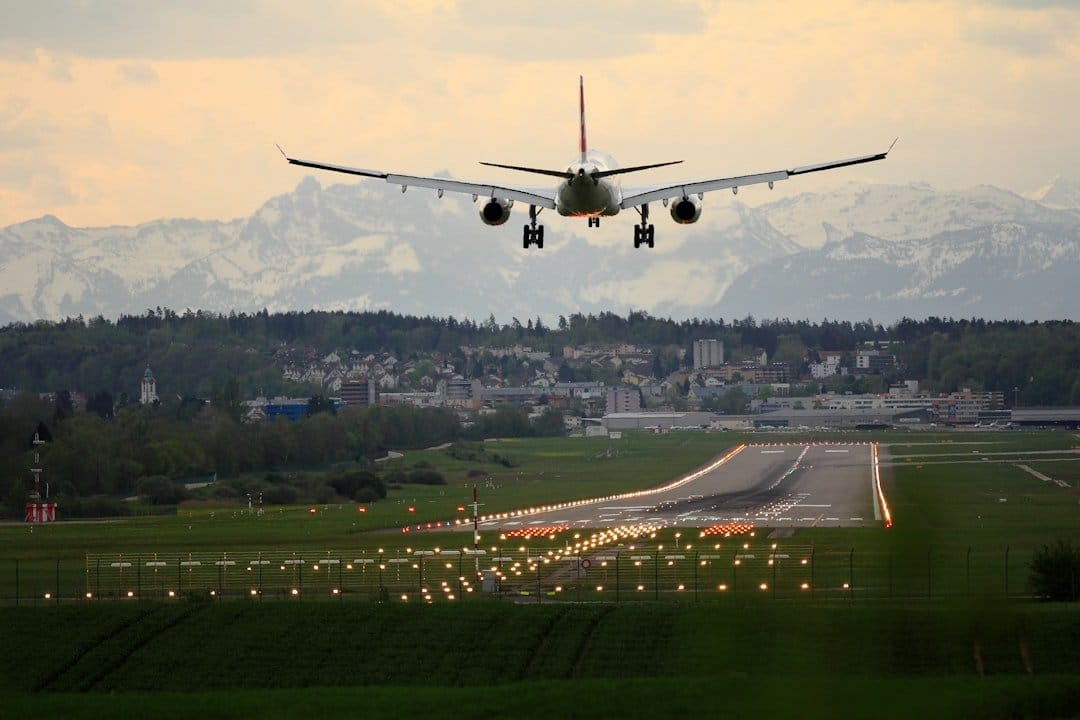
I’ve spent enough time in Italian airports to know the exact moment a system stops being a system and becomes vibes. A guy in a fluorescent vest waves people left. Another waves them right. Somebody behind a desk says prego, prego with the confidence of a man who has absolutely no plan, only momentum.
So when I saw the phrase Rome airports revolt over EES border checks before summer crush, I didn’t think: scandal. I thought: yes, obviously. Of course Rome is the city publicly stress-testing Europe’s shiny border-tech dream. Rome knows something Brussels keeps trying not to say out loud: if a system only works when traffic is light and nobody’s stressed, it doesn’t work. It’s a demo.
That’s the whole story here. Not that Rome Fiumicino EES queues could get ugly. Not even that parts of the process might be skipped when the pressure spikes. The real story is that this possibility was built in from the start, then dressed up as “flexibility.” My nonna would call that lipstick on a traffic jam.
Rome airports and EES border checks: the moment the CEO stopped pretending
The most revealing part of this mess wasn’t some viral passenger rant. It was Marco Troncone, CEO of Aeroporti di Roma, basically dropping the corporate mask in public.
According to The Financial Times, as cited by The Local and Euronews, Troncone rated his concern about summer at an “eight or nine” out of 10. Airport CEOs are not supposed to talk like that. They’re supposed to sound like they were grown in a lab and fed nothing but “operational resilience” and room-temperature water.
Instead, he said this:
The process proves to be incompatible with the peak volumes that we are going to face.
That is not spin. That is a man staring directly into July and seeing the face of God.
Then he got even clearer:
So the only way is to open up the valve.
And the line that matters most:
There is no way that we can deliver 100 per cent of the enrollment.
If you run Fiumicino and Ciampino and you’re saying, out loud, that full EES compliance is impossible under summer volume, you are not tweaking around the edges. You are admitting the launch is operationally unfinished.
He even used the word “disaster.” Which, to be clear, is not me being dramatic because I once missed a connection and held a grudge for half a decade. That’s the guy running Rome’s airports warning that unless some passengers bypass biometric controls, the whole thing could buckle under pressure.
And Rome is not some weird outlier with one bad terminal and a cursed Tuesday. Fiumicino handled around 49 million passengers in 2025. It’s one of Europe’s major gateways. If the people running that machine are telling you the EU Entry/Exit System in Rome airports can’t handle peak flow, I’m going to believe them over any polished PDF from Brussels. Sorry.
EES was supposed to replace passport stamps. Instead it built a new bottleneck
In theory, EES is clean and modern. For non-EU short-stay travelers, the old passport stamp gets replaced by a digital record: entries, exits, refusals, facial image, fingerprints, travel document data. According to the European Commission, the system started rolling out on 12 October 2025 and became fully operational on 10 April 2026 across 29 European countries.
On paper, lovely. In real life, less lovely.
The cruel little irony is that the thing that gives EES its value is also the thing that slows it down. First-time biometric enrollment is not a glance-and-wave process. You stop the traveler. You capture fingerprints. You take the facial image. You create the record. Border control becomes a live database event.
That’s fine when volumes are normal. Airports do not have normal volumes in summer. They have chaos in linen.
And to be fair, the system does have real security value. The European Commission says the rollout has already logged more than 45 million border crossings, recorded over 24,000 refusals of entry, and identified more than 600 people who posed a security risk. Those numbers matter. This is not fake innovation for the sake of a press release.
The Commission also pointed to a case in Romania where biometric collection exposed a traveler using two identities and two documents under different names. Good. Useful. That’s exactly the kind of thing a digital border system should catch.
I’m not arguing EES is useless. I’m arguing something more annoying: security performance and passenger throughput are not the same product, and Europe keeps pretending they are.
They’re not.
A system can be good at catching identity fraud and still be terrible at biometric border checks in Italy during summer travel. Both things can be true. Institutional Europe hates saying that because trade-offs make the brochure ugly.
The real bug isn’t biometrics. It’s pretending summer traffic is a side quest
The clearest explanation came from Uku Särekanno, deputy executive director at Frontex. In a Euronews report, he said getting fingerprints from non-EU travelers on their first Schengen entry is “probably the most challenging part” of the rollout.
That sentence is doing a lot of work. “Probably the most challenging part” is bureaucrat for this is where the wheels come off, ragazzi.
Then came the line that should have set off alarms everywhere:
We expect the situation will stabilise in one or two years because the most challenging part is the first enrolment.
One or two years.
Not a rough month. Not some early turbulence. One or two years.
If you launch a friction-heavy border system before peak travel and then casually admit it may take up to 24 months to settle, that’s not a rollout. That’s beta testing on people trying to get to Mallorca.
And yes, we already know what that looks like. Reports cited by The Local and Euronews mentioned two- to three-hour queues at passport control. Two to three hours. I become a worse person after 18 minutes in a border line. By 40, I’m spiritually ready to renounce aviation and travel only by donkey.
The maddening part is that none of this was hard to predict. Summer travel in Europe is not a black swan event. It happens every year. Children scream. Someone loses a sandal. A British man in a salmon polo argues with a scanner. This is not new information.
Italy isn’t being chaotic. It’s being honest
This is where the whole “revolt” framing gets a bit theatrical. Because when you actually look at the rules, Italy isn’t smashing the machine. It’s using the escape hatch that was built into it.
According to The Local, the EES implementation rules include a flexibility mechanism that lets member states partially suspend checks at individual border crossings for up to six hours at a time until September.
Read that again. The fallback is part of the design.
So no, contingency is not some Mediterranean tantrum. Contingency is architecture.
Then came the rumor carousel. A bunch of travel sites reported that Italy was preparing an emergency decree to bring back manual passport stamping whenever queues exceed 45 minutes, supposedly until 30 September. Great headline. Very clickable. Small issue: according to The Local, no such decree has been announced, and Italy told the European Commission it does not plan to do exactly that.
That gap between rumor and official position tells you a lot about how Europe governs. The center gets to say the framework is intact. The local airport gets to absorb the operational pain. And the traveler gets to stand there clutching a passport like it’s a raffle ticket.
The key detail is the boring one, which means it’s the important one: individual airports are responsible for implementing the new rules. That’s the whole game. Brussels designs. Rome absorbs. Travelers suffer. Then everyone releases a statement about coordination and lessons learned.
I’ll admit something deeply on-brand for a tech founder: I love systems. I color-code travel folders. I automate stupid admin. A clean product flow gives me an embarrassing amount of joy. Which is exactly why this kind of thing makes me irrationally angry. Not because I hate digital borders, but because I hate fake competence.
If your emergency mode is “skip parts of the process when it gets busy,” then “busy” was always part of the product problem.

This isn’t just Rome. Europe’s EES summer travel chaos is already uneven
Rome is just the city loud enough to say it.
The bigger story is that EES summer travel chaos in Europe already looks like a multi-country improv session where everybody got the same script and then ignored half of it.
Take Portugal. According to Euronews, it plans to deploy hundreds of PSP officers at national airports at the beginning of July to help streamline border procedures. That is not the move of a country feeling relaxed about throughput. That is a country saying, “software alone is not saving us, bring humans.”
Then there’s Greece, which briefly became the center of one of those very European administrative soap operas. Reports said it had effectively suspended checks for British citizens. Then that was denied, with the foreign ministry saying it had no information that “specific nationalities are temporarily exempt from the relevant procedure.”
That sentence is peak Europe. It means nobody wants to be caught publicly owning the workaround.
And then you have Stefan Schulte, president of ACI Europe and head of the company that owns Frankfurt airport, saying EES is “what keeps me and many other airport CEOs across Europe awake at night.”
That quote is incredible. Airport CEOs are paid to look unflappable, like men who can meditate through a runway closure and a baggage strike at the same time. If this is keeping Schulte awake, it is not a local hiccup.
Särekanno from Frontex basically confirmed the unevenness. According to Euronews, he said:
There are some who are managing it rather well and have dedicated resources for them to follow the processes. There are others who are still struggling.
That’s the traveler experience in one sentence. Harmonized rules on paper. Border roulette in practice.
Across Spain, Portugal, France, Greece, and Italy, there have already been reports of long queues and inconsistent procedures. So when people say “one European border system,” what they really mean is 29 countries trying to perform the same play with different staffing levels, terminal layouts, budgets, and tolerance for panic.
Bellissimo.
What EES border checks mean for travelers this summer
If you’re a non-EU traveler heading into Schengen, this is not just another airport annoyance story. The official EU travel portal makes clear that EES creates and checks your digital entry/exit record, including biometric data and your authorized stay.
That changes the feel of border crossing.
Under the old system, if an officer stamped your passport and waved you through, you had a physical mark. Maybe crooked. Maybe faint. Maybe it looked like it had been applied by a sleepy uncle after lunch. But it existed. Now your trip lives in a system.
And when systems are applied unevenly, people don’t just worry about delay. They worry about ambiguity.
According to the official EES FAQ, if the system is temporarily not applied at a crossing because of contingency or technical reasons, travelers can still face random checks. The FAQ also covers cases where registration may not happen in the standard way. That’s not automatically catastrophic, but tell that to someone sprinting for a connection while wondering whether their entry is sitting correctly in a border database.
The EU now also has an official stay-calculation tool for the 90/180-day Schengen rule. Which makes sense. Recorded entries and exits matter more now than a stamp ever did. Rational? Yes. Slightly dystopian? Also yes.
And this is where I get annoyingly human for a second: even with a U.S. passport and enough travel experience to know the drill, I still get that weird low-grade anxiety at border control. Not because I’m doing anything wrong. Borders just have that effect. For five minutes, everyone becomes a child waiting for an adult to say yes.
Add inconsistent EES enforcement to that, and the stress spikes fast.
The ripple effects go beyond non-EU passengers too. Queue blowups mean missed connections, stressed staff, delayed flows, and the general airport mood mutating from “vacation” to “open-air hostage situation.” Nobody wins when passport control turns into a boss level.
August is the real test, not the press release
What Rome is exposing is not an Italian failure. It’s a European fantasy.
The fantasy is that you can launch a sleek biometric border system, flash some early success numbers, and treat peak-season human volume like a minor implementation detail.
No. Volume is the product.
If Fiumicino has to choose between keeping people moving and proving Brussels’ software works exactly as advertised, it will choose movement every single time. Because airports are judged by lines, not white papers. By whether families make flights. By whether queues spill into corridors. By whether the guy in the reflective vest has to invent a parallel process using hand gestures and divine intervention.
That’s why Rome airports revolt over EES border checks before summer crush is a slightly misleading headline. Rome isn’t revolting against Europe’s border system. Rome is revealing what the system actually is under pressure: an unfinished operational model with an officially sanctioned bypass mode.
My bet? This summer won’t kill EES. It’ll do something more embarrassing.
It’ll prove that Europe’s smartest new border system still depends on the oldest technology on the continent: a stressed human being making it up on the fly while shouting aprite tutto and opening the side door.
Sources
- Primary trending article
- ‘Very worried’: Rome’s airports may suspend EES over peak summer season
- Europe’s chaotic Entry/Exit System could take up to two years to stabilise, EU official warns
- Iran war, strikes, EES: Why the number of people flying in Europe is dropping
- The Entry/Exit System will become fully operational on 10 April 2026
- How will the EES work? What is new during the border checks?