
Italy Olive Oil Rescue Call Exposes a Broken Market
Confagricoltura warns Italy’s olive oil market is stalling under price pressure, weak value signals, imports, and retail-driven discounting.
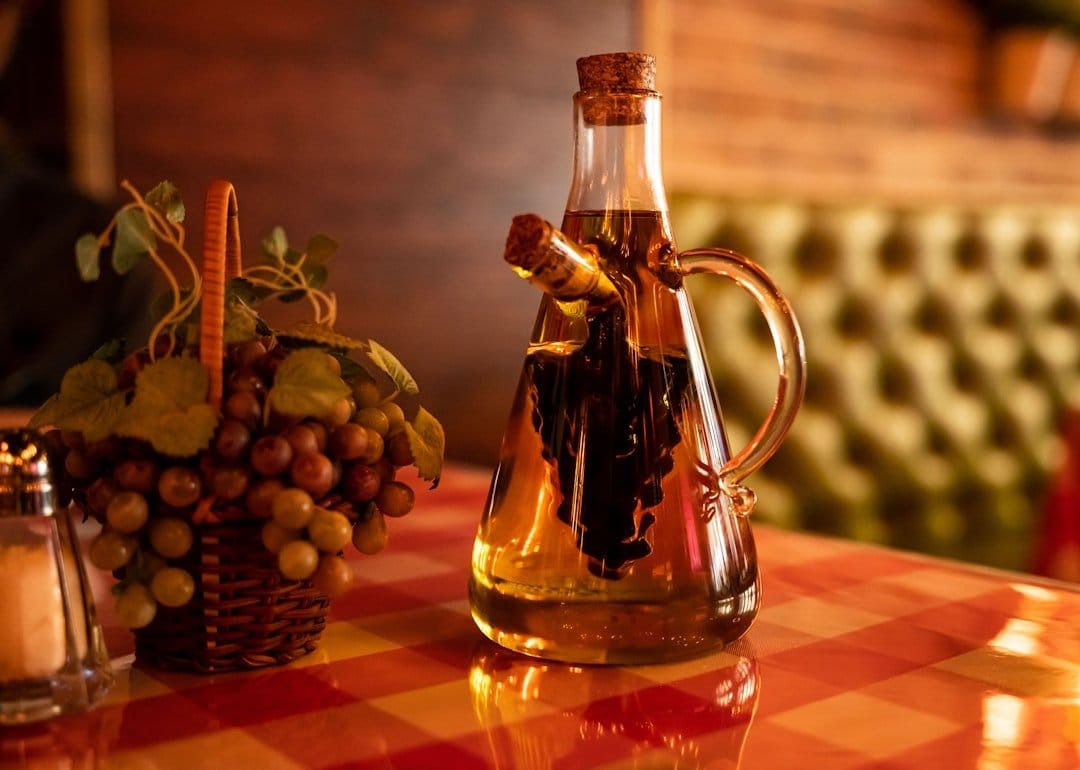
You can feel the scam in the supermarket before you even read a label. Twenty dark green bottles, all yelling extra virgin, all trying to look expensive, and somehow the only thing most people can actually compare is the price tag.
So when Confagricoltura demands urgent rescue as Italy’s olive oil market stalls, I’m not shocked. Italy doesn’t have an olive oil problem. Italy has a value problem.
And yes, I know. That sounds like founder-brain. Like I’m about to open a Notion doc and invent a framework nobody asked for. But this time it’s true. According to Italian Food News and Teatro Naturale, Confagricoltura told the Tavolo Olio at MASAF that the sector risks “il collasso economico prima dell’avvio della prossima campagna olearia” if nothing changes. In plain English: parts of the supply chain could crack financially before the next harvest even starts.
That’s not a rough quarter. That’s a market choking on its own bad habits.
Confagricoltura demands urgent rescue as Italy’s olive oil market stalls
What makes Confagricoltura’s warning serious is that it’s not blaming one villain. Not drought alone. Not imports alone. Not cheap consumers alone. The group laid out the full mess: high stocks, falling sales, foreign competition, and weak valorization of Italian product. That combination is how a “difficult season” turns into family businesses quietly disappearing.
The bleakest line in the reporting is also the clearest. Without immediate intervention, many firms may be forced to “vendere sottocosto o a bloccare la raccolta.” Sell below cost or stop harvesting. That’s not market efficiency. That’s self-harm with a nicer font.
I grew up with the full Italian mythology around olive oil. The grove is sacred. The frantoio is sacred. The first pressing is sacred. Every uncle becomes a sensory expert after two glasses of Nero d’Avola. Then those same people hit the supermarket and suddenly become ruthless little private equity guys the second they see a promo sticker.
That contradiction is the whole crisis.
A market can be full of product and still starve for value. Warehouses are stocked, labels are printed, trucks are moving, and producers are still broke because the thing they’re selling is treated like a generic commodity instead of a differentiated food. Olive oil fell into that trap, and Italy absolutely helped build it.
Teatro Naturale’s reporting from 28 May 2026 made the timing look even uglier. Confagricoltura isn’t asking for rescue because one region had a bad week. It’s asking because the market is stuck while people are already gossiping about the next campaign. If you’re sitting on inventory and buyers are waiting for future prices to soften even more, your cash flow gets strangled in real time. Bills don’t care about rumors. Workers don’t either.
And this is the part food people love to ignore because it ruins the romance. You can’t pay a mill with vibes. You can’t pay pruning crews with “Made in Italy” nostalgia. You definitely can’t maintain groves because some magazine in Brooklyn might eventually describe your oil as “peppery and expressive.”
Confagricoltura is right to ask for immediate support. But the more important part is the structural one. Emergency money is oxygen. It is not a business model.
The shelf is lying, and everyone knows it
The sharpest thing Confagricoltura said is also the most embarrassing for all of us: consumers don’t sufficiently perceive the quality difference between Italian oil and community oil, so they choose the cheaper one.
There it is. No poetry. No patriotic speech. If people can’t tell why one bottle deserves more, they buy the lower-priced bottle. Of course they do.
And honestly, Italians are not innocent here. We romanticize olive trees like they’re elderly philosophers in linen shirts, then shop like hedge funds. Lowest spread wins. Fine. But let’s at least be honest about it.
Confagricoltura’s request for an institutional communication campaign is basically an admission that the category failed at the most basic job: explaining why origin, quality, territory, and national peculiarities matter. If you need a ministry-backed campaign to explain that oils are not all the same, your branding has already face-planted into the pavement.
And no, this isn’t just marketing fluff. Quality differentiation is real. ANSA reported on the 32nd edition of the Concorso Montiferru in Oristano, one of Italy’s most respected olive oil competitions. In the Biologico category, Azienda Agricola Caputo Maria from Puglia won with Gran Pregio Bio Coratina. In DOP/IGP, Le Tre Colonne di Salvatore Stallone won with DOP Terra di Bari.
That matters because quality is specific. It has a producer, a cultivar, a place, a style. It is not “green bottle, premium-ish label, ciao.”
ANSA described the Premio Montiferru as “uno dei più autorevoli concorsi oleari italiani”, a serious benchmark for technical and organoleptic evaluation. The problem is that this distinction barely survives contact with retail.
I saw this in Milan not long ago, in one of those polished supermarkets near Porta Romana where you can buy crackers with a backstory. A guy in loafers looked at two EVOO bottles for maybe four seconds, then grabbed the one on promotion. Not because he was dumb. Because the category gave him no usable reason not to. If labels are vague, blends are confusing, and everything looks vaguely premium, then price becomes the only signal anyone can read.
That’s not consumer failure. That’s market design.
Confagricoltura is right to push a campaign around Italian origin, quality, territorial link, and national peculiarities. But even that feels too polite. If people need a decoder ring to understand what they’re buying, the industry has already lost half the battle.
And abstract quality does not survive inflation. Ever.
Olive oil prices are being written by rumor before the harvest even happens
If you want to understand why producers are furious, watch the prices. Or better: watch how prices get pushed around by expectation, gossip, and buyer psychology before the agronomy is even settled.
According to Teatro Naturale, Spain’s EVOO price was €3.9/kg on 3 June, based on PoolRed, and it had been below the psychological €4/kg threshold since 24 May. That number matters because Spain is the gravitational center of Mediterranean olive oil pricing. When Spain slides, everyone else starts sweating immediately.
Italy is not magically protected by vibes and opera. Teatro Naturale reported that Foggia hit €5.85/kg on 28 May, down 1.7%, while Lecce, Brindisi, and Taranto dropped to €5.3/kg, down 5.4%. That’s Puglia. The heart of the thing. Real producers watching prices soften while their fixed costs remain, how do I put this delicately, completely insane.
The most maddening part is that this decline is being driven by talk of a stronger upcoming Mediterranean crop, even though reality is much messier. Teatro Naturale noted that Andalusia saw temperatures of 35–38°C during flowering, which can affect olive physiology and make all those “record crop” assumptions look a bit fantasy-coded. So the market is pricing in abundance while the actual trees are out there getting grilled.
Classic Mediterranean chaos. But with spreadsheets.
This is where I stop joking for a second because it’s genuinely infuriating. Farmers are living in the real world. Traders are living in a rumor economy. One side is looking at flowering, heat stress, labor, and mill costs. The other is gaming expectations months in advance.
Teatro Naturale went further and reported that after the arrival in Puglia of some big bottlers, there were meetings with frantoiani to condition the market from October onward, echoing what happened last year. The publication described the Lecce, Brindisi, and Taranto exchanges as “un indicatore importante” and even “una base di appoggio ufficiale per azioni speculative al ribasso.”
Read that again. Speculative downward actions.
If you’re a small or mid-sized producer, what are you supposed to do with that? Wait nobly? Journal about resilience? Post an Instagram reel with drone footage of your grove and hope the pricing gods feel merciful?
This is why the Italian EVOO crisis feels so brutal. The product is agricultural, but the pricing environment is financial, psychological, and heavily shaped by whoever can set the mood first. Buyers hold back. Inventories build. Lower prices start to feel inevitable, even when they’re partly manufactured by expectation and market power.
And once that mood hits, it leaks straight onto the shelf.
Imports shape “Italian” olive oil more than people want to admit
Here’s the part that makes everyone slightly uncomfortable at dinner. Italy’s olive oil identity is emotionally national and operationally transnational.
Confagricoltura basically said as much by asking for stronger controls on imports, on community and non-EU blends, and on clearer origin transparency. You don’t ask for that unless the current system is muddy enough to confuse consumers and flatten value.
I’m not anti-import. That would be stupid. Italy has long imported oil, blended oil, bottled oil, and exported oil. This is not some shocking revelation. It’s how the category works. The problem is pretending consumers understand that structure when plenty of them absolutely do not.
The Tunisia numbers make that impossible to ignore. According to Teatro Naturale, citing Onagri, Tunisia exported 295,400 tons of olive oil between November 2025 and April 2026, up 63.9% in volume and 49.2% in value. Italy accounted for 19.6% of those export volumes, making it the second-largest customer worldwide after Spain. In Tunisian organic olive oil, Italy is the first importer, with 38% of volumes.
That is not a footnote. That is the map.
And the pricing pressure is obvious. The average Tunisian organic olive oil price was around €3.90/kg, according to the same report. If domestic Italian producers are trying to defend a higher-value position while large volumes circulate internationally at those levels, pretending the shelf is some patriotic meritocracy is nonsense.
What bothers me isn’t imports themselves. It’s the dishonesty around them. Imported bulk oil can help sustain the system while domestic producers still get crushed by the same low-price culture. Consumers deserve a much clearer explanation of what “Italian” means on a label, what a blend means, what bottling means, what origin means, and where the value is actually being captured.
Because right now a lot of people hear “Italian olive oil” and imagine one clean national story. It’s not clean. It’s a cross-border industrial and agricultural network with branding layered on top.
Fine. Say that.
Explain it. Label it clearly. Stop acting like transparency is an optional accessory.

The supermarket didn’t just respond to demand. It trained it
I have a strong opinion here, and for once I’m very comfortable saying I’m right: the GDO didn’t merely react to consumer behavior. It created a lot of it.
According to Italian Food News, Confagricoltura wants an institutional confrontation with the grande distribuzione organizzata, which today privileges price logic at the expense of Italian product. That’s the diplomatic version. The less diplomatic version is that supermarkets turned olive oil into a promo-war item and now everyone else gets to deal with the wreckage.
If the shelf constantly tells shoppers that the main difference between bottles is €1.80, then congratulations, you’ve flattened a culturally dense, territorially specific food into a race to the bottom. Consumers didn’t invent that logic alone. Retail taught it, repeated it, and optimized it.
I see a version of this in America too. Walk into a Whole Foods in Austin or a fancy grocery store outside New York and olive oil is either sold like luxury home decor or like generic pantry fuel. Very little in between. Italy does its own version of the same mess: poetic language upstream, brutal price compression downstream.
That’s why Confagricoltura’s push for promotional initiatives in HoReCa and schools is one of the smartest parts of the whole package. If people only encounter olive oil as anonymous table lubricant in a trattoria or as cheap cafeteria fat, they never build a sensory memory for quality. You can’t expect adults to pay for what nobody taught them to notice.
Still, “consumer education” by itself is too cute for me. Education without retail reform is just vibes with a brochure. If I teach you bitterness, pungency, cultivar differences, DOP signals, and harvest freshness, but the supermarket still buries serious oils in a wall of discount blends, what exactly changed?
Meanwhile, bigger industrial players understand systems better than many fragmented premium producers do. FoodNavigator recently reported on Deoleo, the parent company of Bertolli, Carapelli, and Sasso. Say what you want about big groups—and trust me, I often do—but they understand that value has to be built across farming, packaging, transparency, and story. Their 2025 sustainability report showed 79% recyclable plastic bottles, achieved five years ahead of schedule, 98% renewable energy across their industrial footprint, and more than 135,000 tons of CO2 emissions avoided since 2022.
Yes, sustainability reporting can sometimes sound like somebody put a KPI dashboard in a blender. But Deoleo’s José María Zamora Rica said something actually useful:
The first word that comes to my mind is responsibility.
He added:
This product is so good for human health that we have a responsibility for this generation and future generations to enjoy it.
That’s not just ESG wallpaper. That’s category positioning. It’s an attempt to make olive oil mean something beyond discount arithmetic.
He also told FoodNavigator that the hardest part is cultural:
The most difficult part is the social part in terms of cultural habits that farmers have had for a long time.
Fair enough. But the same thing is true for consumers and retailers. Habits are the battlefield. If the habit is “grab the cheapest extra virgin,” quality loses before the cap is even open.
Rescue matters. But if Italy keeps selling olive oil like a commodity, this headline will come back
So yes, rescue measures matter. A lot. If Confagricoltura demands urgent rescue as Italy’s olive oil market stalls, I’m not going to pretend producers should simply hustle harder and innovate their way out of a structurally broken market. That’s Silicon Valley brain rot, and I’ve already been exposed to enough of it for one lifetime.
Confagricoltura is asking for immediate financial support and a broader strategy for the whole supply chain. That includes multi-year planning, accelerating already funded measures, and incentives for aggregation, OP, and contratti di filiera. Good. Fragmentation is charming only in postcards. In business, it usually means weak bargaining power and a lot of beautiful losing.
There’s also a policy backstop here. In an ANSA video item, Di Niso called the PAC an “indispensable” tool in moments of financial crisis, especially for sectors like olive growing. He’s right. If your category is being hit by inventory pressure, weak demand, foreign competition, retail compression, and geopolitical spillover, CAP support is not shameful. It’s breathing room.
But breathing room is not a fix.
The wider Mediterranean mess makes that obvious. According to Teatro Naturale, Spanish olive oil imports into the U.S. are down 44.7% year over year. The U.S. usually imports around 350,000 to 400,000 tons annually, so when that market jams up under tariff pressure, the consequences don’t politely stay on one side of the Atlantic. The same piece notes antidumping duties, a global 10% tariff, and peaks up to 20% after the 2025 escalation. That reshapes trade flows, pricing incentives, and where oil gets pushed next.
So Italy’s domestic crisis is not happening in a little glass dome. It’s part of a wider rewrite across Spain, Italy, Tunisia, the U.S., logistics, and buyer behavior. Teatro Naturale is right to frame this less as a temporary shock and more as a structural condition.
That should scare people more than it probably will.
I’ll admit something mildly embarrassing. For years, I was one of those annoying people who thought buying a nicer bottle when I felt virtuous was enough. Like bravo, Luca, you spent a few extra euros and now you think you personally saved Mediterranean agriculture. Che eroe. The uncomfortable truth is that occasional premium purchases don’t fix a market built to obscure quality and reward discounting.
What would actually help?
- Clearer origin labeling
- Stronger controls on blends
- Better shelf segmentation
- Serious promotion in schools and HoReCa
- More aggregation among producers
- Supply-chain agreements that aren’t decorative PDFs
- Retailers treating top-tier Italian EVOO less like a traffic-driving promo item and more like the culturally specific food it is
If Italian extra virgin olive oil is really a national treasure, then why does Italy keep asking it to survive like a discount commodity?
That’s the real question under all of this. Not just whether aid arrives. Whether Italy is finally willing to sell olive oil in a way that makes quality legible, origin obvious, and price feel earned.
Because if not, this headline is coming back. Same crisis, different tie. And everyone will act surprised again while another shelf full of anonymous green bottles keeps winning for all the wrong reasons.
Sources
- Primary trending article
- L'olio d'oliva italiano rischia il collasso: servono interventi urgenti
- Prezzi dell’olio di oliva al 3 giugno: ancora cali per l’extravergine sia in Spagna e sia in Italia
- L'asse olivicolo Spagna-Italia riscrive la catena del valore mentre il mercato USA crolla
- Inside Deoleo’s Olive Oil Sustainability Strategy
- Concorso Montiferru, premiati i migliori oli extravergine di oliva d'Italia