Biomedical Papers Hit by a Massive Fake Citation Audit
A sweeping review of millions of studies found fabricated references rising fast, exposing how AI and weak checks are straining trust in science.
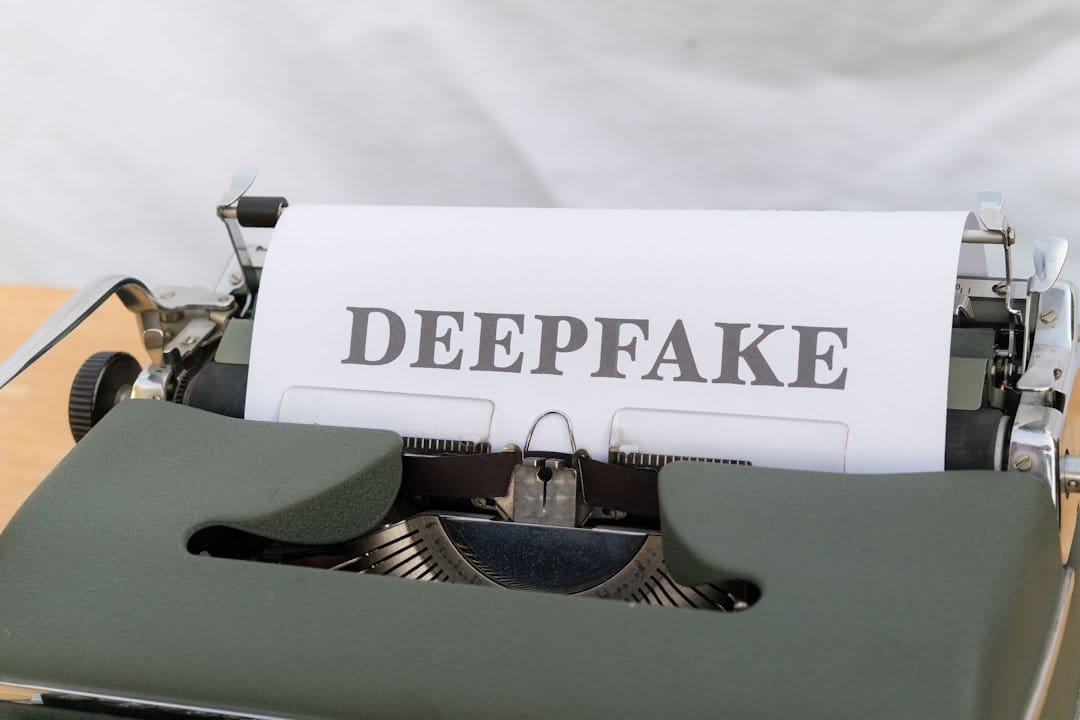
Fake citations surge across biomedical papers after massive audit, and the story is bigger than a weird publishing glitch. A sweeping review of biomedical literature found that fabricated references are showing up more often, raising fresh concerns about AI-generated writing, overloaded peer review, and how much trust we place in a polished bibliography.
A researcher gets a Google Scholar alert and finds out he’s been cited in a dentistry paper. Weird already. Then he opens it and realizes the citation to his own work is fake, not wildly fake, not “Dr. Mario Pizza et al.” fake, but close enough to feel creepy. Guillaume Cabanac told Nature, “I was very surprised to see that I couldn’t recognize my own reference.”
That’s the whole scandal in one scene. Not a dramatic lab fraud story. Not a Netflix villain in a white coat. Just the references section, the part everybody skims like iPhone terms and conditions, quietly rotting.
And that’s why the headline Fake citations surge across biomedical papers after massive audit actually matters. It sounds niche until you realize references are supposed to be the receipts. If the receipts are made up, the whole vibe of “trust the literature” starts looking a little optimistic.
Fake citations surge across biomedical papers after massive audit
The new audit was not some tiny academic spot check. According to a Lancet correspondence by Maxim Topaz and colleagues, researchers screened 2.5 million biomedical papers, inspected 125.6 million references, and closely analyzed 97 million verifiable references with DOIs or PubMed IDs.
That scale alone tells you this isn’t a quirky edge case.
The number that stuck with me, though, was smaller and nastier: in early 2026, about 1 in 277 PubMed-indexed papers contained a citation to a paper that didn’t exist, according to Retraction Watch’s coverage. One in 277. That’s the kind of number that makes you put your espresso down for a second.
The trend is worse than the snapshot. In 2023, the rate was 1 in 2,828. In 2025, it jumped to 1 in 458. In the first seven weeks of 2026, it hit 1 in 277. That’s not random noise. That’s a system picking up speed in the wrong direction.
And this isn’t just one weird cluster of junk papers from some shady corner of the internet. The audit identified 4,406 fabricated references across 2,810 papers. Nature also reported that another analysis estimated around 1.6% of 2025 publications may contain at least one invalid reference. Small percentage, huge literature. Same old story: the percentage sounds harmless until you multiply it by reality.
Topaz put it bluntly in Nature: this is a lower bound. In other words, the problem we can see is probably the polite version.
AI didn’t invent this mess. It made it cheap.
My hot take: blaming AI alone is lazy.
AI did not create academic corner-cutting. Science already had all the ingredients: pressure to publish, too much volume, prestige games, people rewarding polished prose over actual verification. AI just showed up like the world’s most confident intern and started scaling the nonsense.
Topaz’s group found the sharpest increase in fabricated references in mid-2024, which Retraction Watch said coincided with the rise of AI writing tools. Yeah. That tracks. Once large language models became the easiest way to generate a literature review that sounds competent, fake citations were always going to explode.
Because LLM hallucinated citations have one evil superpower: they look right.
They often have the right author style, the right title rhythm, the right journal energy. Sometimes they mash together real authors, a plausible topic, and a nonexistent paper title. That’s much worse than something obviously fake. A bad counterfeit is easy. A good counterfeit gets spent.
Cabanac’s example is perfect because it’s so absurd. A computer scientist at the University of Toulouse gets cited in the International Dental Journal. Strange, but maybe interdisciplinary life is just messy. Then he checks the reference and it turns out to be a spooky remix of his work rather than his actual paper. Academic deepfake energy.
Nature’s reporting said tens of thousands of 2025 publications might include invalid references generated by AI. Tens of thousands. Not enough to be funny. Too many to dismiss.
And the growth curve is ugly. Retraction Watch described a 12-fold increase in two years. If those were startup metrics, somebody would be posting a thread about product-market fit. Here it’s basically product-market failure.
The annoying part is how predictable this was. Science built a culture that rewards output, speed, citation density, and the performance of rigor. AI didn’t break that culture. It just industrialized it. Brutto, but true.
Peer review was never built to catch bibliography fraud
I feel for reviewers here. Really.
Most peer reviewers are overworked volunteers trying to answer normal reviewer questions: does the method make sense, do the claims match the data, is this paper worth publishing, and can reviewer number two please relax for once in their life. They are not doing forensic accounting on every citation.
Topaz’s team had to build an automated pipeline because the problem is now machine-scale. According to Nature, they used LLMs to flag mismatches between cited titles and the titles linked to DOIs or PubMed IDs, then checked suspicious references against PubMed, Crossref, OpenAlex, and Google Scholar.
That is not a thing a tired reviewer is doing at 11:43 p.m. between a grant deadline and a child who won’t sleep.
And this wasn’t just typo-hunting. The audit tried to separate actual fabrication from normal citation messiness like formatting issues or abbreviated titles. That matters. Academic references are already chaotic enough without turning every missing comma into CSI: Vancouver Style.
So when a reference fails across PubMed, Crossref, OpenAlex, and Google Scholar, we’re not talking about harmless sloppiness. We’re talking about a paper citing something that appears not to exist in the places where it should exist.
That’s a real failure mode.
I’ve seen versions of this outside academia too. In startups, once content volume gets high enough, “human oversight” becomes one of those nice phrases people say on panels while the dashboard quietly catches fire. If a system can generate junk faster than humans can verify it, the junk wins unless you build tooling.
And yes, I’ll admit something slightly embarrassing: for years I treated reference lists as decorative proof that somebody had done the homework. The formatting looked serious, the DOI was there, the citations were stacked neatly at the end, so my brain gave the paper extra credit. Clean formatting has a halo effect. It feels true because it looks organized. That is not just a science problem. That is internet brain poisoning.
The wildest part is what happens after they’re found: basically nothing
This is where the story goes from bad to almost comical.
According to Retraction Watch, more than 98% of the articles with fake references had seen “no publisher action” by the time of the February audit.
Over 98%.
So even when fabricated references are identified, the system mostly shrugs.
I understand the procedural excuse. A fake citation doesn’t automatically prove intent. Maybe an author used ChatGPT like an idiot. Maybe a co-author pasted in junk from a reference manager. Maybe everyone trusted a generated bibliography the way people trust airport sushi. Which, to be clear, they should not.
Renee Hoch, head of publication ethics for PLOS, told Retraction Watch that research misconduct has a specific definition involving intent, and that misconduct determinations happen at the institutional level, not the publisher level. Fine. That’s careful. That’s legally tidy. That’s also not especially useful if the literature is filling up with ghost references in real time.
Taylor & Francis sounded more practical. A spokesperson told Retraction Watch the company is investing in “technology, specialist staff and processes” to catch problematic citations, and said suspicious submissions may be returned or rejected if the issue is serious enough.
Good. That is at least a response from planet Earth.
Meanwhile, Retraction Watch said Elsevier, Wiley, Springer Nature, IEEE, and Sage did not respond in the timeframe provided. I’m not saying silence equals guilt. I’m saying silence looks terrible when your business depends on people trusting what you publish.
There’s a bigger structural problem here too. Scientific publishing is very good at handling clean categories: accepted, rejected, corrected, retracted. Fake citations live in a murkier zone: obvious problem, unclear intent, slow response, no immediate consequence. And that’s exactly the kind of dead zone where garbage thrives.

This is bigger than publishing gossip
The reason Fake citations surge across biomedical papers after massive audit matters isn’t just that some papers have bad bibliographies. It’s that the scientific record is vulnerable in the same way the internet is vulnerable: polished surfaces get trusted faster than verified substance.
A fake citation with a DOI-shaped string feels real for the same reason a fake restaurant review with moody lighting and artisanal plates feels real. It hits the pattern your brain expects. You see the format, you assume the substance. Ciao, we all live on the same broken internet.
That’s what makes “plausible-but-nonexistent references,” as Nature described them, so dangerous. Fake things that scream fraud are easy to catch. Fake things that whisper competence can sit in a system for years.
And references are not decorative. They feed literature reviews. They get copied into future papers. They shape what people think has already been established. A made-up citation doesn’t just sit there being embarrassing. It can distort the map other researchers use to navigate the field.
I was in a coffee shop in SoHo recently, one of those places where a cappuccino costs the same as a regional train ticket in Italy, and a founder friend showed me an AI tool that generated investor updates. The output looked immaculate. Tight language. Clean formatting. Smart-looking charts. Two sections were complete nonsense once we checked the underlying numbers.
Same movie, different costume.
Once a system starts rewarding what looks complete, fiction gets very good at dressing up as admin. In science, references were supposed to be the anti-bullshit mechanism. The boring part. The receipts. If even that can be faked at scale, then this is not just an AI problem. It’s a trust architecture problem.
The reference list is about to become a product feature
I think the next step is obvious.
Citation integrity is going to stop being a back-office publishing chore and become a visible trust layer. Not because journals suddenly discovered morality, but because they’re going to be forced to compete on trust.
PLOS told Retraction Watch it is “exploring options for system-wide reference integrity screening.” Taylor & Francis said it is investing in technology, specialist staff and processes to catch problematic citations. That’s the tell. Once publishers start sounding like fraud teams at Stripe, the market has shifted.
And honestly? Good.
If I were building in this space, I’d treat bibliography screening the way fintech treats card fraud detection. Invisible when it works. Very visible when trust matters. Journals, preprint servers, manuscript editors, reference managers, discovery platforms: all of them now have an opening to offer some version of: this reference list has actually been checked.
Not sexy. Also necessary.
The technical side is already here. Topaz’s audit used automated screening across PubMed, Crossref, OpenAlex, and Google Scholar. So we’re past “is this possible?” We’re now at “who’s going to make it standard first?”
And if publishers don’t build that layer themselves, someone else will. That’s how this always goes. Payments, identity, analytics, search: the infrastructure nobody notices becomes the thing nobody can live without. Scholarly publishing is not magically exempt from that pattern.
Yes, some academics will hate the irony of using more automation to fix a problem accelerated by automation. Fair. I also hate when tech people start a fire and then pitch smoke detectors. But once AI-generated citations are already in the literature, refusing machine verification on principle is not noble. It’s just unserious.
The funny part (darkly funny, but still) is that references used to be the least glamorous part of a paper. Necessary, tedious, nobody’s favorite. Now the bibliography might become one of the most important product surfaces in science. Blue checks for footnotes. Dio ci aiuti.
And here’s the part I can’t shake: if a scientific paper can fake the section that’s supposed to prove it read the science, then we need to stop treating references like decorative parsley.
I think that flip is coming fast. Soon I won’t trust a paper more because it has a long bibliography. I’ll trust it only if I know the bibliography has been tested. Once that becomes normal, scientific publishing won’t just have a writing problem.
It’ll have a receipts problem.
Sources
- Primary trending article
- One in 277 PubMed-indexed papers in 2026 shows fabricated references, says analysis
- Hallucinated citations are polluting the scientific literature. What can be done?