
FAA clears Boeing 737 Max 7 after years of delays: I’d fly it
A decade of scrutiny brought redesigns, tougher reviews and factory oversight. The real safety milestone will come after years of boring flights.
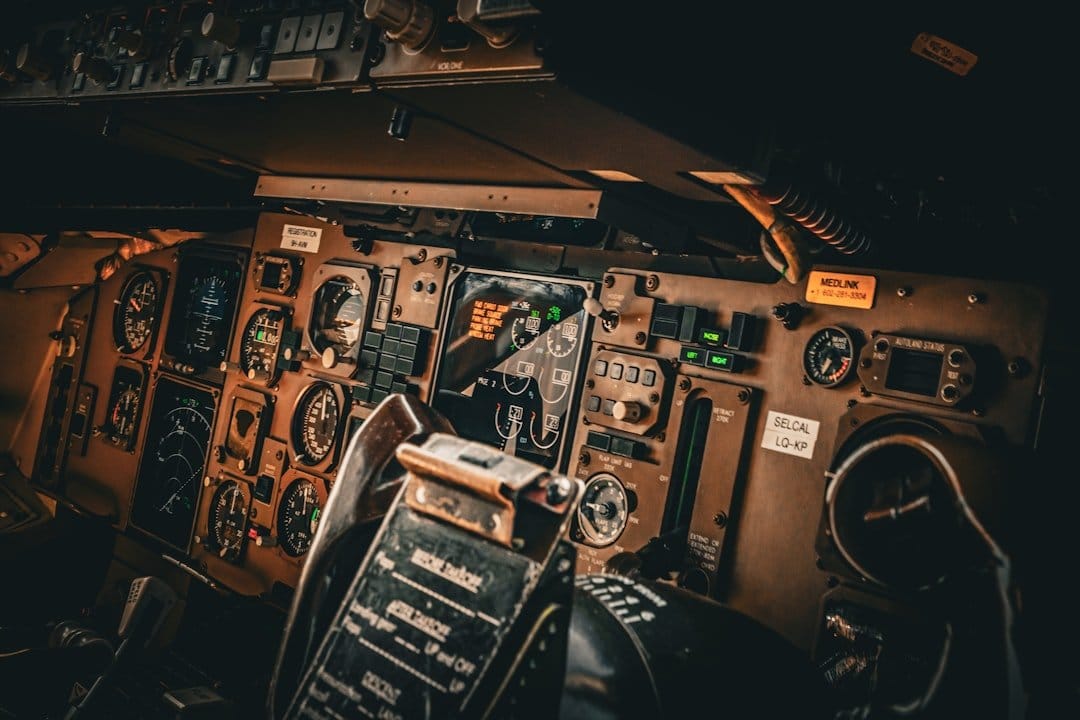
The FAA made Boeing wait nearly a decade for the 737 MAX 7. Good. I check aircraft types before boarding, though I can’t identify a hydraulic system by sound and sometimes barely find my gate. “737 MAX” stopped being neutral after two MAX 8 crashes killed 346 people. Boeing exhausted the benefit of the doubt, changing certification for the smallest MAX. The headline is FAA clears Boeing 737 Max 7 after years of delays. The delay matters: regulators required redesigns. A certificate proves only so much.
Boeing has earned no redemption montage. Keep the inspirational music and slow-motion engineer hugs stored.
Aviation needed the friction
I run a technology company, where the doctrine is: ship quickly, watch metrics, patch the ugly bits, call it a “learning phase” and pray nobody screenshots it.
Silicon Valley made this a religion. It works for apps. For commercial aircraft, it is borderline psychotic.
Failures thrive between hardware, firmware and cloud systems because each team assumes another owns the problem.
A smart-home bug starts an argument with a light switch at 1 a.m. An aviation bug becomes an accident report.
The MAX 7 never had ordinary certification. Lion Air Flight 610 crashed in October 2018; Ethiopian Airlines Flight 302 followed in March 2019. The two MAX 8 disasters killed 346 people.
The Associated Press reported that the FAA overhauled Boeing aircraft certification after the crashes, reframing complaints that the MAX 7 took too long.
Boeing unveiled the aircraft nearly a decade before approval. According to the company, testing began in 2018 and exceeded 1,000 flight and ground hours.
The FAA described the timeline:
Following almost a decade of extensive review, the FAA has issued an amended type certificate and updated Production Limitation Record for the Boeing 737 MAX-7.
A thousand hours cannot prove perfection. Boeing supplied the figure, and companies present homework in the most flattering font available. Still, the FAA said it performed or directly reviewed major work on flight controls, system safety assessments, human factors and flightcrew alerting.
Human factors matter because a system may work as designed yet confuse pilots during an emergency. Software must make sense to a busy, exhausted and inconveniently mortal brain.
My concession: I cannot independently validate aircraft certification or inspect test cards for missed edge cases. A thousand test hours reassures me only because I depend on credible processes and regulators willing to keep saying no.
That dependence makes me uneasy. It should.
Long reviews can look indifferent. But when telemetry disagrees with embedded electronics or the cloud, “move fast” ends badly. Airplanes raise the stakes.
I want the maddening dinner guest who returns risotto because its center is raw. Boeing’s calendar can survive hurt feelings.
The wait changed the aircraft
The approved Boeing 737 MAX 7 has updated flight-control software, clearer cockpit alerts and a redesigned engine anti-ice system. The delay was not merely “procedural.”
The anti-ice problem was simple: according to the FAA, in rare conditions the system could overheat the engine inlet and weaken nearby structure.
The redesign prevents overheating. Earlier proposals relied more on pilot intervention, increasing workload while crews processed warnings and interpreted the aircraft’s behavior.
The FAA listed the changes:
Before granting approval, the FAA required the MAX-7 to incorporate key improvements that address requirements in the Aircraft Certification, Safety, and Accountability Act and NTSB recommendations, including updates to the flight-control software, flightcrew alerting system, and a redesigned engine anti-ice system.
Lauren Rosenblatt reported in The Seattle Times that Boeing initially asked the FAA to certify the MAX 7 before completing the anti-ice fix, then withdrew its request after the January 2024 Alaska Airlines MAX 9 panel blowout.
The failures were separate. The Alaska incident involved a MAX 9 door plug and exposed manufacturing and quality-control failures; it did not prove the MAX 7’s anti-ice defect. One giant Boeing-failure bucket feels satisfying but weakens analysis.
The blowout still transformed Boeing’s regulatory and political climate. Once a panel leaves an aircraft in flight, enthusiasm for exemptions falls to approximately zero.
Sensible.
Regulators also required clearer flightcrew warnings. The MAX crisis showed what happens when automation becomes hardest to understand precisely when crews need clarity.
IoT offers a miniature version: the sensor reports accurately, the app presents data badly and the user chooses wrongly. Every component can be technically correct while the product fails.
Boeing’s work extends beyond the MAX 7. In a July 2026 MAX 10 testing update, the company said revised Engine Anti-Ice and enhanced Angle of Attack systems would enter production across all MAX models, with the in-service fleet retrofitted.
Boeing deputy chief pilot Capt. Bill Quashnock said MAX 10 testing covered extreme conditions and hundreds of systems. The MAX 10 has its own certification program, but shared upgrades spread the MAX 7 review’s consequences across the family.
The crisis already taught an expensive lesson about angle-of-attack data, cockpit warnings and software authority. Pilots must know which warning matters and what to do. Cleaner graphics alone won’t save the day.
Certification moves the risk to Boeing’s factories
Boeing understandably wants a victory lap. Tens of thousands worked through a pandemic, technical redesigns and stricter certification. One approval hides years of exhausting, mostly invisible labor.
Boeing Commercial Airplanes CEO Stephanie Pope told employees:
The tens of thousands of hours of work have been worth it … for Boeing, for our customers and for commercial aviation.
I believe her about the work. It cannot prove Boeing’s production culture has healed.
Pope also described the program’s ordeal:
Our team of dedicated engineers and test experts worked through challenges, an extended pandemic, and the transition to new certification processes.
“Determination and resilience” dominated Boeing’s announcement. Engineers deserve credit. Resilience is also a flattering corporate term for surviving problems your company partly created.
One FAA sentence reassured me more:
FAA safety inspectors will remain on site at Boeing production facilities across the country to closely monitor the manufacturing process, including observing and assessing Boeing’s Safety Management System (SMS) and safety culture.
An amended type certificate confirms that the approved design meets applicable requirements. Safe service requires Boeing to reproduce it correctly in every aircraft, then airlines to inspect, maintain and operate each jet properly.
An updated Production Limitation Record lets Boeing begin MAX 7 production under its production certificate. In human language: Boeing proved an acceptable design and must manufacture consistent copies.
Manufacturing has been Boeing’s sore spot.
The pressure is measurable. CNBC reported Boeing shares rose 8% on certification day. Jefferies analyst Sheila Kahyaoglu estimated roughly 40 completed MAX 7 and MAX 10 aircraft sat in inventory.
Manufacturers receive most of an aircraft’s price upon delivery, so certification unlocks cash. Forty expensive jets awaiting paperwork make any CFO stare at a calendar like an Italian mother awaiting grandchildren.
Boeing reported $24.6 billion in second-quarter 2026 revenue, helped by 171 commercial-aircraft deliveries. According to the company’s July 28 results, its Commercial Airplanes division still recorded a $322 million operating loss.
No evidence shows Boeing cut certification corners for payment. But the incentive is obvious, measurable and enormous. Independent inspectors exist because corporate urgency cannot set regulatory deadlines.
“The inspectors will remain on site” is the announcement’s safest sentence.
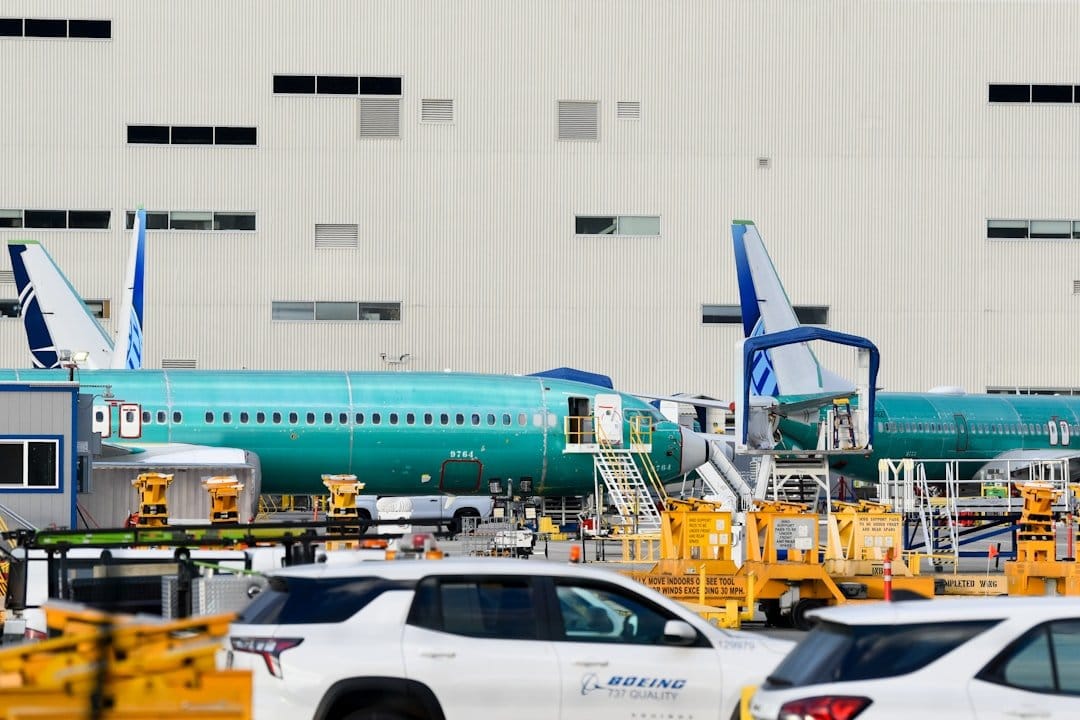
Southwest finally gets its smaller MAX
Airlines need the right seat count. Flying a larger jet half-empty is an expensive aluminum group chat, especially when fuel prices bully the income statement.
In Boeing’s two-class specification, the MAX 7 typically carries 135 to 160 passengers and flies up to 3,800 nautical miles. Boeing says it offers about 10% more range potential than its MAX siblings and suits hot, high-elevation airports.
The MAX 8 typically seats 160 to 180 and flies up to 3,500 nautical miles. Extra seats suit dense routes but become dead weight when demand is thinner or seasonal.
Southwest can replace aging 737-700s with the smaller MAX 7 instead of imposing MAX 8 capacity everywhere. Twenty fewer seats may preserve a nonstop or useful frequency where larger jets leave rows empty.
Southwest is the obvious protagonist. Its model has relied on the Boeing 737 family for decades. A common fleet simplifies training and maintenance while helping schedulers move aircraft through the network.
That simplicity chained Southwest’s fleet plan to Boeing’s delays.
Aviation.Direct reported that Southwest evaluated the Airbus A220, flown by Delta Air Lines, JetBlue, Air Canada and Breeze Airways, as an escape from total Boeing dependence.
Airbus would require separate pilot training, new simulators, different maintenance capability, dedicated spare-parts inventories and ground-operation changes. Southwest decided diversification cost too much.
Understandable, though dependence loses charm when one supplier spends years failing to deliver the aircraft central to your retirement plan.
Southwest ended the second quarter of 2026 with 803 aircraft. During those three months, it received 13 Boeing 737-8s and removed 10 older aircraft, including six 737-700s through sales or retirement.
The airline plans to retire around 60 aircraft during 2026 while receiving 64 MAX 8s. MAX 7 deliveries will accelerate replacement of smaller 737-700s kept longer than planned.
The jet also arrives amid a cabin overhaul. Completed MAX 7s need Southwest’s new extra-legroom layout before carrying passengers.
Southwest is removing six seats from every 737-700 to create that space. It estimated the work would add 1.1 percentage points to third-quarter unit-cost growth excluding fuel, special items and profit sharing.
Six seats sound trivial until an airline modifies hundreds of cabins. Aviation economics turns inches of legroom into a line item discussed by analysts wearing extremely serious expressions.
A Southwest spokesperson told The Seattle Times:
Certification is an important step toward continuing to modernize our all-Boeing 737 fleet with upgraded interiors and more fuel-efficient aircraft to fit our customers’ preferences and demand patterns.
Passengers may experience the payoff as pleasant nothingness. A route unable to support 175 seats might support 150, preserving frequency instead of cutting a flight or funneling everyone through another airport.
Give me the nonstop.
Your first MAX 7 flight is probably in 2027
Certification permits commercial service. It does not teleport finished aircraft into Southwest’s schedule with cabins installed and flight attendants waiting.
Boeing already built MAX 7s to earlier designs. They need “change incorporation”: rework matching the final certified configuration.
That includes safety changes added during review. Boeing must also finish customer interiors, conduct acceptance work and prepare each aircraft for delivery.
CNBC reported that Southwest was unlikely to fly the MAX 7 before 2027. Boeing CEO Kelly Ortberg had told analysts first MAX 7 and MAX 10 deliveries were expected in 2027.
Southwest said “coming months” after certification. As of August 5, 2026, it had announced no inaugural date. Boeing also declined to tell The Seattle Times how many MAX 7s needed rework or how long change incorporation would take.
My bet: first-quarter 2027 for Southwest’s first scheduled passenger service. Earlier, and I’ll happily eat these words with agnolotti.
After delivery, Southwest still needs acceptance inspections, updated manuals and maintenance preparation. The aircraft then enters schedules vulnerable to weather, mechanical problems and ordinary airline chaos.
Travelers can check aircraft types while booking or use Flightradar24 before flying. I do both, pretending my phone controls airline operations. Assignments can change on departure day, so it’s a plan, not a blood oath.
The MAX 7 deserves variant-specific judgment. It shares systems and history with the MAX 8 and MAX 9, but its amended certificate covers this model and approved configuration.
The scale makes oversight consequential. Boeing says the full MAX family had more than 7,200 orders at the end of June 2026 and over 2,300 deliveries. The Seattle Times reported roughly 280 net MAX 7 orders through May. Boeing continues pursuing MAX 10 certification.
Would I fly the MAX 7? Yes.
Regulators forced design changes. Testing exceeded 1,000 hours. FAA inspectors remain inside Boeing’s factories. If manufacturing defects emerge, my judgment will follow the evidence.
Aviation trust should expire and renew like a certificate. I reserve loyalty for the neighborhood trattoria, where the worst foreseeable consequence is my nonna judging my sauce.
Most MAX 7 passengers will board while answering Slack, fighting for overhead space or drinking airport espresso that tastes like a personal attack. The first delivery brings executive handshakes and pristine photos. Years of uneventful flights matter more.
Give me the window seat, too.
The milestone worth celebrating comes later: the morning FAA inspectors can leave Boeing’s factories because they are no longer needed.
Frequently asked questions
Why did FAA certification of the Boeing 737 MAX 7 take so long?
The Boeing 737 MAX 7 underwent an extended certification process shaped by the two MAX 8 crashes and stricter FAA procedures. Regulators required updated flight-control software, clearer flightcrew alerts and a redesigned engine anti-ice system, while the test program accumulated more than 1,000 hours of flight and ground testing.
When will Southwest begin flying the Boeing 737 MAX 7?
Southwest is unlikely to begin scheduled Boeing 737 MAX 7 passenger service before 2027. Certification allows commercial service, but completed aircraft still need change incorporation, customer-specific interiors, acceptance work and delivery preparation. Southwest must also complete inspections, manuals and maintenance preparations before placing the aircraft into its schedule.
What does FAA certification of the Boeing 737 MAX 7 mean?
FAA certification confirms that the Boeing 737 MAX 7’s approved design complies with applicable requirements and authorizes production under Boeing’s certificate. It does not guarantee flawless manufacturing or operation. FAA inspectors will remain at Boeing facilities to monitor production, the Safety Management System and the company’s safety culture.
Sources
- Primary trending article
- FAA Statement on Certification of the Boeing 737 MAX-7
- U.S. FAA certifies new Boeing 737-7 airplane
- FAA certifies Boeing's new 737 Max 7 jetliner for flight after years of delays
- FAA certifies Boeing 737 Max 7 after years of delays
- U.S. FAA certifies new Boeing 737-7 airplane