
Dutch Air Tax Backlash Exposes a Fairness Problem
The Dutch travel industry says higher flight taxes look climate-smart on paper but turn messy, expensive, and politically fragile in real life.
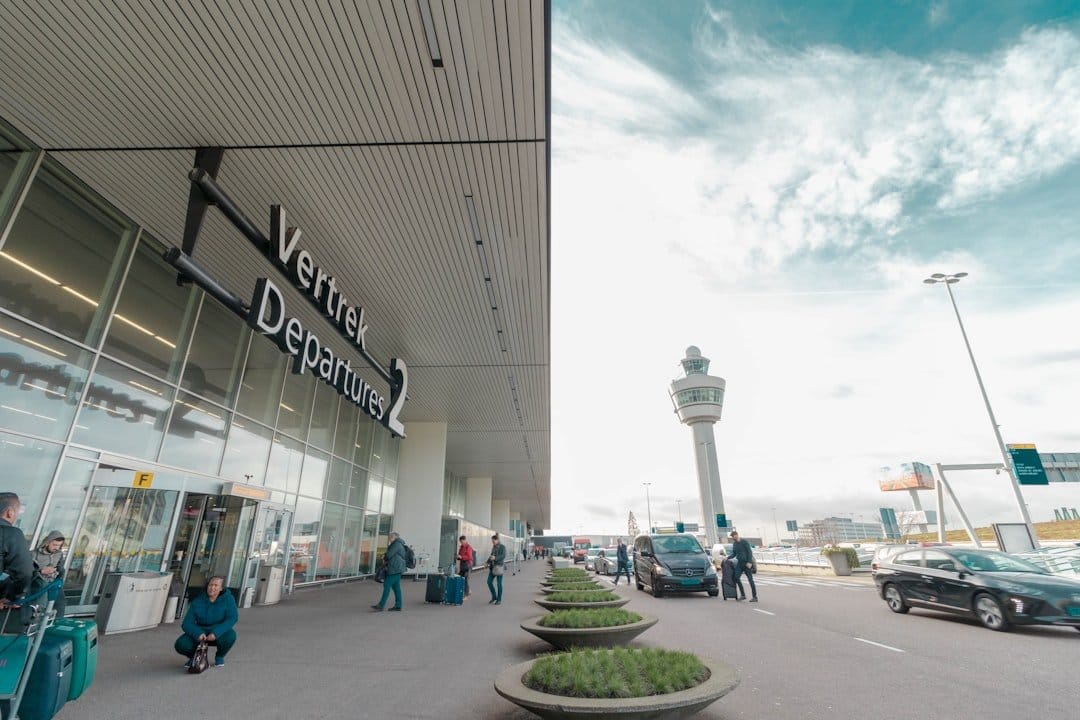
Dutch travel industry revolt against higher air taxes gains steam, and honestly, I get it. This isn’t a cartoon fight between climate saints and evil vacation people. It’s a much uglier argument about who gets billed first when a government wants to look serious.
On paper, the Dutch plan sounds almost offensively neat: longer flight, higher tax. A hop to Spain shouldn’t cost the same as flying to Indonesia. Fine. Makes sense. Then real life barges in with kids, diaspora travel, package holidays, stopovers, junk fees, and the small detail that airline pricing already feels like a hostage situation.
That’s why this story matters. Not because the travel industry is allergic to rules, though, to be fair, it is, but because even people trying to sound responsible are looking at this tax design and going, ragazzi, this is not as smart as you think.
This isn’t a tantrum. It’s a credibility test.
If this were just airlines yelling because someone touched their margins, I’d care a lot less. The travel business can turn any policy dispute into theater. But this Dutch fight is more awkward than that.
On 20 May 2026, ANVR launched Samen Steeds Reisbewuster, a platform meant to push travelers and travel companies toward more conscious choices. According to Reisbizz, it covers transport, accommodations, local communities, nature, and fair economic contribution. That is not the language of people denying sustainability. That is the language of people trying, maybe later than they should have, to prove they understand the assignment.
Yes, trade groups can talk like monks while lobbying like pirates. I’ve founded companies. I know what a polished “vision” paragraph can hide. Still, ANVR made this harder to dismiss as pure self-interest because it tied the whole thing to a broader claim: the industry should have a positive impact by 2050.
Ambitious. Slightly insane. Potentially both.
Frank Radstake, ANVR’s director, said travel brings together cultures, friends, families, and entrepreneurs, but also that “reizen kan niet zonder sporen na te laten”: travel cannot happen without leaving traces. That line is good because it doesn’t pretend flying becomes moral if you click the green button at checkout. Travel leaves a mark. The only real question is what kind.
That’s why the ANVR air tax response lands differently. They’re not saying emissions don’t matter. They’re saying a blunt tax is not the same thing as serious climate policy.
And they’re right.
The Dutch air tax 2027 plan looks logical until you try booking an actual trip
Since 1 January 2021, passengers leaving Dutch airports have paid a departure tax. Right now it’s €30.25 per passenger. According to Rijksoverheid, that flat rate was €29.40 in 2025 and is set to become a three-tier distance-based system in 2027.
The proposed Dutch air tax 2027 rates are:
- €29.40 for short-haul
- €47.24 for medium-haul
- €70.86 for long-haul
And yes, inflation correction is still coming, so those numbers are not even the final boss.
The bands are based on distance from Amsterdam. Short-haul covers EU flights and routes up to about 2,000 kilometers. Medium-haul runs roughly 2,000 to 5,500 kilometers. Long-haul is 5,500 kilometers or more. Government examples put Turkey and Egypt in medium-haul, and Canada, Mexico, Indonesia, and South Africa in long-haul.
Very tidy. Very ministry PDF. Very “someone definitely high-fived after making this chart.”
Then politics shows up.
According to Rijksoverheid, places like Aruba, Curaçao, Sint Maarten, Bonaire, Saba, and Sint-Eustatius still get the low rate even though they’re more than 5,500 kilometers from Amsterdam, because they’re part of the Kingdom of the Netherlands. Some other areas with special ties, including the Canary Islands, also get exceptions.
So the tax is based on distance and climate logic. Except when history, constitutional weirdness, or identity make that inconvenient.
Which is normal politics, obviously. I’m not shocked. I’m Italian. I was raised in a country where rules are often more like opening suggestions. But let’s not act like this is some pure carbon formula handed down from the sky. It’s already a compromise before anyone even gets to the payment page.
There’s another catch: the tax is based on the final destination, even if you stop along the way. So if you fly Amsterdam to Dubai to Jakarta, the tax follows Jakarta, not Dubai. Rational? Sure. But it means long-haul families and complex itineraries get hit no matter how cleverly they route the trip.
This is my issue with the whole thing. A distance-based air passenger tax in the Netherlands sounds morally elegant, but in practice it lands like a regressive UX nightmare. Still blunt. Just with nicer branding.
Dutch travelers are still in their “book the trip anyway” era
Policymakers love a fantasy where consumers behave like clean little data points. Price goes up, demand goes down, emissions solved, everyone gets to feel wise.
That’s not how people book travel.
According to ANVR research published on 11 May 2026, “Nederlanders onverminderd reislustig”: Dutch consumers remain strongly eager to travel. That matters. This debate is not happening in a weak market where people were already staying home. It’s happening while demand is still very much alive.
And wanting the trip is not some side detail. It is the whole game.
A few days later, on 26 May 2026, the ANVR/NIQ boekingsmonitor april 2026 added more context. Demand was still there, but people were getting sharper about price and destination choice. Which is exactly what anyone with functioning Wi-Fi already knows. People are not abandoning travel. They’re becoming tactical, annoying, hyper-comparative little booking goblins.
I say that with love because I am one of them.
A few weeks ago I was trying to piece together a summer route through Lisbon, Milan, and New York, and I spent 40 minutes comparing airport combinations to save less money than I had just spent on two negronis. Great use of adult life. My point is simple: higher prices do not automatically produce more virtuous behavior. They produce more neurotic behavior.
People book later. They shorten trips. They switch destinations. They cut the hotel to keep the flight. Or keep the hotel and agree to a 6:10 a.m. departure from an airport that feels located in another moral universe. Package holidays get squeezed because the all-in number matters. Family trips get fragile because one extra fee is never just one extra fee.
That’s why Dutch travelers booking trends 2026 matter here. The Netherlands aviation tax hike isn’t landing on some passive public. It’s landing on consumers who still want mobility and are already getting twitchy around price.
Governments like to talk about demand destruction. What they usually get is demand distortion. Less noble. More chaotic. Same humans.
The person getting hit isn’t always the climate villain in the group chat
This is the part that annoys me most. The public framing around flying gets lazy fast.
The imagined bad guy is always some luxury traveler doing “spontaneous” long weekends across continents with a tiny suitcase and a giant carbon footprint. Sure. Those people exist. Instagram will happily show you seventeen of them before breakfast.
But long-haul is not automatically luxury. It can mean visiting family. It can mean diaspora travel. It can mean the one big trip a household saves for all year because they are not doing four city breaks, a yoga retreat, and whatever rich people call camping now.
When the Dutch government lists Indonesia and South Africa as long-haul examples, I don’t just see premium leisure. I see weddings, grandparents, mixed families, once-a-year reunions, and the sort of trip people budget for carefully because it actually matters.
A jump from €30.25 to €70.86 per passenger doesn’t sound catastrophic when you read it alone. Add bags, seat selection, airport transfers, summer fares, maybe a connection, maybe two kids, and now it’s not symbolic anymore. It’s real money. The kind that changes whether a family books, delays, or quietly gives up.
According to Rijksoverheid, private jets will face a tougher separate regime from 1 January 2030, applying to aircraft with 19 seats or fewer and a weight of 4,000 kilograms or more. The rates are steep: €420 for short flights, €1,015 for medium-haul, and €2,100 for long-haul.
Good. As they should. If you’re taking a private jet, I am not especially interested in your feelings.
But the timeline says a lot. The mass traveler gets the redesigned tax in 2027. Private aviation gets its heavier regime in 2030. Three years later. Because governments go where the volume is. That’s where the easy revenue lives.
I’m not saying don’t tax emissions. I’m saying be honest about who gets taxed first. It’s not the edge-case billionaire in sunglasses. It’s ordinary passengers moving through Schiphol in sneakers, carrying one overstuffed carry-on and several unresolved family dynamics.
I used to feel slightly smug paying extra for “greener” options because it made me feel like I was participating in a solution. Then I started reading how these systems are actually designed, and the smugness evaporated. A lot of what we call climate accountability is just checkout pain with better copywriting.
That realization was annoying. Also true.

Airlines were already playing fare Jenga before this fight started
Timing is a big reason the Dutch travel industry revolt against higher air taxes gains steam. If airline pricing were transparent and fares were stable, maybe the government could sell this as a reasonable correction.
That is not the world we live in.
According to BTN Europe, in reporting from 6 May 2026, travel managers are already dealing with soaring ticket prices and weaker air agreements as fuel pressure and airline negotiations get shakier. I like that source because corporate travel people are usually the least theatrical people in the room. If even they’re stressed, something is genuinely off.
Then PhocusWire, on 13 May 2026, described a 2026 airline market defined by thin margins, fuel-cost pressure, and heavier reliance on ancillary revenue. Which tracks. Airlines have become weirdly brilliant at making the base fare look survivable and the final total look like a personal attack.
I am not defending baggage fees, by the way. Let’s not get crazy.
And Travel Weekly, on 15 May 2026, added the obvious extra problem: jet fuel remains volatile enough to push fares up regardless. So now picture a Dutch family pricing a package holiday, a travel advisor trying to keep a long-haul itinerary from collapsing, or a distributor trying to sell a trip where every line item has become a mini crisis.
That’s fare Jenga. The tower is already wobbling. Add another block, then act shocked when people get angry? Please.
This is the real air travel affordability vs climate policy problem. Consumers do not separate taxes, fuel costs, ancillaries, and airline strategy into neat categories. They just see one final ugly number. If you want public buy-in, that matters more than any elegant spreadsheet.
If the Dutch travel industry wants to win, it needs a better answer than “don’t do this”
Now for the part where I’m equally annoying to the industry.
The Dutch travel sector does not get to say “this tax is flawed” and stop there. If ANVR and the broader industry want credibility, they need something better than “please don’t make booking harder.”
Because yes, the tax is imperfect. Very. But the emissions problem is not fake just because governments are clumsy.
This is where ANVR’s broader positioning could actually help. On 26 May 2026, ANVR opened registration for its 2026 Congress on Madeira, with an agenda focused on resilience, innovation, and changing traveler behavior. Good. That’s the right frame. This is not a one-off PR spat. It’s a structural adaptation problem.
And the language in Samen Steeds Reisbewuster gives them a usable blueprint. Shared responsibility. Step by step. More conscious choices. According to Reisbizz, that includes practical decisions around transport, stays, and local impact.
So do something with that.
If the industry wants to push back on the Netherlands aviation tax hike without sounding self-serving, it should argue for smarter incentives and actual transparency. Make emissions and local-impact information visible during booking instead of hiding it behind twelve tabs and a guilt-colored icon. Reward lower-impact choices. Push harder for fleet renewal. Improve rail-air integration where it genuinely works, not as a PowerPoint fantasy. Support faster, tougher measures on private aviation. Back policies that reduce pointless short-haul duplication instead of just slapping another fee on everyone at checkout.
That would be a real offer.
Because one checkout tax does not solve aviation emissions. It barely even organizes them. It mostly monetizes them. Big difference.
The harder question for the Dutch industry is whether it’s willing to support measures that are actually effective even when those measures are less convenient than a press release. That’s the test. Not whether they can complain. Anyone can complain. Ryanair basically turned that into a business model.
The Netherlands is stress-testing a question the whole travel world keeps dodging: do we actually want cleaner travel, or do we just want travelers to pay more and feel guilty about it?
Those are not the same thing.
And if the Dutch travel industry revolt against higher air taxes gains steam, it won’t just be about one country’s airfare policy. It’ll be about whether Europe can admit that sustainability policy built on irritation, carve-outs, and checkout pain is politically fragile.
My bet is simple: people will tolerate sacrifice when it feels fair. They revolt when it feels cosmetic.
If your climate policy looks brilliant in a spreadsheet but starts falling apart the second a family tries to book summer vacation, maybe the problem isn’t the traveler. Maybe it’s the policy.
Sources
- Primary trending article
- ANVR/NIQ boekingsmonitor april 2026
- ANVR lanceert beweging en platform ‘Samen Steeds Reisbewuster’
- ANVR-congres 2026 op Madeira geopend voor inschrijving
- ANVR onderzoek: Nederlanders onverminderd reislustig
- Belasting op luchtvaart