
Why the Digital Euro Is Coming and Why It Matters
Europe’s digital euro is less about replacing cash than reclaiming control over the payment rails that power everyday life.
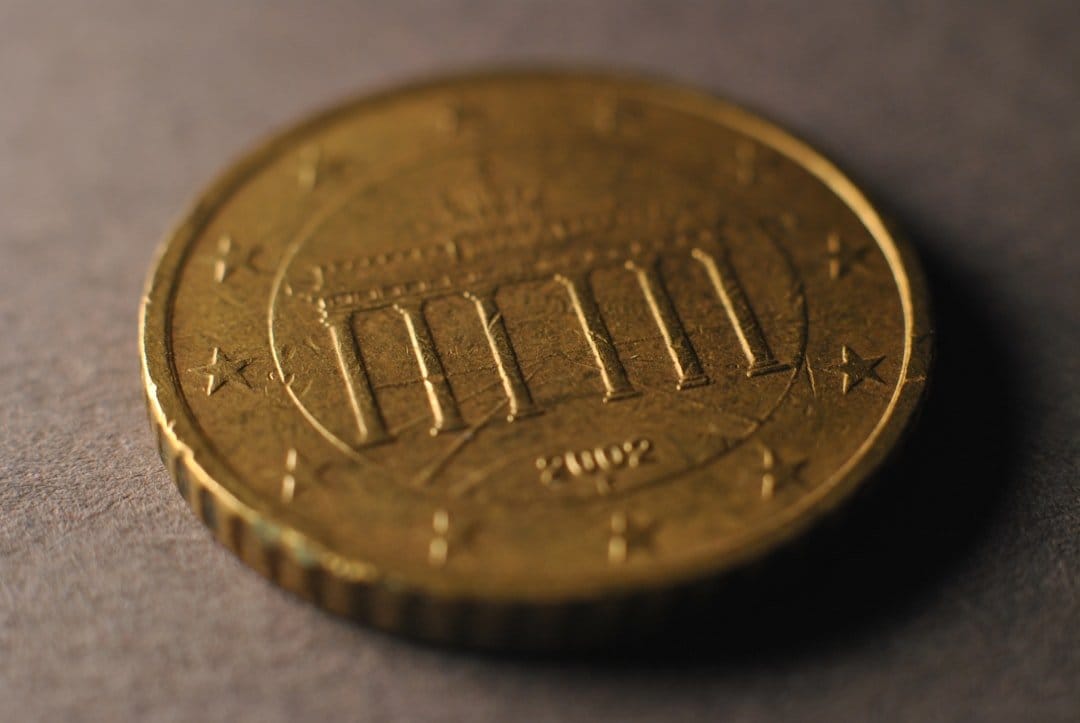
The digital euro is coming and most people do not understand why it matters. I had this moment at Linate airport in Milan a few weeks ago, standing there half-awake, paying €3.20 for a truly disrespectful airport espresso. I tapped my phone, got my tiny cup, and moved on like a civilized European adult.
Then it hit me: the whole scene looked European on the surface. Italian coffee. Euro price. Local bank card in my wallet. But the rails underneath that payment? Very possibly not European at all.
That’s the part people miss.
Most people hear “digital euro” and think: ah, great, another Brussels thing with a logo, a slogan, and a PDF no one will read. Honestly, that was my reaction too. It sounded like bureaucracy trying to cosplay as innovation. Very EU. Very fluorescent conference room. Very bad biscuits.
But the more I looked into it, the less this felt like a weird money experiment and the more it felt like a basic sovereignty question.
Because this is not really about inventing a shinier way to pay for focaccia.
It’s about dependency.
The Payment Looks Local. The Infrastructure Often Isn’t
When people say “I paid with my bank” or “I used my card,” they’re not wrong. They’re just stopping the story too early.
A simple tap at a checkout runs through a whole stack: bank, wallet, card network, processor, settlement system, fraud tools, merchant infrastructure. And a lot of that stack in Europe leans heavily on non-European players. Philip Lane from the ECB said Europe is “overly dependent on non-European payment providers.” That’s central banker language for: this is fine until it absolutely isn’t.
And if you’ve been alive for the past few years, you may have noticed geopolitics has become a bit... less chill.
I spend a lot of time in the US. I build products here. I’m not doing the lazy anti-American thing. America built monsters. Visa, Mastercard, Stripe, the whole machine. They won because they built scale, standards, and habit. Respect where it’s due.
Europe, meanwhile, became weirdly comfortable outsourcing one of the most boring and most important layers of daily life.
Classic Europe move, honestly. We’ll debate ethics for six years and then let someone else own the pipes.
A Euronews piece from late March made the political angle pretty explicit: Europe’s dependence on US payment giants is becoming harder to ignore as EU-US tensions rise. Which makes sense. Dependency always feels efficient when the weather is good. Then one storm rolls in and suddenly everyone remembers the roof matters.
If you want to be a serious political union, you can’t wake up one morning and realize your everyday commerce runs on infrastructure you don’t control.
That’s not sovereignty. That’s vibes.
And vibes, sadly, do not settle transactions.
The Surveillance Panic Is Real. It’s Also a Little Convenient
Mention the digital euro at dinner and within three minutes someone’s uncle will start free-associating about surveillance, social credit, CBDCs, and the end of civilization. Then a cousin sends a 17-minute voice note on WhatsApp that begins with “I’m not saying I’m paranoid, but…”
I get it. The name is awful. “Digital euro” sounds like something invented by people who think Helvetica is a personality.
But I also think this whole debate gets framed in a way that lets the current system off the hook. Because right now your payments already pass through banks, card networks, app stores, payment processors, anti-fraud systems, merchants, and every random intermediary trying to squeeze a basis point out of your existence.
So when people talk about today’s setup like it’s some beautiful privacy paradise, I have to laugh.
According to the ECB’s payments strategy from March 2026, the digital euro is being designed with high privacy standards and legal-tender status. That doesn’t mean I suddenly trust every institution with the blind innocence of a Labrador. I’m Italian. Skepticism is basically our national operating system. But it does mean the real question is more interesting than the meme version.
The real question is whether Europe can build a public digital payment option that protects privacy better than the patchwork commercial system we have now.
That matters because cash is fading whether people like it or not. The ECB says cash accounted for just 24% of day-to-day payments in 2024. Twenty-four. Not dead, but definitely no longer the main character.
So when someone says, “If you care about privacy, just use cash,” that’s not a serious answer anymore. That’s nostalgia dressed up as policy.
And look, I love cash. I really do.
Cash is my nonna quietly slipping me a folded €20 and telling me not to tell my mother. Cash is the tiny bar in Naples with no website, no card machine, and coffee that would make half of San Francisco cry. Cash is human. Cash has texture. Cash smells faintly like cigarettes and old leather and chaos.
But loving cash is not a payments strategy.
If Europe Screws Up the UX, This Whole Thing Dies
This is the part that makes me nervous.
Not because I think the digital euro is secretly dystopian, but because I’ve built enough products to know that good intentions mean absolutely nothing if the thing is annoying to use. Public-interest tech dies the same way startup products die: bad onboarding, confusing flows, ugly design, and someone in a meeting saying “users will adapt.”
No, they won’t.
If the digital euro is clunky, patronizing, or even slightly embarrassing compared to the private options people already use, then people won’t touch it. Then the incumbents win by default, and everyone will pretend the lesson was “public infrastructure can’t compete.”
Wrong lesson.
The lesson would be that Europe shipped a bad product. Which, depressingly, would not be the first time.
The ECB says pilot transactions could start from mid-2027, so this isn’t one of those eternal Brussels maybe-projects that floats around for nine years and dies next to a stale croissant. It’s getting real. Which is good. Drift is not a strategy either.
The Underrated Part: This Could Actually Be Good for Banks and Builders
One of the laziest takes in this whole debate is that the digital euro automatically means war on banks. I don’t buy it.
The ECB itself has framed the project as an opportunity for banks, especially through shared infrastructure and co-badging, which could reduce dependence on international card schemes. In normal-person language: this doesn’t have to be Brussels versus banks. It could be Europe finally giving its own financial sector better rails to build on.
That matters a lot.
As a founder, I have a huge bias toward infrastructure. Boring infrastructure, especially. The stuff nobody claps for at conferences is usually the stuff that makes the useful products possible later. Nobody gets emotional about payment rails until they realize the payment rails are the reason the business works at all.
Europe has spent years acting like sovereignty and innovation are somehow opposites. I think that’s nonsense. Shared public infrastructure can make markets more competitive, not less. Especially in Europe, where the “single market” still sometimes feels like 27 separate systems stacked in a trench coat.
If common rails exist, banks can build better services on top. Fintechs don’t have to rebuild the same thing country by country. Startups can spend less time wrestling with fragmentation and more time making products people actually want.
That’s not anti-market.
That is the market, if you build it properly.
And yes, I know some incumbents would prefer to defend their tiny national moats forever. Adorable. But if the choice is between mild discomfort now and permanent weakness later, the answer should be obvious.
This Is the Real Question: Does Europe Want to Be a Market or a Union?
Here’s where I get a little federalist. Sorry. Actually, not sorry.
The digital euro is a payments story, yes. But it’s also a test. A test of whether Europe wants to function like an actual union in the digital age or remain a beautifully regulated shopping mall for other people’s infrastructure.
Europe is good at rules. Very good. Sometimes too good. We can regulate with the best of them. But rules are not rails. Legislation is not infrastructure. A true single market needs shared systems, not just shared press releases.
That’s why the recent movement in the European Parliament matters. This is no longer just central bankers talking to each other in polished wood rooms. It’s becoming a real political choice.
And it should be.
Because if Europe is serious about strategic autonomy, then payments are not some side quest. They’re part of the main storyline. Same with cloud, chips, AI, energy, defense. You do not get to talk about sovereignty in grand historical language and then outsource every layer that actually matters.
I’m pro-European in a very practical way. Not the flag-waving, anthem-playing version. I mean I genuinely think Europe only works if it gets over its fear of scale. The world is being shaped by systems built at American and Chinese scale. Twenty-seven fragmented approaches with nice principles and different plugs are not going to cut it.
They just won’t.
Europe Needs to Stop Performing Sovereignty and Start Building It
So here’s my blunt version.
If Europe cannot build and defend its own payment rails, then a lot of the grand talk about digital sovereignty starts sounding like performance. Nice speeches. Great panels. Excellent catering. Still performance.
That’s why the digital euro is coming and most people do not understand why it matters. They think it’s about a new wallet icon on their phone. It’s not. It’s about whether Europe wants public money and public infrastructure to still exist in digital life, or whether we’re happy renting the foundations forever.
I know where I land.
I want a Europe that can regulate and ship. A Europe that protects privacy without making products nobody wants to use. A Europe that gives its banks, startups, and citizens infrastructure that is actually European in the part that counts: the rails underneath.
Because you can’t call yourself geopolitically serious if your economy still checks out on someone else’s machine.