
Chianti Classico Gran Selezione Reaches 100 Points
A perfect score for Castello di Ama’s Bellavista 2022 could finally force American drinkers to rethink Chianti Classico.
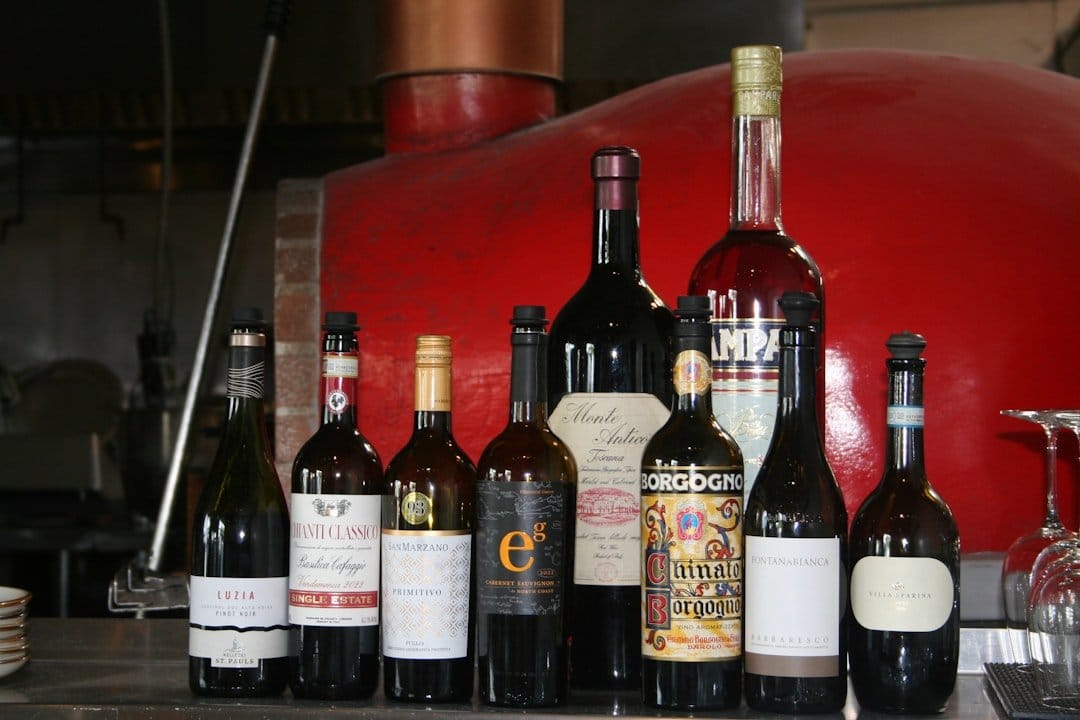
Chianti Classico Gran Selezione hits a 100-point milestone, and it feels bigger than one shiny critic score. For years, too many American drinkers have treated Chianti like a generic red instead of a place with real geography, history, and standards. Castello di Ama’s Bellavista 2022 may have changed that conversation.
I’ve heard “I love Chianti” from a lot of Americans who absolutely do not love Chianti. They love the idea of Chianti, usually some vague red they drank with bad pizza in college from a bottle that cost less than a sad airport panino.
That’s the baggage. And that’s why this moment matters.
Castello di Ama’s Bellavista 2022 just landed a perfect score from Decanter’s Michaela Morris, who called it her first-ever 100-point Chianti Classico. The Chianti Classico Consortium also made sure everybody heard that Antonio Galloni of Vinous gave the same wine 100/100. Same bottle. Same message. Wake up.
And yes, it’s overdue.
For years, Chianti Classico has had to fight two battles at once. One is against glamorous Italian rivals such as Brunello, Barolo, and Super Tuscans. The other is against its own past, especially in America, where “Chianti” still gets treated like a catchall red instead of a denomination with identity.
So when Chianti Classico Gran Selezione hits a 100-point milestone, I don’t see a trophy. I see a category finally forcing people to update their mental software.
The bottle that made people pay attention
Here’s the headline version. Castello di Ama Bellavista 2022 got 100 points from Decanter and 100 points from Vinous. That alone would be enough to get the trade buzzing. But the bigger point is what Bellavista represents.
According to Decanter, Bellavista is currently 80% Sangiovese and 20% Malvasia Nera. That detail captures this transition moment perfectly: the wine that hits the big 100-point milestone does it right before the rules get tighter and force even iconic wines to change.
Michaela Morris called it a “watershed moment” for Chianti Classico.
The score did not magically make the category serious. Chianti Classico was already getting more precise, more ambitious, and more itself. The score just made lazy people notice.
That’s usually how these things work. The hard work happens for years, and then one public moment makes everyone act like the success happened overnight. It didn’t. The market was just asleep.
Bellavista 2022 wasn’t the beginning. It was the push notification.
I hate score culture. I also know it works
Wine scores make grown adults act insane. One number goes up and suddenly people start talking like day traders with stemware.
Still, scores matter.
They matter to distributors, retailers, sommeliers, collectors, and regular people standing under fluorescent lights in a wine shop trying not to embarrass themselves. The wine world loves to pretend nobody cares about points anymore. That theory is false.
People say they don’t chase points or follow hype, then quietly reorder the buying list the second a bottle gets a perfect score.
According to Decanter, the 2022 and 2021 Gran Selezione releases are offering wines with 10 to 15 years of evolution ahead of them. That matters because it pushes Chianti Classico deeper into the serious-wine conversation: not just restaurant-friendly and not just “good with pasta,” but cellarworthy and collectible.
The consortium, naturally, went full Italian drama in its July 10, 2025 statement about Galloni’s score, calling it “A Day to Remember for Chianti Classico” and a “true consecration of the Gran Selezione category.”
And honestly, they’re not wrong. Categories become culturally real when a public moment forces people to stop using old assumptions. America has been running on old assumptions about Chianti for decades.
The real story is identity, not prestige
Prestige is nice. Prestige pays bills. Prestige gets importers to answer emails faster. But the more interesting thing happening in Chianti Classico is identity.
For a long time, Gran Selezione risked sounding like nothing more than “more expensive Chianti.” That’s not enough. If the price goes up, the wine should explain why through place, not just oak, packaging, or luxury signaling.
That’s why the rise of UGAs, or Unità Geografiche Aggiuntive, is the real plot twist. In plain language, Chianti Classico is finally speaking in neighborhoods, not just broad regional branding. Villages, slopes, soil, altitude, and exposure now matter more clearly in the conversation.
Decanter gave a strong example with Maurizio Alongi’s Vigna Barbischio, elevated from Riserva to Gran Selezione for the 2023 vintage and now carrying the Gaiole UGA. That matters because Gaiole means something specific.
Decanter also reported that Cigliano di Sopra released its first-ever Gran Selezione from a single vineyard in San Casciano planted in 2016.
Speaking about that wine, Maddalena Fucile explained the philosophy clearly.
If a vineyard is born with the right stuff, it can be a Gran Selezione even from its youth.
And the geography here is not decorative. According to Club Oenologique, vineyard altitudes in Chianti Classico range from 180 metres to almost 900 metres, with wines authorized up to 700 metres. That is a huge spread.
The soils are just as varied. Greve has limestone and clay. San Casciano is known for marls. Lamole, at higher elevation, is famous for sandstone, or macigno. Those differences show up in texture, tannin, freshness, and aromatics.
Angela Fronti of Istine put the importance of UGA labeling in direct terms.
I was waiting for the rules to change so that you could write Radda UGA on the label. This is very important for me.
Once you start looking at Chianti Classico that way, it gets much more interesting. Gaiole versus Radda versus San Casciano versus Lamole is not nerd trivia. It is the reason one glass feels dark and structured while another feels lifted and almost salty.
The new Gran Selezione rules are getting stricter. Good
If you want proof the category is growing up, look at the rules.
Starting with the 2027 vintage, Gran Selezione will require at least 90% Sangiovese, and Merlot will be banned altogether. That is not a technical footnote. It is a philosophical choice about what Chianti Classico wants its top tier to be.
Again, Bellavista is the perfect symbol. Decanter noted that its 80% Sangiovese and 20% Malvasia Nera blend should be enjoyed “while it lasts,” because the wine will need to adapt under the revised regulations.
The sharper example is La Casuccia. Decanter reported that Castello di Ama has withdrawn La Casuccia from the Chianti Classico denomination because the updated rules will prohibit Merlot in Gran Selezione. That move suggests identity matters more than forcing a wine into a category that no longer fits.
That is why Club Oenologique got the framing right when it described Gran Selezione, the UGAs, and the Gran Selezione rules 2027 as part of a “new era” for Chianti Classico, one where flagship wines become more distinctive and less internationalized.
That is a good thing. Tuscany does not need to imitate polished international red blends when its own voice is more interesting.
Rules matter because they shape whether the wines remain rooted in place rather than designed by committee.
I’ll admit something mildly embarrassing too. For years, I had a soft spot for some of the more international Tuscan blends because they were easier to explain to American friends. Bigger fruit, more obvious plushness, less chance of the “wait, why is this savory?” reaction.
That was laziness talking.
The more seriously I drink Chianti Classico, the less I want it translated.

The best thing about Chianti Classico is that it still wants food
Here’s the part I love most about this whole story: while Gran Selezione is climbing the prestige ladder, the broader style conversation in Chianti Classico is moving toward freshness, lower alcohol, and drinkability.
Not blockbuster reds. Not bottles that taste engineered to overpower the table.
According to Decanter’s reporting on the 2024 annata, producers are describing the wines as both old-school and contemporary. Alessandra Deiana of Monteraponi said they “recall the Chianti Classicos produced in vintages of yesteryear” and described them as elegant, lively, and fine-boned.
Paolo Paffi of Casa Emma put it even more simply when discussing lighter, more agile wines.
It’s what wine drinkers are looking for now.
Decanter described the 2024 style as “slender and frisky”, with alcohol levels around 12–13%, and the best examples as “vivacious, agile and refreshing.”
A few bottles stood out in that reporting. Badia a Coltibuono was Michaela Morris’s top annata. Monteraponi kept impressing. Jurij Fiore & Figlia’s unoaked Sonocosì made the highlights. Principe Corsini’s Villa Le Corti got praise for value. In Decanter’s value picks, Viticcio 2024 also got attention for spending less time in wood.
That is why Chianti Classico is such a compelling region when it is on form. It can produce prestige bottles that collectors obsess over, and it can produce Tuesday-night reds you want with grilled sausage, beans, and bread torn by hand.
There is a farming story underneath this too. Decanter reported that 55% of the region is certified organic, and more than 60% if you include vineyards in conversion. Those are meaningful numbers. They suggest the future of Chianti Classico is being built in the vineyard, not just in branding.
If this becomes trophy wine only, they’ve missed the point
My one caution with the whole Chianti Classico Gran Selezione hits a 100-point milestone story is simple: the danger is that people start chasing the top label without learning anything about the region underneath it.
That would be a very American mistake. We are excellent at turning nuanced things into ranking systems and then wondering why all the joy disappeared.
The beauty of Chianti Classico is that the pyramid only works if every level has integrity. Decanter’s value guide made that point well. If you want an accessible entry into the upper tier, Ruffino Riserva Ducale Oro Gran Selezione Castellina 2022 was presented as an “accessibly priced” gateway Gran Selezione.
Then there is Monsanto Riserva 2022, which Decanter called a “savvy cellar pick.”
Lower down the ladder, the denomination still delivers. Ricasoli Brolio 2024 was praised for authenticity and place in a lighter vintage. Viticcio 2024 got credit for vibrancy. Borgo Salcetino 2023 was described as a possible house red, cheerful and pure.
There is also an important corrective in the story. Sofia Ricasoli, the 33rd generation of the family, chose Riserva for her own label, Innesto 2021, instead of jumping straight to Gran Selezione.
Her explanation, reported by Decanter, was exactly the right one.
It’s a more historical category than Gran Selezione.
Prestige should not erase history.
That matters even more when you remember how exposed wine always is to vintage reality. According to Decanter, 2023 was brutal in parts of Chianti Classico. Michael Schmeltzer at Monte Bernardi lost 80% of production and folded what would usually be three separate bottlings into a single Riserva. Other estates skipped bottlings entirely.
Decanter also noted that estates including Tregole and Castello di Ama would skip the 2023 Gran Selezione vintage.
That is discipline. That is seriousness. That is a category acting like the words on the label are supposed to mean something.
If Gran Selezione turns into an automatic luxury upgrade, it becomes cosplay. But if it stays demanding, if Riserva stays relevant, and if annata wines keep overdelivering at the table, then Chianti Classico keeps what makes it special: a hierarchy with actual integrity.
And that matters more than a perfect score.
I’ve had some of my best meals in Tuscany with bottles nobody on Instagram would bother posting. A simple annata in a trattoria outside Panzano. Steak basically still mooing. Terrible lighting. Perfect night. Nobody asked for the score. Everybody finished the bottle.
That is still my benchmark.
So yes, I’m glad Castello di Ama Bellavista 2022 got its flowers. I’m glad Chianti Classico Gran Selezione hits a 100-point milestone and forces people to look again. But the real question is whether drinkers are finally ready to care about Gaiole, Radda, San Casciano, and Lamole, the actual places, the way they already care about villages in Burgundy.
If not, then the 100 points were just content.
If yes, then Chianti Classico did not just get a perfect wine.
It got a new language.
Sources
- Primary trending article
- Gran Selezione: Chianti Classico's 100-point milestone
- Chillable and quaffable: The low-alcohol Chianti Classico vintage everyone is talking about
- Our expert picks out her top-value Chianti Classico buys
- Chianti Classico: The enduring appeal and resilience of Riserva
- Chianti Classico