
Bari Xylella Summit Tests Puglia’s Olive Future
EFSA’s Bari meeting shows why Apulian olive groves now depend less on nostalgia and more on surveillance, enforcement, and regeneration.
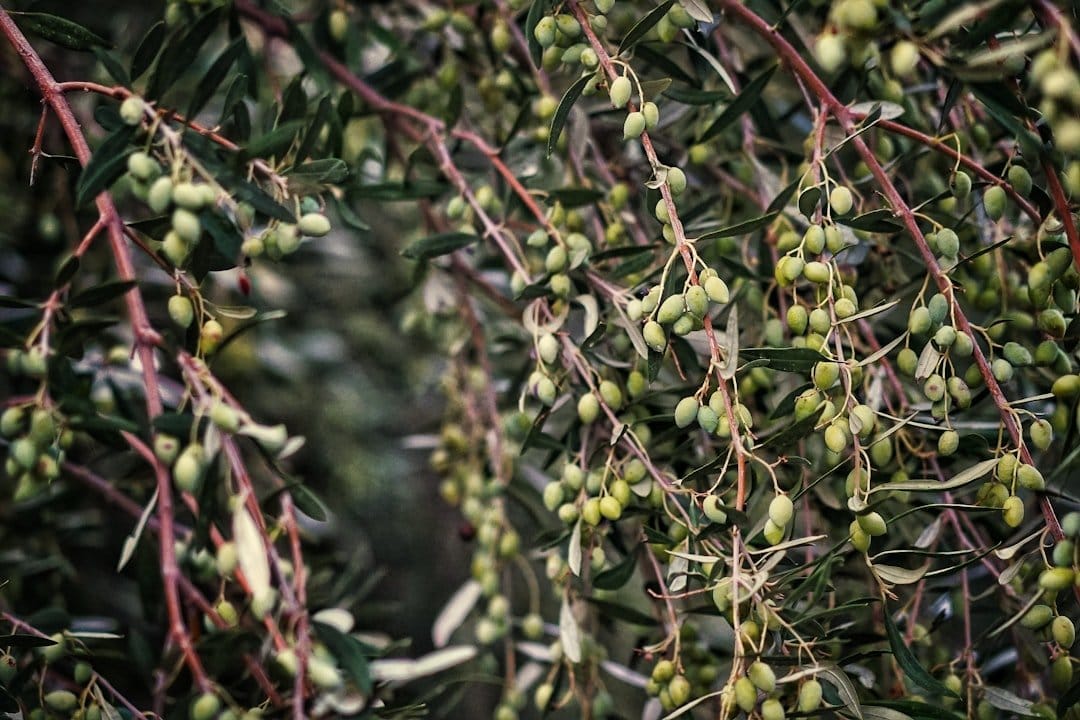
EFSA’s Bari Xylella summit puts Apulian olive groves back under scrutiny in a way that cuts through the poetry surrounding Puglia’s ancient trees. The region’s olive landscape still carries enormous emotional weight, but the summit makes clear that memory and survival are no longer the same project.
For years, too much of the conversation around Xylella has treated grief like farm policy. Olive trees became symbols first and production systems second. That distinction now matters more than ever.
Puglia’s old groves remain culturally powerful, but preserving the image of them is not the same as preserving olive culture. One is about heritage. The other is about whether olive growing can remain viable under pressure.
The real question behind the Bari summit is blunt: is the goal to save olive culture, or just preserve the postcard? If the strategy is only to keep the landscape looking exactly as it once did, the region is already behind.
EFSA’s Bari Xylella summit puts Apulian olive groves back under scrutiny for a reason
The significance of this event is not simply that another conference exists. The 5th European Conference on Xylella fastidiosa is taking place in Mola di Bari from June 23 to 25, 2026, a decade after the first European outbreak was identified in Puglia.
That timing puts the region back under a microscope. According to EFSA’s event page, the summit brought together around 400 participants, including researchers, policymakers, institutional representatives, and sector operators from Europe and beyond.
This is why Puglia remains a reference point. It is still the case study other regions watch when they want to understand what happens after a major outbreak, how recovery evolves, and what mistakes cannot be repeated.
Local reporting from Giornale di Puglia framed the moment clearly, describing Puglia as once again central to the international scientific discussion around the bacterium that transformed its agriculture and landscape.
In remarks reported by Giornale di Puglia, Regione Puglia president Antonio Decaro said hosting the conference recognized the work carried out by the region and scientific institutions during the emergency. He also noted that Puglia was the first European region to face the drama of a bacterium that struck millions of olive trees, reshaping landscapes tied to local history and identity.
EFSA executive director Nikolaus Kriz made a similar point, saying that while the path had not been simple, the scientific effort and cooperation in Puglia produced knowledge that is now useful across Europe.
That is why the summit feels less like a celebration than an assessment of what has been learned and what still needs to change.
Xylella was never just an olive tragedy
The conference agenda strips away any romantic framing. EFSA says the focus is on detection, epidemiology, sustainable management, and social aspects, with particular attention to turning research into risk management and policy support.
That may sound technical, but it is the real story. Olive-growing regions do not survive on symbolism alone. They survive on competence.
The summit is not centered on a miracle cure. Sessions instead cover innovative tools and integrated approaches for olive, vineyard, and almond production systems, along with updated risks posed by the bacterium and its insect vectors to agriculture, forestry, and natural ecosystems.
This matters because Xylella is still too often discussed as if it were only an olive issue. It is broader than that. It is an agricultural systems problem, a governance problem, and a policy problem.
EFSA’s own review of control options points toward the practical work that matters most:
- Surveillance
- Containment
- Vector control
- Management strategies
None of those are especially romantic. All of them are essential. Treating Xylella mainly as a cultural tragedy, with agronomy as background scenery, is how regions lose twice.
The least glamorous part may be the most important
The future of olive oil may depend less on sentiment and more on inspectors, databases, and field teams working with digital tools. That is not a poetic image, but it is increasingly the reality.
According to Giornale di Puglia, the Osservatorio Fitosanitario regionale now carries out around 120,000 samplings every year across more than 1.5 million plants. That scale of monitoring shows how far the response has moved beyond symbolic gestures.
Modern food protection relies on mapped risk zones, repeat inspections, traceable data, and the ability to act before outbreaks spread further. In this context, surveillance is not bureaucracy for its own sake. It is infrastructure.
CIHEAM Bari’s XylAppEU reflects that shift. According to the institute, the app was developed under the H2020 XF-Actors project to improve the collection, geolocation, and archiving of data on plant material and insect samples across EU territory.
Tools like this make monitoring faster, more consistent, and less dependent on improvisation. They also show how much the future of olive growing now depends on systems that are largely invisible to consumers.
There is an emotional tension in that reality. The old image of Puglia still matters deeply. But if one of Europe’s largest phytosanitary surveillance efforts is what keeps more of that world alive, then the least photogenic part of the story may be the most necessary.
That is not betrayal. It is adaptation.
When financial police enter the picture, the story changes
On June 5, 2026, Regione Puglia announced an integrative protocol between the Guardia di Finanza and the regional agriculture department to strengthen controls in agriculture, with specific reference to phytosanitary measures and interventions connected to Xylella fastidiosa.
That development signals a shift. The issue is no longer only scientific. It is also about governance, compliance, oversight, and whether recovery measures are being managed credibly.
Regione Puglia said the initiative aims to improve vigilance and protect public resources allocated to agriculture. That may be the least romantic sentence possible in an olive-tree story, but it is one of the most consequential.
The presentation also made the political message clear, with Antonio Decaro, regional agriculture councillor Francesco Paolicelli, and Gen. Guido Mario Geremia, commander of the regional Guardia di Finanza, all involved.
That kind of lineup suggests that recovery has become a legality issue as well as an agricultural one. Farmers are being asked to accept monitoring, rules, removals, replanting frameworks, and public interventions on inherited land. If enforcement appears inconsistent or politicized, the entire system loses legitimacy.
Science without credible enforcement quickly becomes performance. Puglia cannot afford more performance.

Regeneration will not recreate the old postcard
Rigenerazione del patrimonio olivicolo sounds elegant, but in practice it means changed landscapes, changed planting choices, and changed expectations. It also means accepting that part of the old visual identity is gone.
According to EFSA’s programme, the conference includes field visits related to olive-sector regeneration in Salento and to the threat facing nearby table-grape production. That broader framing matters because recovery is not only about iconic trees. It is about the survival of a regional food economy.
Salento remains central because that is where the scale of the damage became impossible to ignore. Giornale di Puglia described Puglia as the first European region to experience the emergency at scale, while Decaro said the bacterium transformed the landscape after striking millions of olive trees.
That transformation is visible and emotionally disorienting. It forces a recognition that attachment to olive culture is often also attachment to scenery, memory, and inherited ideas of southern Italy.
That is exactly why nostalgia can become dangerous. It encourages people to defend the image of the grove instead of the future of olive growing.
If regeneration is serious, it cannot be judged by how perfectly it reproduces the old landscape. It has to be judged by resilience, continuity of production, and whether farmers can still build a viable livelihood.
Puglia cannot freeze itself in place because visitors prefer the aesthetic. It has to remain functional.
Bari is now exporting a Xylella playbook
There is a striking reversal in all this. Puglia is no longer only the region that suffered first. It is increasingly becoming a source of expertise for others.
A recent report from CIHEAM Bari described a visit by a delegation from the Syrian Ministry of Agriculture focused on innovation in the olive-oil sector. The programme included a stop at CIHEAM Bari’s Tricase office and field visits across the Lecce area, where delegates observed Xylella damage directly.
CIHEAM summarized the lesson simply: prevention is key.
According to the institute, the exchange focused on lessons from managing the regional emergency, the importance of continuous field monitoring, and the need for strong laboratory diagnostics for early detection.
That is now part of Puglia’s exportable knowledge: not just olive oil, but procedures, diagnostics, monitoring culture, and operational methods built through crisis.
The private-sector names involved underscore that this is not just an academic exercise. CIHEAM Bari highlighted participation from De Nicolo Vivai, Amenduni S.p.A., De Carlo Oleificio, and Sabino Leone, showing how nurseries, mills, and companies are part of the recovery ecosystem.
CIHEAM Bari’s institutional overview also shows the scale of training already carried out since 2010 to hinder and control the spread of Xylella fastidiosa:
- 100 officials from ministries and local administrations
- 1,000 technicians and farmers
- 200 Italian phytosanitary inspectors
- 70 laboratory technicians from MENA countries
- 250 agronomists and technicians from Puglia
That is not a side project. It is a regional knowledge system.
CIHEAM also points to research under projects such as XF-Actors and CURE XF, including work on detection techniques, monitoring methods, host-plant identification, and insect vectors.
The larger point is simple: Bari is now teaching other olive regions how to avoid repeating its crisis.
The real conflict is romance versus resilience
What the summit ultimately exposes is a tension Italy often struggles to resolve. Landscapes become identity, and identity can become paralysis.
EFSA says the Bari conference is about turning science into risk management and policy support. Regione Puglia is tightening controls around phytosanitary measures and public resources. Local reporting points to 120,000 annual samplings across 1.5 million plants. CIHEAM Bari is exporting lessons built on monitoring, diagnostics, and prevention.
Taken together, those facts point in one direction. The future of olive growing will be more monitored, more engineered, more bureaucratic, and less photogenic than the myth many people still prefer.
That may be disappointing on an emotional level, but the alternative is worse. If the choice is between keeping olive culture alive and preserving an idealized image of it, survival has to come first.
That is the choice Bari is forcing into the open. The real test after this summit is not whether everyone agrees that Xylella is devastating. It is whether Puglia can accept that preserving olive culture may require giving up the fantasy of preserving every old form exactly as it was.
That is why EFSA’s Bari Xylella summit puts Apulian olive groves back under scrutiny in the only way that matters now: not as symbols, but as systems.
The regions that endure will choose resilience over romance, then learn how to make that resilience part of the story they tell.
Sources
- Primary trending article
- Xylella, la Puglia torna al centro della ricerca europea: a Mola di Bari la quinta Conferenza internazionale EFSA
- Protocollo d'intesa tra Comando regionale Puglia della Guardia di Finanza e Regione Puglia per il contrasto alla diffusione della Xylella fastidiosa: domani 5 giugno la conferenza stampa di presentazione dell'atto integrativo
- From Puglia to Syria: Building Bridges of Innovation for The Olive Oil Industry
- 5th European Conference on Xylella fastidiosa: programme now available
- Latest Xylella control options reviewed – have your say!