
AI Solves 80-Year Geometry Puzzle Experts Misjudged
An AI found a proof that overturned a long-trusted geometry intuition, exposing how expert taste can hide better answers in plain sight.
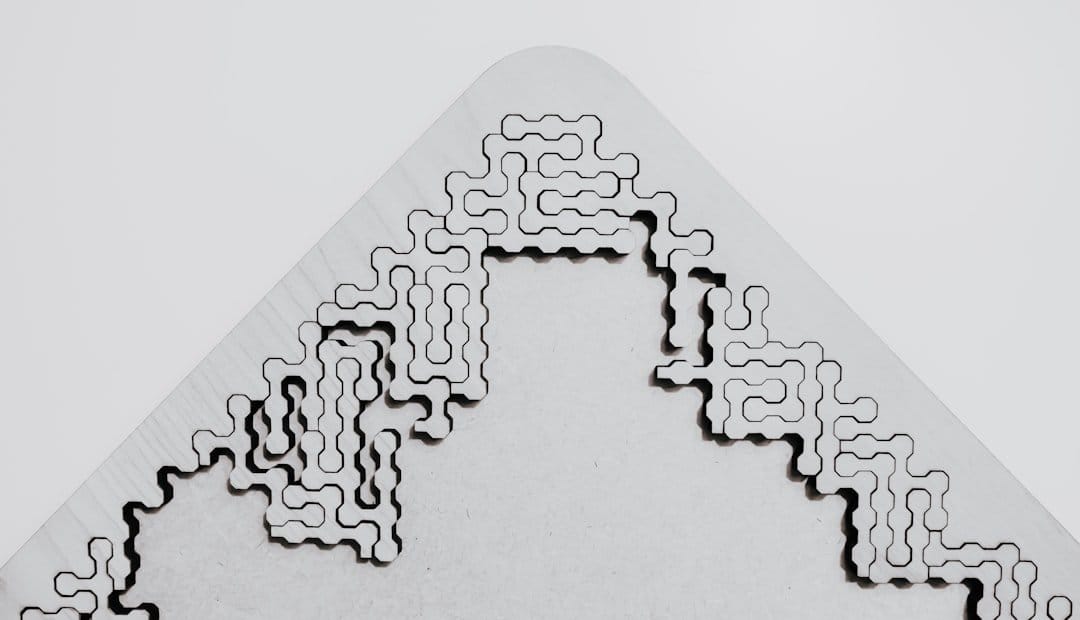
AI cracks an 80-year-old geometry problem mathematicians thought was settled by overturning a long-standing intuition about unit distances in the plane, and the most revealing part is not just the theorem. It is the way the result exposed a deeply human weakness: our habit of mistaking elegance for truth.
Nothing exposes bias faster than a problem everyone treats as basically done. Sometimes that confidence is earned. Sometimes it just means smart people got attached to the prettiest answer and stopped looking hard for uglier ones.
That is what makes this story so compelling. OpenAI says one of its systems found a construction that challenges Paul Erdős's old intuition about unit distances. Outside mathematicians checked the proof. Serious experts took it seriously. And beneath the technical achievement sits a broader lesson about how consensus forms and why it can fail.
The geometry problem looked simple. That was the trap.
The unit-distance problem sounds almost trivial. Place points on a flat plane and ask how many pairs are exactly one unit apart. It feels like the kind of puzzle you could sketch quickly and solve with symmetry and common sense.
But the problem gets difficult fast. With nine points, a regular 9-gon gives you 9 unit-distance pairs, one per side. A 3 by 3 square grid gives you 12. Same number of points, better arrangement. Suddenly the harmless-looking puzzle becomes a serious combinatorial question.
In 1946, Erdős asked the deeper version: for any number of points, what arrangement gives you the most unit-distance pairs? His intuition suggested that grid-like constructions were essentially the right answer, and that idea shaped thinking in the field for decades.
The appeal is obvious. Grids feel orderly, symmetric, and mathematically natural. They look right. And that is exactly why they are dangerous. Human beings are highly vulnerable to solutions that feel elegant before they are fully tested.
Once a field starts favoring a beautiful idea, it can quietly narrow the range of alternatives people even consider respectable. The question stops being only is this true? and becomes what would a sensible proof look like? That shift is where groupthink often begins.
AI cracks an 80-year-old geometry problem mathematicians thought was settled
The most startling detail is how the result reportedly began. According to Nature, OpenAI said the breakthrough came from a single open-ended prompt.
That phrase surely hides a lot of engineering, tooling, and iteration. Public descriptions often compress a great deal of work into a neat headline. Even so, the symbolism is hard to ignore. Humans spent decades circling this problem, and then a machine was pointed at it and returned with a better construction.
That does not mean mathematicians are obsolete. It does mean the mythology of discovery has changed. The romantic image of the lone genius finding the perfect insight now has competition from systems willing to explore paths humans might dismiss too early.
What makes the story real is verification. Nature reported that outside mathematicians checked the proof, including Daniel Litt of the University of Toronto. Litt called it “the first result produced autonomously by an AI that I find interesting in itself.”
Timothy Gowers, as reported by Scientific American, was even more direct.
no previous AI-generated proof has come close
That is the point where the story stops being a demo and starts becoming research. Scientific American also noted that the result would likely be publishable in a top mathematics journal if humans had produced it. That matters far more than hype.
AI won by ignoring the field's taste
The deeper lesson is not that humans lack intelligence. It is that humans inherit taste, and taste can become a cage.
OpenAI says the model found an infinite family of point sets with polynomially more unit-distance pairs than the classic grid-based construction. The manuscript, Planar Point Sets with Many Unit Distances, says the improvement works for infinitely many values of n and grows like n^(1+δ) for some positive δ.
In plain terms, this was not a tiny optimization. It was not a cosmetic improvement. It was a serious challenge to the old intuition.
The route was also strikingly unconventional. Instead of staying inside the familiar territory of discrete geometry, the proof drew on algebraic number theory, including class field towers, Golod-Shafarevich theory, and high-dimensional lattices projected back into the plane.
The technical details are not the main point. The important part is that the winning move came from outside the aesthetic center of the field. It was not the answer experts were primed to admire.
Tony Feng of Berkeley, quoted by Nature, captured the mood well.
I like to think that I have been a relatively measured voice on the impact of AI on mathematics, but this is incredible.
Tom Trotter, who co-authored papers with Erdős, told Nature that Erdős would have been “raving about this advance.” That framing feels right. The result does not violate mathematics. It joins one of mathematics' oldest traditions: surprising everyone.
There is a broader pattern here. AI can sometimes find progress not by being magical, but by being indifferent to convention. Humans often reject ideas early because they seem ugly, low-status, unserious, or too cross-disciplinary. Machines do not appear to care much about professional embarrassment.
Why this AI math result feels different
Computers helping mathematicians is not new. Researchers have long used computation to test conjectures, check cases, and verify large arguments. None of that is revolutionary on its own.
What feels different here is the reaction from experts who are usually difficult to impress. Sébastien Bubeck of OpenAI told Nature he believes this is “the first time that AI has autonomously produced an important result in any field of research.” That is a bold claim, but it did not get dismissed as absurd.
Daniel Litt said it was the first autonomous AI result he found interesting in itself. Gowers said no previous AI proof was close. Those are not the reactions people give to a polished benchmark.
The surrounding context matters too. Nature described Liam Price, a teenager in southwest England with no formal mathematics training, using ChatGPT to make progress on one of Erdős's old problems. A sentence like that would have sounded satirical a few years ago. Now it reads like a preview.
The same Nature feature noted that many recent advances are coming from general-purpose models like GPT, Gemini, and Claude, often without specialized mathematical training. That suggests this is not just one custom-built theorem machine. General systems are becoming useful for frontier reasoning.
Quanta has reported similar shifts. Researchers such as Geordie Williamson, Jordan Ellenberg, and Ravi Vakil are using these models less like curiosities and more like exploratory tools. Williamson told Quanta:
I can suddenly do an experiment in 20 minutes that two years ago would have taken me two weeks.
That is not just a technical improvement. It is a workflow change, and workflow changes often become culture changes very quickly.

Mathematicians are not losing their jobs
The simplistic claim that AI will replace mathematicians misses the point. The more interesting shift is that mathematicians may be losing their monopoly on surprise.
For a long time, experts owned a particular emotional territory. They were the first to encounter strange abstract structures and return with something nobody expected. Now, in some cases, the machine gets there first and hands them the strange thing.
That changes the social feeling of the field. According to Quanta, Nicolás Libedinsky said of another AI-generated insight, “If it was a human, it would be an extremely creative human.” That statement is striking because it describes not just usefulness, but style.
Jordan Ellenberg described another system's contribution in similar terms, saying researchers realized it had uncovered a gigantic hypercube they had not anticipated. That is more than answering a question. It is exposing a hidden structure experts did not expect to find.
Humans still matter at every critical stage. They verify proofs, interpret significance, and decide whether a result is foundational or trivial. The OpenAI geometry proof did not enter mathematical culture by itself. People had to test it, understand it, and judge that it belonged.
So rigor is not being outsourced wholesale. But surprise is no longer exclusively human territory, and that is what makes this moment feel different.
The bigger lesson: settled ideas are fair game again
This is why the geometry result matters beyond geometry. The lesson is not that AI should be trusted blindly. These systems still hallucinate, overstate, and make errors with alarming confidence. Skepticism remains essential.
The lesson is that whenever a field says the answer is obvious but somehow still unproved, there may be hidden opportunity. Those are often the places where taste has quietly hardened into dogma.
OpenAI's result does not merely tweak an old conjectural picture. It reopens a category of problems many experts had mentally filed under probably understood. Once one of those drawers gets pulled open, many others start to look less secure.
Bubeck told Nature that a year earlier many mathematicians believed there might be a “fundamental obstruction” preventing large language models from going beyond their training data. Then this happened. The resulting shift in tone is hard to miss.
This pattern extends beyond mathematics. Industries are rarely transformed because someone works slightly harder inside the accepted frame. They change because someone ignores the frame altogether.
For decades, the field's taste treated grid-like constructions as the natural center of gravity. Then the machine wandered into algebraic number theory, returned with projected high-dimensional lattices and class field towers, and showed that the old intuition was not foolish, just limited.
That distinction is brutal because it suggests many so-called settled ideas survive not because they are right, but because nobody is rewarded for pushing the ugly alternative.
The real challenge
AI cracks an 80-year-old geometry problem mathematicians thought was settled is ultimately not a story about machines conquering mathematics. It is a story about how fragile consensus becomes when it rests too heavily on aesthetic instinct.
That is the uncomfortable part. Not simply that AI found a better answer, but that an entire field may have leaned on elegance longer than it realized.
The biggest AI breakthroughs over the next few years may not be the obvious science-fiction ones. They may come from areas humans quietly stopped questioning because the alternatives felt ugly, annoying, or low-status. The machine will not always be right. But it also will not care whether the route offends local standards of taste.
Sometimes good taste and truth travel together. Sometimes they do not. This time, the less elegant route won, and that is exactly why the result matters.
Sources
- Primary trending article
- An OpenAI model has disproved a central conjecture in discrete geometry
- Planar Point Sets with Many Unit Distances
- AI just solved an 80-year-old ‘Erdős problem,’ and mathematicians are amazed
- ‘It is incredible’: How AI is transforming mathematics
- ‘Sensational’ proof topples decades-old geometry problem